
What Does a Pop Time of 2.0 Actually Mean?
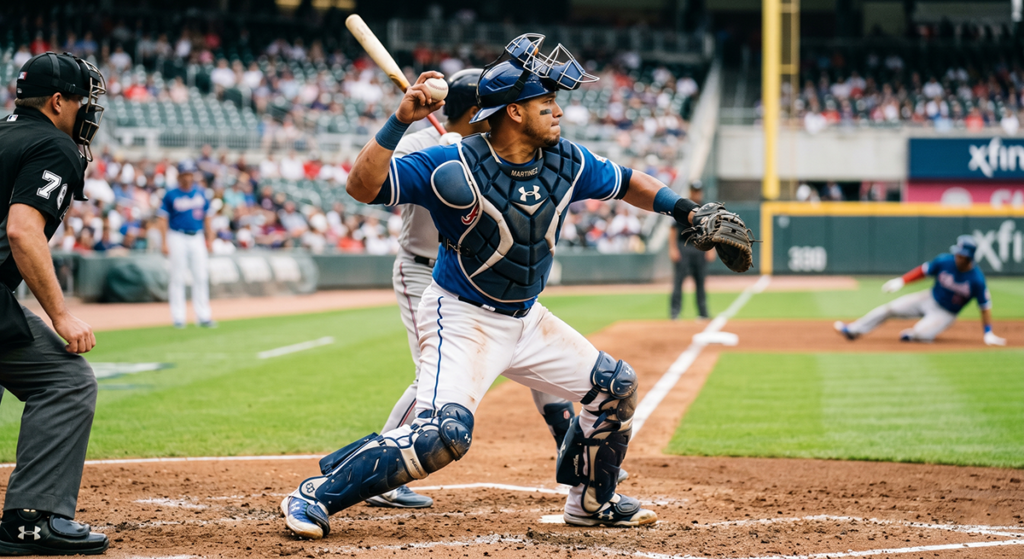
The pitch pops as the ball thumps your new mitt. Now, the timer is running.
From the thump through the exchange and the throw, until the ball arrives at the base — that is your pop time. The best catchers in baseball do it in under two seconds. The Major League average is exactly two seconds flat.
Two seconds does not sound like much. It is everything.
The difference between a good pop time and a slow one is the difference between an out and a stolen base.
Here is the part most youth catchers do not know: pop time is more than just arm strength. It is two things — exchange time, how fast you get the ball out of your glove, and how hard you throw. In the big leagues, the difference between a good pop time and a great one is almost always the exchange, not the arm.
A catcher who throws 70 mph but gets the ball out in 0.6 seconds can beat a catcher who throws 75 mph but takes 0.9 seconds to find it. Arm strength matters. Exchange matters more than most people think.
Pop time is the most talked-about catcher metric, but it is not the only one. Statcast also tracks framing — turning borderline pitches into called strikes — and blocking, which is stopping the wild pitch in the dirt before it gets past you. A great catcher manages all three. A great catcher is worth something on every single pitch, not just the throws.
What a catcher can do with this
The fastest way to lower your pop time is not to throw harder. It is to move faster from catch to throw.
Work the transfer. Every time you block a ball in the bullpen, practice finding the seams quickly and getting into your throw position in one smooth motion. Do it a hundred times. Then a hundred more. Practice exchanging with the thumb forward, then backward. And remember to frame with the biggest part of the glove over the plate.
Shave a tenth of a second off your exchange, and you just made a good arm into a great pop time. That is a math problem every catcher can solve.