Cal Raleigh Return from Injury 2026: What the Comeback Teaches
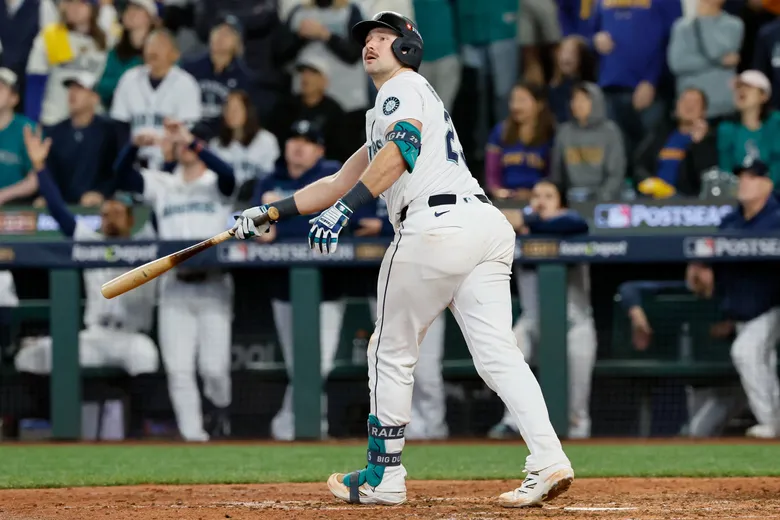
Cal Raleigh set the all-time catcher home run record in 2025. His 2026 oblique injury — and what his comeback actually looks like — is the most honest lesson the position can teach right now.
On May 14, 2026, Seattle put Cal Raleigh,who owns the all time MLB record for most home runs hit by a catcher in a single season (60), on the injured list with a right oblique strain.
He missed 33 days. He came back on June 16 against the Baltimore Orioles, delivered a two-run single in his return game, and the Mariners won 3-1. It felt like the breakthrough.
But the oblique had its own timetable.
Through his first week back, Raleigh was cold. No extra-base hits. The man who averaged a home run every two to three games in 2025 was grounding out to second, fouling off pitches he used to put in the bleachers. The swing was recognizable. The percussive snap through the zone — the coiling, the load, the explosion — wasn’t all the way back.
Then, quietly, he hit a solo home run in a 3-2 Seattle win over the Pittsburgh Pirates. His eighth of 2026. His first since April 27.
Small. But real.
Before he returned to Seattle, Raleigh did the rehab work right. High-A Everett first. Then Triple-A Tacoma. Seven hits in 17 at-bats, five home runs. The power was there. It was just rebuilding at game speed before he brought it back to the big leagues.
What a catcher can learn from this
The oblique is not a background muscle for a catcher. It is central to everything.
It powers the swing. It powers the throw. When you rotate to fire a ball to second base, the oblique is the engine. That is why returning from an oblique strain as a catcher can take longer than the timeline on the medical report suggests. Your body healed. The oblique still has to relearn when to fire, at game speed, under game pressure, when a 97-mph fastball is in the zone right now.
Raleigh didn’t try to shortcut that. He worked back through the minor league levels. The numbers returned as the body was healed and became stronger.
That is not a comforting message if you are sitting on the injured list right now. But it is the honest one. The catchers who come back strongest don’t rush the oblique. The oblique is a large thick muscle, strengthen it while its healthy so it can heal more quickly. Give it time to heal when it’s injured. Your injury will heal and you’ll be back stronger than ever!
One homer at a time. That is how you come back right.
Try this at your next practice
- Weighted rotation drill (return-to-throw). Using a light med ball (1–2 lbs), practice the rotational load of a throw — not a full throw, just the load and hip rotation. Feel the oblique engage. When returning from any oblique strain, this drill reintroduces rotation at low velocity before progressing to full throws. Raleigh’s rehab process (Everett → Tacoma → Seattle) did the same thing: progressively increasing intensity.
- Dry swing series. Ten swings off a tee with full rotation focus — slow motion, then 50% effort, then 75%, then full. The goal is not distance; it is re-establishing the sequence of the swing without protecting the oblique. This is what a minor league rehab assignment does for a big league hitter. Any catcher can build the same protocol.
- Pop time tracking. After any time off, track your pop time from catch to release for 10 throws. Look for consistency, not just speed. An inconsistent pop time — sometimes 1.9, sometimes 2.3 — often signals the body is compensating somewhere. The oblique compensation shows up here first. Tracking it honestly tells you where you are in the comeback.
Sources: Seattle Mariners’ Cal Raleigh back from IL (MyNorthwest) · Mariners’ Cal Raleigh slugs 2 HRs in 1st rehab game with Tacoma (MyNorthwest) · Cal Raleigh stats (ESPN) · Cal Raleigh 2026 game log (Baseball Almanac)