
Blake Mitchell Catcher: 13 HR, 16 SB in 2026
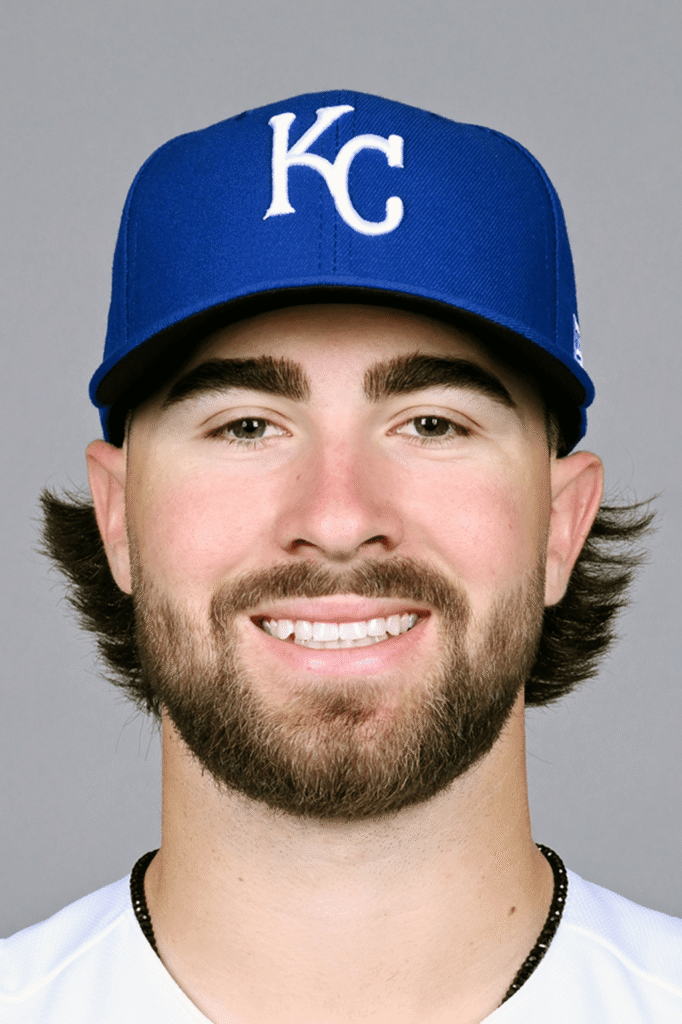
Blake Mitchell is four steals from one of the rarest seasons in minor-league history — and he does it from behind the plate.
Heading into this week, Blake Mitchell had 13 home runs and 16 stolen bases through 67 High-A games. Four steals from 20-20. Four steals from joining one of the rarest clubs in minor-league baseball — a catcher who hits for power and runs, at the same time, in the same season.
Minor-league catchers who reach a 20-20 season are among the rarest in professional baseball, with fewer examples than you can count on one hand in the past two decades. Mitchell is four stolen bases from adding his name to that list. He is 21 years old. He plays for the Quad Cities River Bandits at the Kansas City Royals’ High-A affiliate. And his 2026 stat line is the most polarizing thing in the minor leagues.
| Stat | 2026 Total |
|---|---|
| Games | ~67 |
| BA | .217 |
| OBP | .421 |
| HR | 13 |
| SB | 16 |
| RBI | 40 |
| Runs | 56 |
| Walk rate | 32.9% (leads all MiLB prospects) |
The batting average is low. The walk rate leads every prospect in the minor leagues. The power and speed are both real — happening at the same time, from the same player, from behind the plate.
Last week, we covered Mitchell’s All-Star Futures Game start and his week of July 13, when he went .438/.550/1.063 over four games — three home runs, two stolen bases, and enough noise to earn MLB’s Prospect Team of the Week. The question then was whether the surge would hold. Seven-plus games later, the season line still reads like someone pasted two different stat cards together.
Mitchell went deep in three consecutive games before the Futures break. Added two stolen bases in the same stretch. He has posted a 20-game on-base streak at High-A and leads all minor-league prospects in walk rate at 32.9% — a figure sitting side by side with a 34.8% strikeout rate that has had scouts splitting into two camps since April.
The skeptics look at the batting average and see a swing-and-miss profile that will get exposed the higher he climbs. The believers look at the OBP and the home runs and the stolen bases and see a catcher who refuses to give up anything that makes him dangerous.
Both camps are watching Thursday’s game log.
What a catcher can learn from this
Here is the quiet paradox at the center of Blake Mitchell’s season: the position that is supposed to slow a player down is the one he plays — and his numbers say otherwise.
Catchers are taught early to conserve their bodies. The squat is hard. The foul tips accumulate. The defensive load — framing, blocking, throwing, game-calling — is a full-time job before the first pitch. Coaches at every level look at a gifted athlete behind the plate and start trimming the running game from the equation, because the legs have to hold up for nine innings and 130 games.
Mitchell is running anyway. Not recklessly — his .421 OBP is the foundation. He gets on base at an elite rate, and then he uses what he has. The speed is not a stolen moment; it is a calculated weapon built on plate discipline.
You can take that blueprint to your next practice without being a first-round pick. Plate discipline first, then run when the numbers say run. Not every time. The right time, with the right read. Catchers who build that combination are building a skill set that does not get smaller as they advance — it gets more dangerous.
If there are four more stolen bases left in Blake Mitchell’s summer, he will be one of the rarest catchers in professional baseball history. He will also still have to be behind the plate the next morning.
That could be you — behind the plate, and still the most dangerous player on the bases.
Try this at your next practice
- The pitch-read go-decision. Set up a baserunning drill where the catcher calls “go” only on specific pitch types (fastball off the plate, wild pitch direction). Link baserunning decisions to pitch recognition — the same read Mitchell uses to pick his spots.
- High OBP, low average tracking. For one practice, track how many times you reach base by not swinging at a bad pitch. Count walks and HBP separately from hits. Mitchell’s .421 OBP vs. .217 BA shows the gap — measure your own.
- Speed-and-block combo reps. Sprint first base, return, immediately go into a blocking station. The drill is not about being fast; it is about proving your legs can do both jobs in the same session. That is the Mitchell test behind the plate.
Sources: Prospect Team of the Week July 13 2026 (MLB.com) · Royals top prospect’s polarizing 2026 stat line (Kings of Kauffman) · Road to The Show: Blake Mitchell (MiLB.com).