
How to Choose a Catcher’s Mitt: The Five Decisions That Matter
How to choose a catcher’s mitt comes down to five decisions, made in order: the ball, the size, the leather, the pocket, and the fit. Get those five right, and the brand almost picks itself. Get them wrong, and no logo saves you. So this guide walks each decision with the numbers. Then it points you to the exact page for the next step: our size chart, our leather explainer, or the premium mitts worth comparing.
The five decisions at a glance
| Decision | The question | Rule of thumb |
|---|---|---|
| 1. Ball | Baseball or fastpitch? | The ball decides the mitt. Baseball 32–34.5in, firmer pocket. Fastpitch 33–35in, deeper and softer. |
| 2. Size | How big is the hand, and what level? | Size by age and level. If the catcher can’t close it, it’s too big. |
| 3. Leather | How many seasons does it have to last? | Full-grain steerhide for year-round catchers. Oil-treated cowhide for a season of rec ball. |
| 4. Pocket | Framer or blocker? | Blockers want a stiff, stable pocket. Framers want a mitt that forms to the hand. |
| 5. Fit | Does the wrist and back closure lock the hand in? | Try the closure style. A loose mitt spins on foul tips; a tight one fights the hand. |
Decision 1 — Baseball or fastpitch?
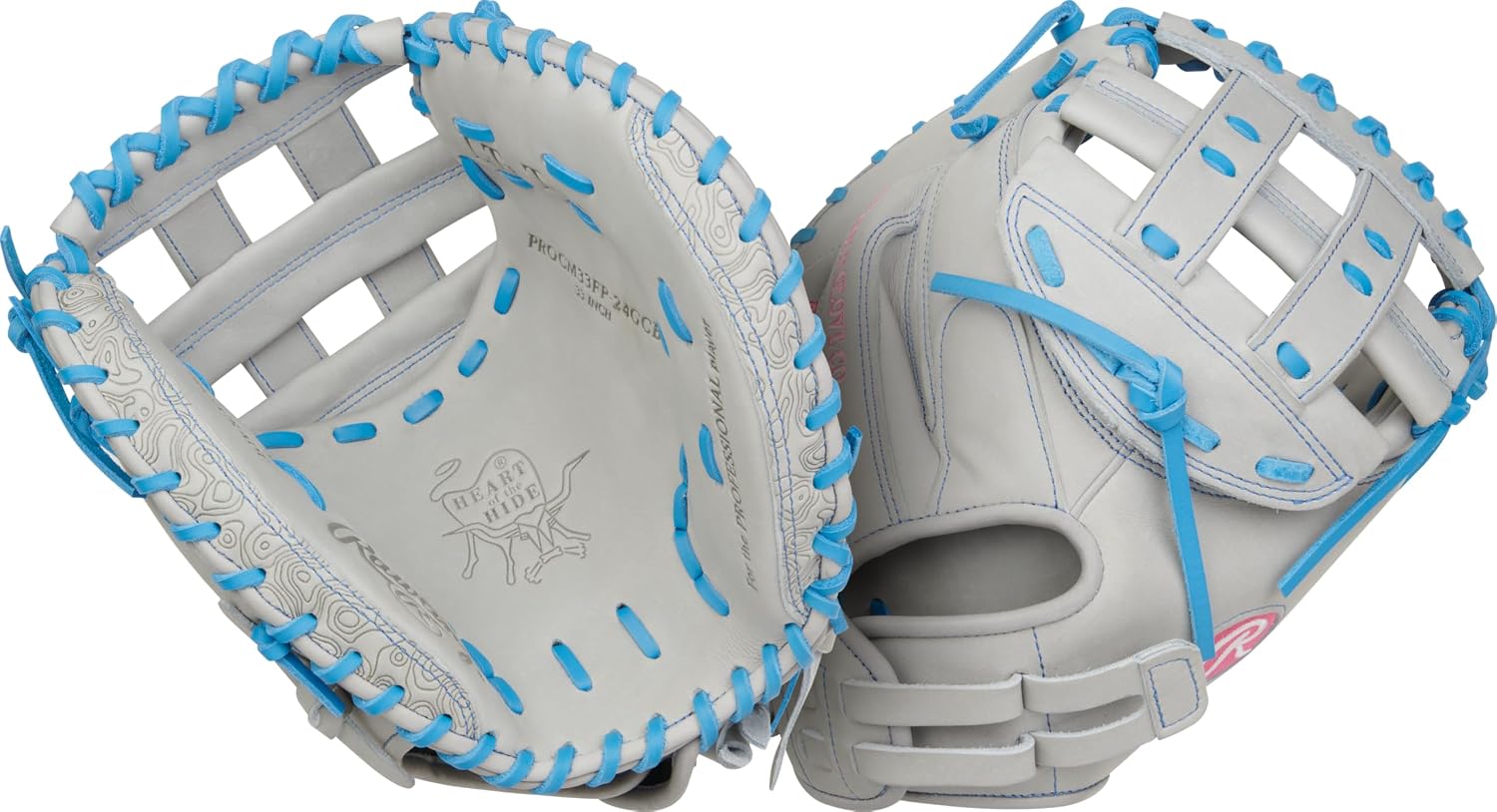
The ball decides the mitt. A baseball is 9 inches around. So a baseball catcher’s mitt runs 32 to 34.5 inches, with a closed one-piece web and a firmer, shallower pocket that frames fastballs. A softball is 12 inches around. So a fastpitch mitt runs 33 to 35 inches, with a deeper, softer pocket built to swallow the bigger ball.
This is not a preference. A fastpitch catcher in a baseball mitt fights the ball out of a pocket that was never built for it. Meanwhile, the reverse is a mitt that closes on air. So pick the baseball catcher’s mitts lineup or the fastpitch catcher’s mitts lineup first, then keep reading.
Decision 2 — What size?
Size by the hand and the level, not by the catcher the kid wants to be. A mitt a young catcher can’t close is a mitt that drops the ball. Likewise, a mitt too small for an adult hand leaves the fingers exposed to foul tips.
| Age / level | Baseball mitt | Fastpitch mitt |
|---|---|---|
| 7 and under | 29.5–30in | 29.5–30.5in |
| 8–10 | 30–31.5in | 30–32in |
| 11–13 | 31–32.5in | 31.5–33in |
| 14 – high school | 32–33.5in | 33–34in |
| Adult / college+ | 33–34.5in | 33–35in |
Those bands come from our catcher’s mitt size chart. It also covers where a growing catcher should sit inside a band. When in doubt at the youth level, size down. After all, a mitt that closes easily on a ball catches more than a mitt with an extra inch of leather.
Decision 3 — Which leather?
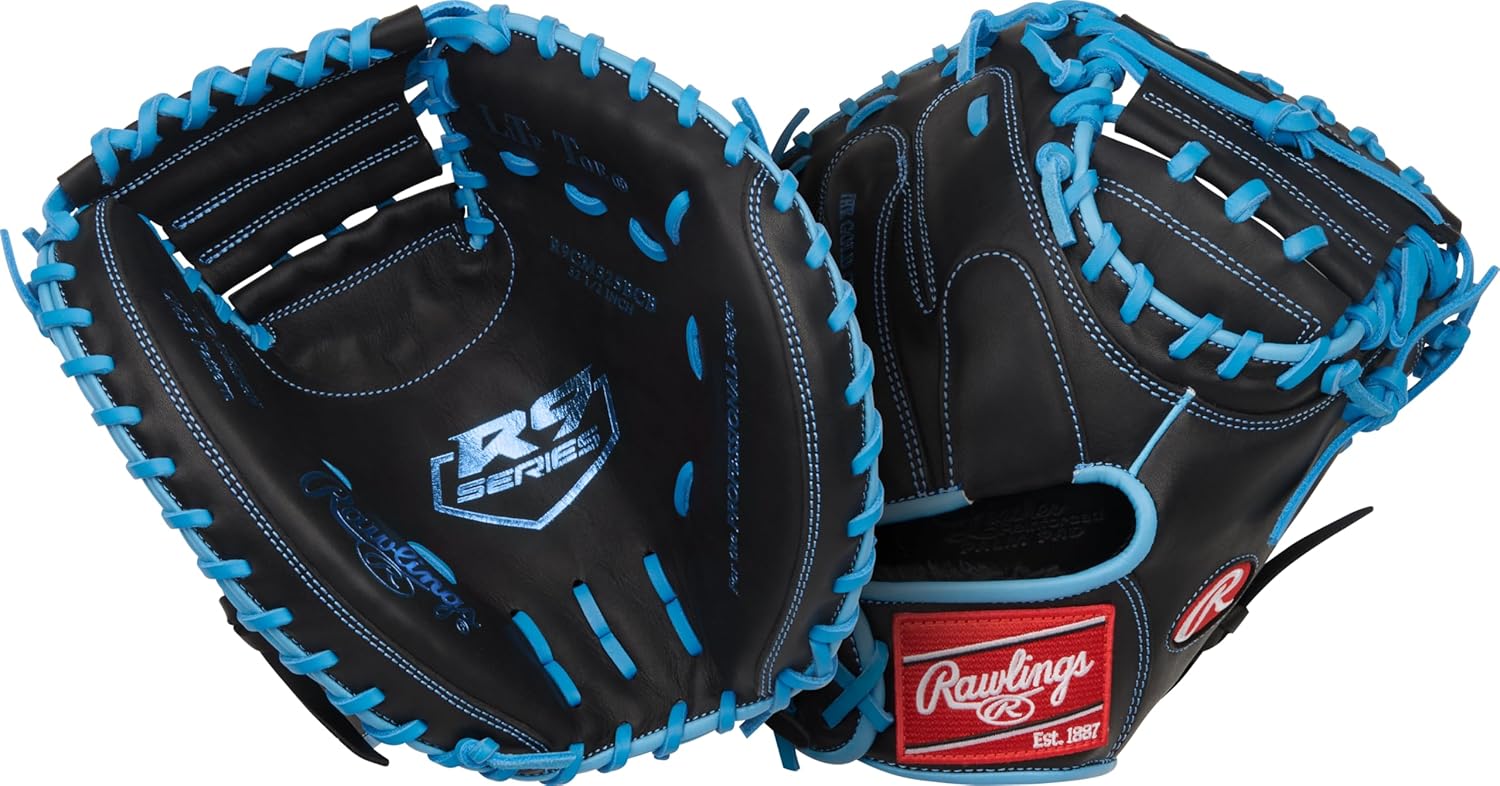
Leather grade is the one spec that predicts three things: how a mitt breaks in, how it carries, and how long it lasts. Every brand names its grades differently. But there are really four kinds. Our leather explainer decodes each brand’s names, so here is the short version.
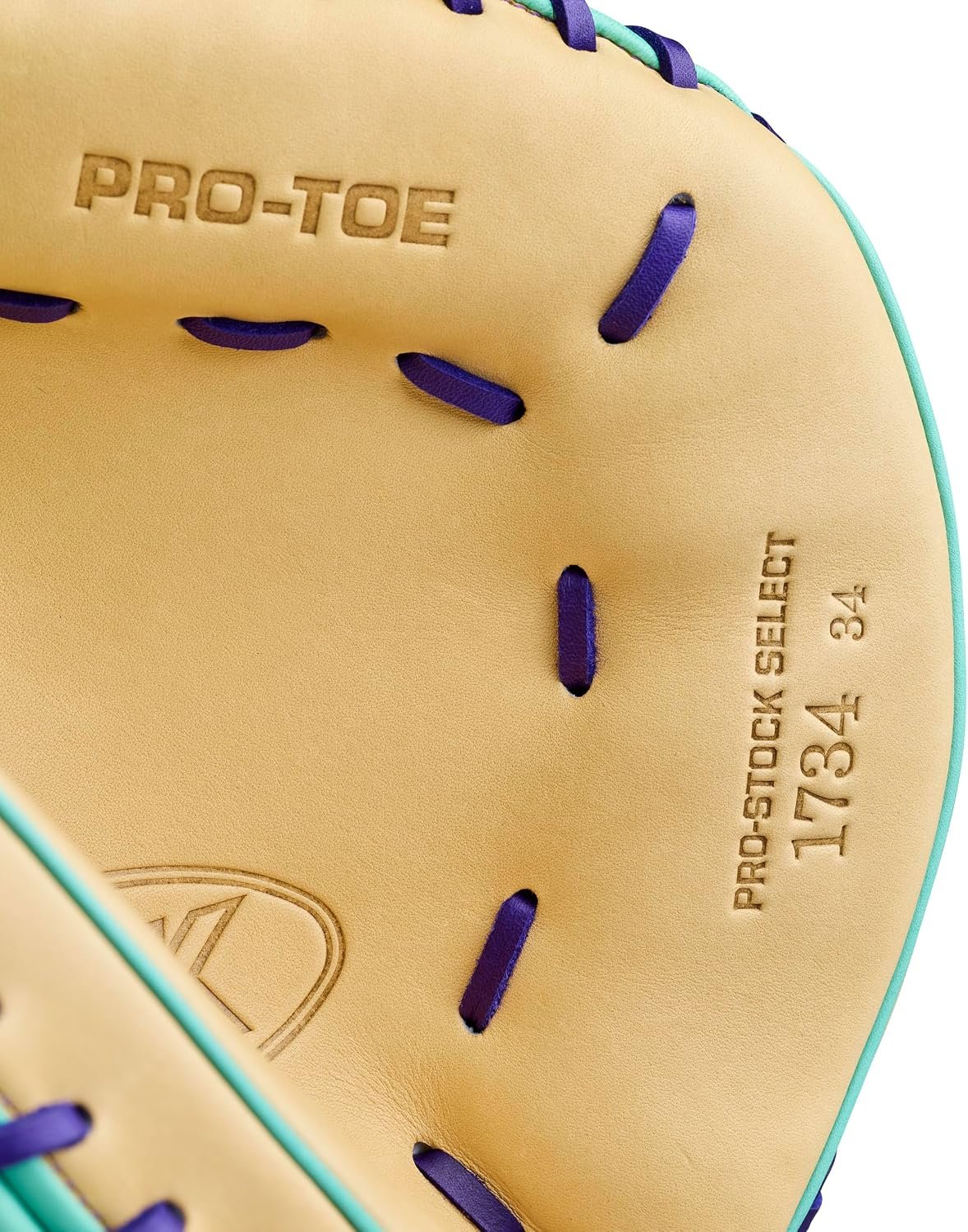
- Full-grain steerhide is what premium mitts are built from. Rawlings Heart of the Hide, Wilson Pro Stock and Pro Stock Select, and All-Star’s Japanese-tanned steerhide are all sorts of it. Expect a slow break-in, then several seasons of life.
- Kip leather is lighter and tighter-grained, used on some pro-level lines. Faster hands, a lighter mitt.
- Oil-treated cowhide is factory-softened so the mitt arrives close to game-ready. Most mid-tier lines. Less pocket structure to lose over time.
- Split-grain and synthetic are the entry point. Light, cheap, and fine for a first season.
The rule: buy the leather that matches the innings. A catcher who plays year-round wears out a mid-tier mitt in a season or two. So for that catcher, premium steerhide pays for itself. But a rec-league catcher, or one still growing, is better served by our budget catcher’s mitts. Those arrive nearly game-ready and cost a fraction of a premium mitt.
Decision 4 — Which pocket: framing or blocking?
This is the decision most buying guides skip. Yet it is the one that separates two mitts at the same price. So ask what your catcher does more of.
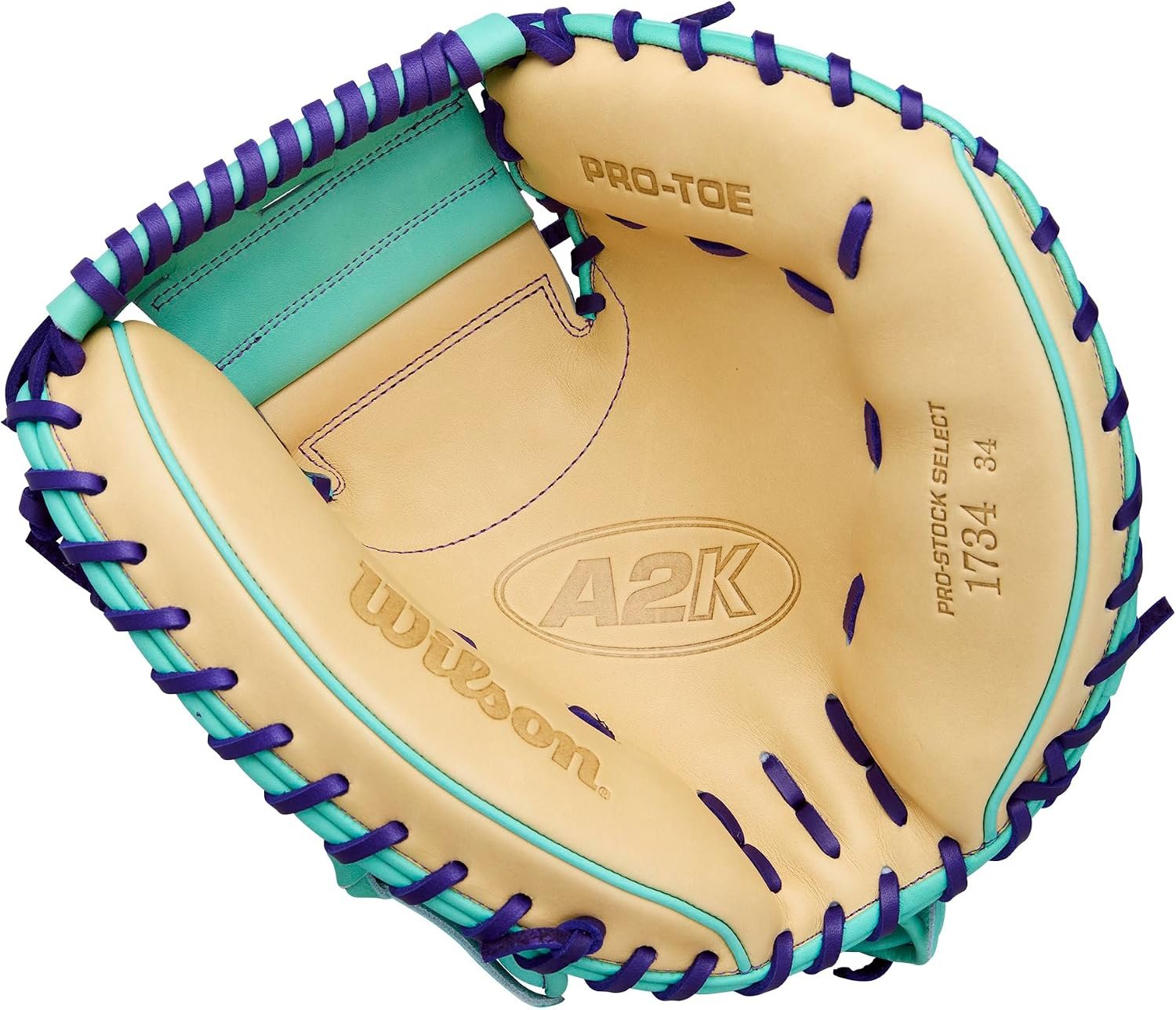
Blockers want a stiff, stable pocket that holds a ball without help. Then nothing squirts out on a ball in the dirt. The Wilson A2K’s Double Palm Construction is built for exactly that. In fact, it is why the A2K wins for heavy blockers in our Heart of the Hide vs A2K comparison.
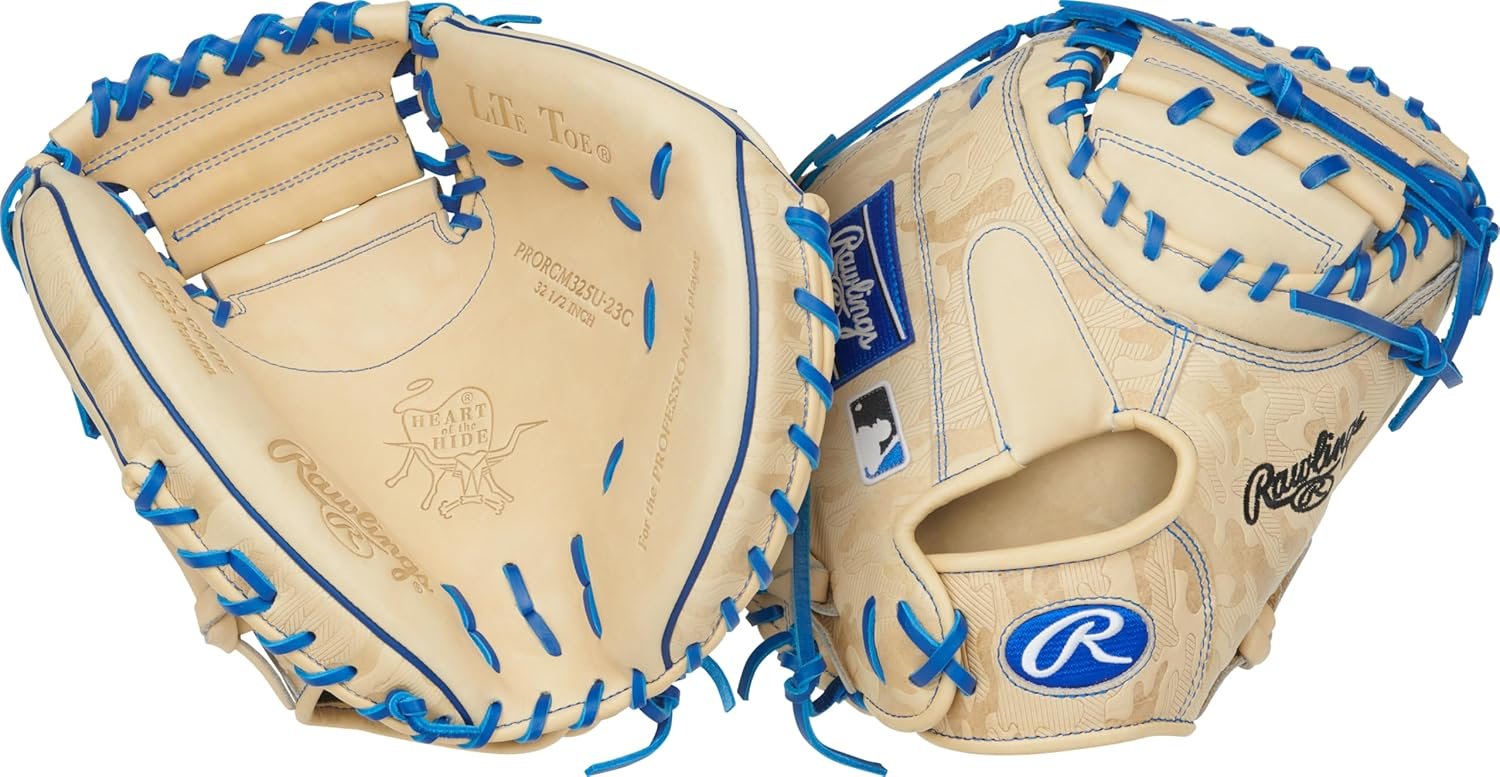
Framers often want a mitt that forms closer to the hand. Then the mitt moves as one piece with the wrist on the edges of the zone. Rawlings’ Heart of the Hide breaks in that way. Similarly, All-Star built its Pro-Elite Japan Series with a rotated pattern and looser web for a receiving-first catcher.
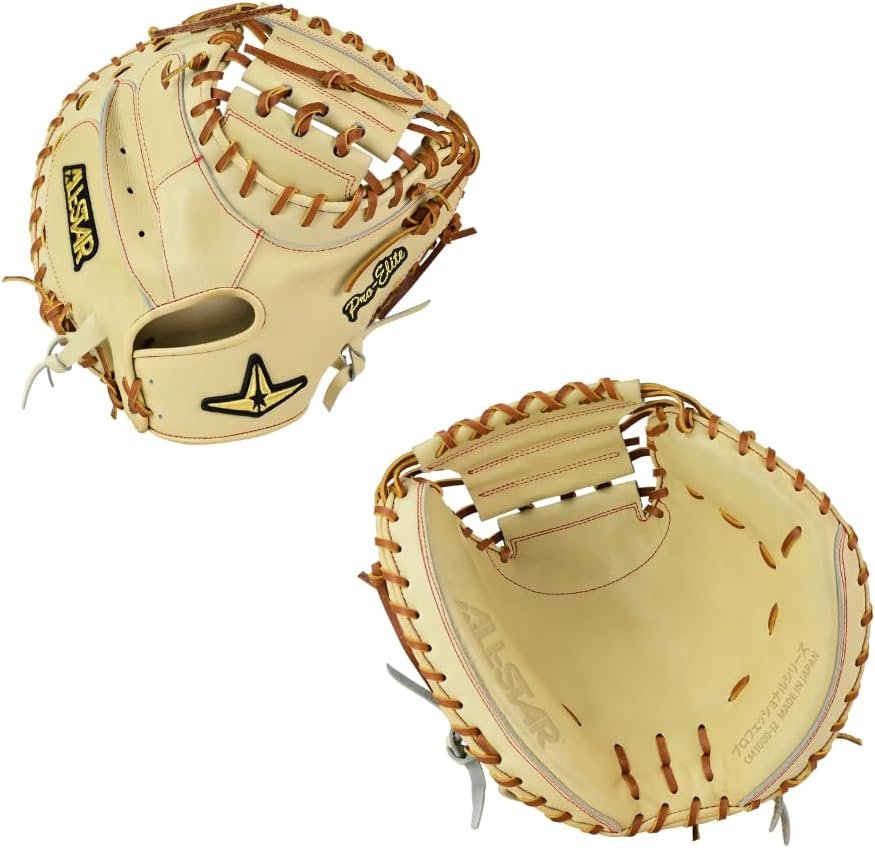
Neither is wrong. But a blocker in a soft mitt and a framer in a brick both spend the season fighting their gear. So decide this before you decide the brand.
Decision 5 — Fit: wrist, back, and closure
The last decision is the one you can only make with the mitt on. The wrist opening and back closure decide whether the mitt locks onto the hand or spins on a foul tip. Some lines offer a contour or narrow-fit option for smaller hands. For example, Rawlings’ Contour Fit Heart of the Hide is one. Others run a standard adult opening that a teen swims in.
So try the closure. Close the mitt around a ball with the hand relaxed. If the mitt rotates on the wrist, it is too loose. If the fingers can’t spread to the finger stalls, it is too tight or too small. When you can’t try it on, buy from a retailer with a real return window. Then check the fit on day one, before break-in starts.
Then break it in right
The best-chosen mitt in the world is ruined by an oven. Premium steerhide takes two to four weeks of reps: hand work, a ball in the pocket overnight, daily catch, a mallet on the landing spot. Our guide to how to break in a catcher’s mitt covers the method and the timeline for each premium mitt. It also covers the shortcuts to skip.
Putting it together: three catchers, three mitts
The 12-year-old travel-ball catcher
Baseball, 31–32.5 inches, oil-treated or entry-level premium leather, and a size that closes easily. Growing hands outrun premium leather. So this is a budget or mid-tier mitt year, with the premium purchase two seasons out.
The high school starter who frames well
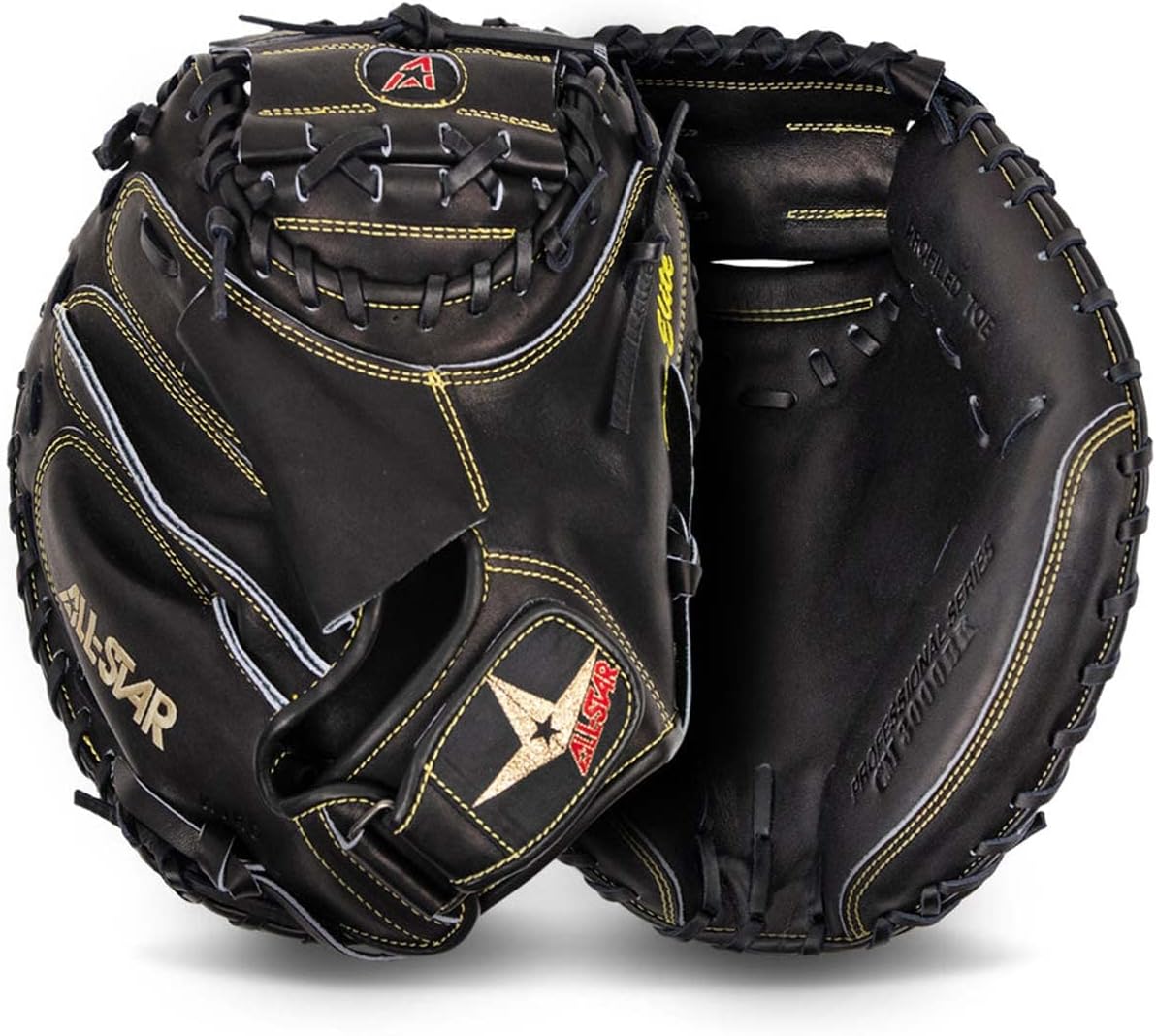
Baseball, 32–33.5 inches, full-grain steerhide, and a mitt that forms to the hand. The Rawlings Heart of the Hide at roughly $300–$350 is the natural fit. For the full picture, our premium catcher’s mitt guide puts it beside the All-Star Pro Elite CM3000 and the Wilsons.
The college or adult catcher who blocks a lot
Baseball, 33–34.5 inches, the stiffest premium pocket you’ll pay for. The Wilson A2K is built for this catcher. Meanwhile, the All-Star Pro Elite CM3000 is the best-overall pick in our premium guide, for a catcher who wants premium density with a shorter break-in.
Why brand comes last
Every major brand builds a good catcher’s mitt at every tier. Rawlings, Wilson, All-Star, Mizuno and Nokona each sell full-grain steerhide at the top and oil-treated cowhide in the middle. So a brand name tells you the grade names, not the grade. That is why our reviews score every mitt on the same five things: leather quality, break-in, durability, feel and pop, and value.
Brand does matter for two things. First, patterns: each brand’s catcher patterns fit hands a little differently, which is decision 5. Second, proof: more than 70 percent of MLB catchers reportedly wear Rawlings, and that history is worth something. But it comes after the five decisions, not before them. Once you’ve made them, our premium guide compares the specific mitts.
If the catalog does not carry the exact combination of size, web and leather you settled on, a custom catcher’s mitt lets you combine them — but make these five decisions first, so you know what to order.
The mistakes we see most
- Buying up a size “to grow into.” A mitt that won’t close drops balls now, and the catcher learns to hate it. Size for this season.
- Buying premium leather for a first season. Steerhide rewards innings. If the catcher may not stick behind the plate, start mid-tier and upgrade when the innings arrive.
- Skipping the pocket decision. Two $300 mitts can catch completely differently. Decide framer or blocker before you compare models.
- Baking the mitt. Whatever you chose, an oven or microwave takes the structure out of it. Break it in with reps.
- Ignoring the wrist. A mitt that spins on foul tips was never fitted. Try the closure, or buy where you can return it.
FAQs
What to look for in a baseball mitt?
Look for five things: the right ball type, a size that matches the catcher’s age and level, a leather grade you’ll actually break in, a pocket that fits how you catch, and a closure that fits the hand. Those are the five decisions. Brand comes last, because every major brand builds a good mitt at every tier.
What size catcher’s mitt should I get?
Most adult and high school baseball catchers use 32 to 34.5 inches. Fastpitch runs 33 to 35 inches. Youth sizes step down by age, to about 29.5 inches for the youngest players. So size by hand and level, not by ambition. A mitt a young catcher can’t close is a mitt that drops the ball.
Is an expensive catcher’s mitt worth it?
Yes, if the catcher plays enough innings to wear out a mid-tier mitt in a season or two. No, if the catcher is still growing or this is one season of rec ball. Premium steerhide costs more up front, but it lasts several seasons. Spread over that time, it often costs about the same per season as rebuying a cheap mitt every spring.
What is the difference between a baseball and a fastpitch catcher’s mitt?
A fastpitch mitt has a deeper, softer pocket and usually a slightly larger size, because it has to swallow a 12-inch ball. A baseball mitt runs smaller, with a firmer, shallower pocket for the 9-inch ball. The leather grades are often identical across a brand’s lines. So the ball decides the mitt, and nothing else does.
Should a catcher’s mitt be stiff or soft?
Stiff enough to hold its shape and stop the ball, soft enough to close on it. That balance is what break-in gives you. A blocker wants a stiffer, more stable pocket. Meanwhile, a framer often wants a mitt that forms closer to the hand. Either way, a mitt that arrives floppy stays floppy. But one you break in with reps holds the pocket you gave it.
Bottom line
Choose a catcher’s mitt in order: ball, size, leather, pocket, fit. Then break it in with reps. Once you’ve made those five decisions, you are ready to compare specific mitts. So start with the premium mitts worth comparing, or step back to the full catcher’s mitts guide.