
Custom Catcher’s Mitts: Is a Build-Your-Own Worth It?
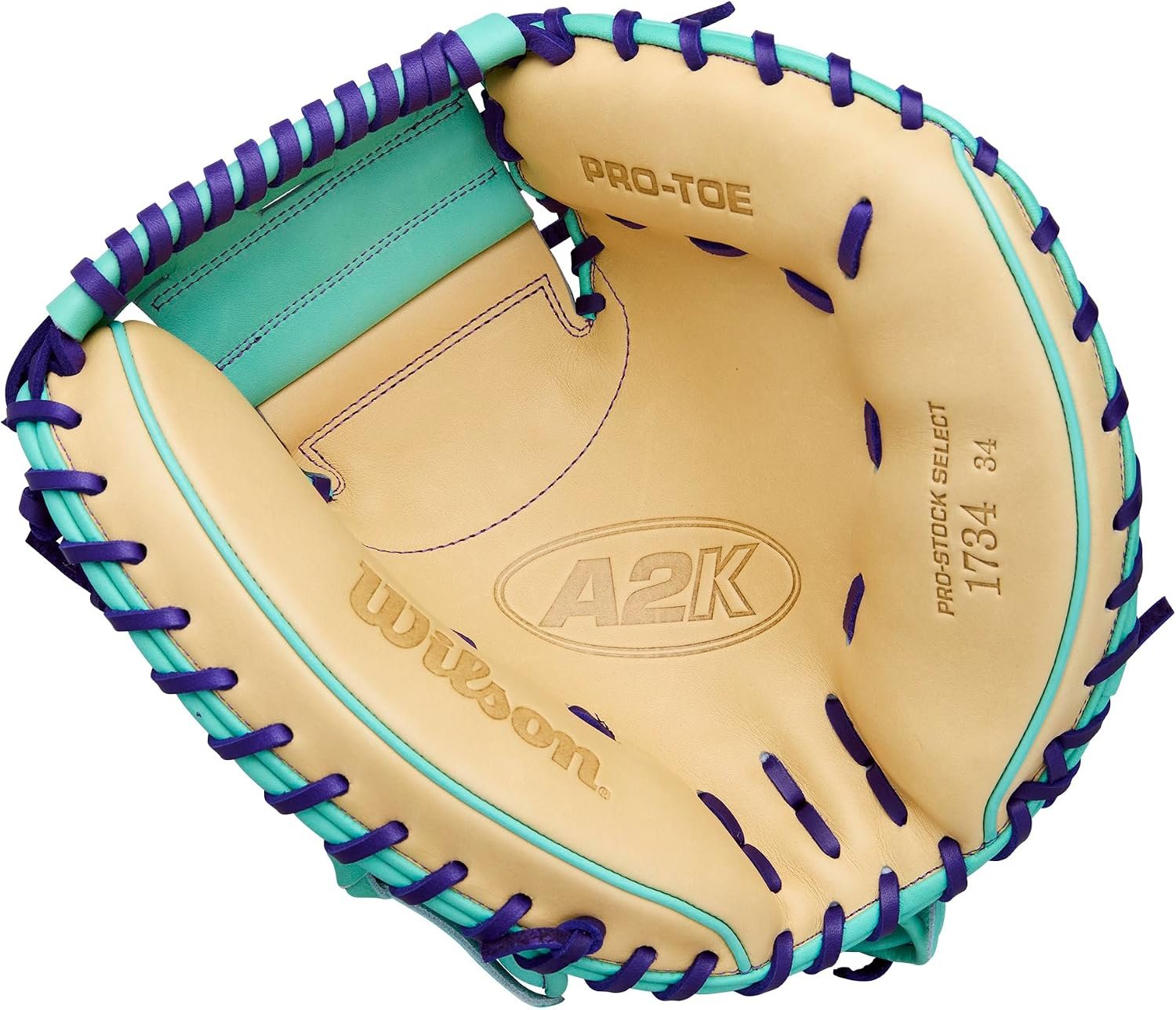
A custom catcher’s mitt is worth it when you already know your exact size, pocket depth, web style and leather grade — and you plan to catch in it for three or more seasons. If either half of that sentence does not fit, buy off the rack: a stock Heart of the Hide or A2000 bought today costs the same $350–$550, ships in days instead of eight-to-twelve weeks, and comes from the same maker. Custom buys you the combination the catalog doesn’t carry, not better leather. This page covers what you can actually change, what the four real builders charge, and who’s better served with a “good for everybody” mitt.
What “custom” actually means for a catcher’s mitt
A custom catcher’s mitt is not designed from scratch. Every builder starts from a base pattern — a proven catcher’s mitt shape — and lets you change specific variables on top of it. Every one of those variables sorts with one test:
Could you feel the difference with your eyes closed? If yes, it’s performance. If no, it’s paint.
Changes how it catches
| Spec | What it decides |
|---|---|
| Leather grade | How long it lasts and how it breaks in — the spec that actually costs money. |
| Size (circumference) | How much of the plate you cover, and how fast the ball gets back out. |
| Web style | Framer or blocker — the two webs catch differently. |
| Pocket depth | Shallow gets the ball out fast; deep holds it secure. |
| Wrist adjustment | Whether it stays planted on your hand through 90 pitches. |
| Padding weight | How much of a 90 mph fastball you still feel in the seventh inning. |
Get these six right and the mitt stops being equipment and starts being a known quantity — the pitcher sees the same steady target in the sixth inning that he saw in the first, and that consistency is something a battery builds on. A custom order is the only way to combine them outside the catalog; our choosing guide walks through each decision in order.
Changes how it looks
| Option | What it changes |
|---|---|
| Shell, lace & web color | Looks. Nothing else. |
| Binding & welting | The trim on the edges and finger seams. Also looks. |
| Embroidery & personalization | Looks — and a name stitched into the thumb kills resale value. |
Builders lead with these because color screenshots sell. They’re fun — just don’t let them be the only reason you go custom.
Custom catcher’s mitt builders compared
Four companies currently offer a build-your-own catcher’s mitt with meaningful pattern choices. Prices and lead times below are what each builder’s own site showed as of August 26, 2026; they move seasonally, so treat them as the shape of the market.
| Builder | Base pattern | Typical price | Lead time | Key detail |
|---|---|---|---|---|
| Wilson Custom | A2000 or A2K catcher patterns | $350–$500+ | 4–6 weeks | Pro Stock Leather; same factory as the catalog A2000/A2K |
| Rawlings Custom | Heart of the Hide or Pro Preferred | $350–$550+ | 6–10 weeks | Same steerhide as the catalog HotH; Pro Preferred adds kip leather |
| 44 Pro Gloves | Proprietary catcher pattern | $300–$400 | 4–8 weeks | Hand-crafted in the US; full custom including pocket depth |
| Nokona | Nokona catcher pattern | $400–$500+ | 6–12 weeks | American-made; Kangaroo and American steerhide options |
Two things jump out of that table. First, the floor is roughly the same as the catalog price for the builder’s own premium mitt — a Wilson A2000 custom starts around where a stock A2000 sits. You are not paying a premium for the leather; you are paying for the choices on top of it. Second, lead times are real. Eight weeks means the mitt ships during the off-season, and it arrives stiff. Factor in a full break-in period on top of that, and a September gift order for the Spring season is the realistic timeline.

How we researched this
- Scope: builders offering a true build-your-own catcher’s mitt with pattern-level choices — Wilson, Rawlings, 44 Pro and Nokona. Team-dealer semi-customs and embroidery-only shops are excluded.
- Sources: each builder’s own custom-order tool, checked August 26, 2026. Prices and lead times are quoted from those pages, not from third-party retailers.
- What we compared: base patterns, leather options, price floor and ceiling, published lead times, and return policies.
- Known gaps: lead times stretch in pre-season demand and builders revise pricing without notice — confirm both on the builder’s site before ordering. We have not caught game innings in a custom from every builder on this list.
Custom versus stock: where the money goes
The cost-per-season argument from our worth-it page applies to customs the same way it applies to any premium mitt. A $450 custom that lasts four-plus seasons costs $112 a season or less. The question is whether those four-plus seasons are more likely with a custom than with a stock mitt at the same leather grade — and honestly, they are not. The leather is the same. The stitching is the same. The pocket breaks in the same way.
What a custom does buy is fit. A mitt built to your measured hand disappears from your attention — and attention is the position’s real currency. The catcher who is not thinking about equipment is the one processing the running game, reading the hitter’s feet, and noticing that his pitcher’s release point is drifting before anyone else in the park does. The catcher who has earned that kind of specificity exists — usually a college or adult-league player who has worn three or four mitts and learned what works. A high school sophomore who has not yet settled on a size is not that catcher yet.
The leather question
Every builder’s custom tool defaults to their house leather, which is the same hide their catalog mitts are built from. A Wilson custom uses Pro Stock Leather. A Rawlings custom uses their Heart of the Hide steerhide. A 44 Pro custom uses their proprietary American steerhide. Our leather explainer covers why that grade matters more than any other spec on the page.
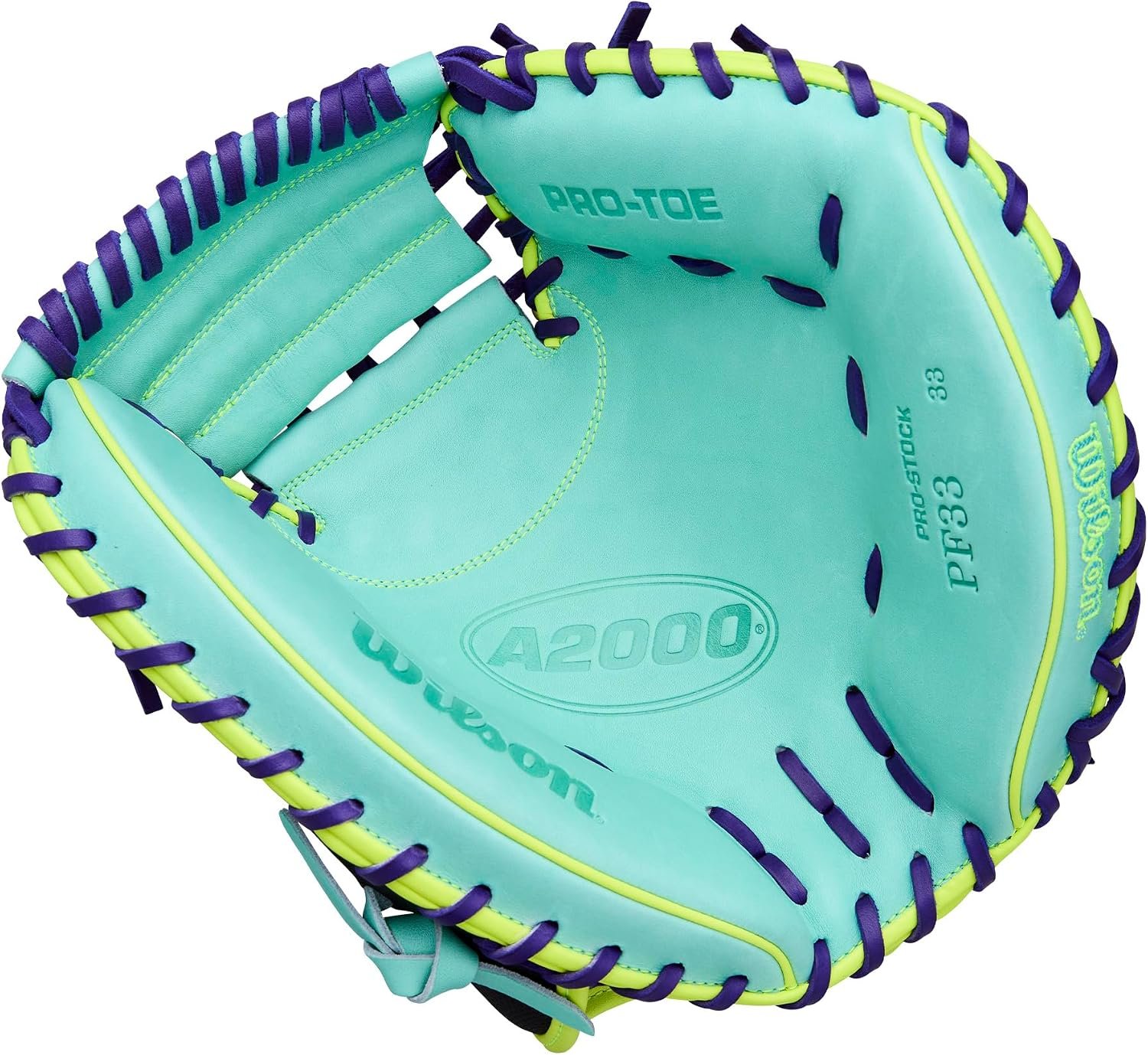
The upgrade path on most builders is a tier jump, not an add-on. Wilson offers A2K leather in their custom tool — Japanese tanned steerhide, which raises the price to the $475–$500 range as of August 26, 2026. Rawlings offers Pro Preferred kip, which sits above Heart of the Hide. In both cases you are buying the next leather up, and the custom tool is the only place to combine that leather with a non-catalog pattern.
Custom or off the rack: which should you order?
Order a custom if you can name your specs without looking them up
If you can state the circumference, web style and pocket depth you want from memory, a custom lets you combine those choices freely — and if the catalog does not carry your combination (say a 34-inch one-piece closed web in A2K leather), a custom order is the only way to get it. If you cannot, start with the size chart and the web-pattern explainer first.
Order a custom if you are a left-handed catcher
The stock shelf for left-handed catcher’s mitts is extremely thin, and no manufacturer stocks a premium LHT catcher’s mitt at all. Custom is often the only path to serious leather in a left-hand throw.
Buy off the rack if you are still growing or still learning your preferences
A custom mitt built to a hand that grows an inch next year is a $400 mitt that no longer fits, and a first serious mitt should be a teacher, not a monument — one to two seasons in a stock A2000 or Heart of the Hide teaches you more about your preferences than any builder questionnaire. The same goes if the season starts before the mitt would arrive: a stock mitt ships in days, a custom in weeks, and it still needs break-in after that.
Buy nothing new if your current mitt still fits and still closes
A broken-in premium mitt that fits is the best mitt money can no longer buy. If the leather is sound and the pocket is true, relacing and conditioning beat replacing — and the money waits for the year your hand, your level, or your pattern actually changes. Wanting new colors is not that year.
How to order without regrets
- Measure your hand, not your current mitt. The size chart gives you the number. Do not assume your next mitt should be the same size as your current one — especially if you bought the current one two years ago.
- Pick the web for function, not looks. A one-piece closed web and a two-piece closed web catch differently. Decide based on whether you are a framer or a blocker — our playing-style guide covers that split — not based on which screenshot looks better.
- Order in the off-season. A November order for a March season gives you time for delivery plus break-in. A February order does not. The catcher who orders in November is doing what catchers do — seeing the late innings from the early ones.
- Understand the return policy before you click. Most custom mitts are final sale. Read the builder’s policy, and be certain of your measurements before ordering.
- Skip the embroidery if you are reselling later. A name stitched into the thumb kills resale value. Premium mitts hold value well — a personalized one does not.
Frequently asked questions
How much does a custom catcher’s mitt cost?
A custom catcher’s mitt costs between $300 and $550 as of August 26, 2026, depending on the builder and the leather grade. Wilson and Rawlings customs start around $350, which is roughly what their stock premium mitts cost. Upgrading to a higher leather tier — A2K at Wilson, Pro Preferred at Rawlings — pushes the price toward $500. 44 Pro Gloves starts lower, around $300, for a hand-built mitt in American steerhide.
How long does a custom catcher’s mitt take to arrive?
A custom catcher’s mitt takes four to twelve weeks to arrive, depending on the builder and the time of year. Wilson is typically on the shorter end at four to six weeks. Rawlings and Nokona tend toward six to twelve. Pre-season demand stretches every builder’s timeline, so ordering in November or December for a spring season is the safest bet.
Can you return a custom catcher’s mitt?
Most custom catcher’s mitts cannot be returned — custom orders are almost always final sale because the mitt was built to your specifications. Some builders will repair manufacturing defects, but a mitt that fits exactly the way you ordered and you simply do not like is yours to keep. This is the strongest argument for knowing your measurements before ordering.
Is a custom mitt better than a stock premium mitt?
A custom catcher’s mitt is not inherently better than a stock premium mitt — the leather, the stitching and the factory are the same. A Wilson A2000 custom comes off the same line as a stock A2000. What you gain is the ability to combine specific size, web, pocket and leather choices that the catalog does not offer together. If the catalog already carries your combination, the stock mitt is the same glove without the wait.
Should a youth catcher get a custom mitt?
A youth catcher should almost never get a custom mitt. A growing hand will outgrow a fitted custom within a season or two, which eliminates the durability advantage that justifies the price. A stock youth catcher’s mitt sized to the hand today is the right buy until the catcher stops growing and settles into the position full-time.
The bottom line
A custom catcher’s mitt is the right buy for the catcher who has done the work to know exactly what they need and will be behind the plate long enough to collect on it; for everyone else, the stock premium shelf is the same leather without the wait. Start with how to choose a catcher’s mitt if you are still deciding, or our premium catcher’s mitt roundup for what the catalog does best.