
Drake Baldwin Named NL All-Star Starting Catcher
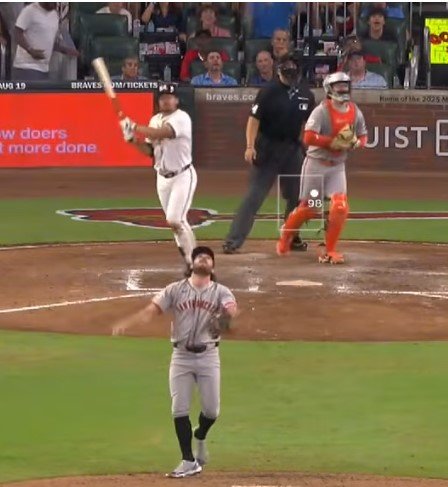
The Braves catcher missed a month hurt, came back, and hit his way into the NL starting lineup — here’s what that proves about the catcher position.
No catcher in the National League hit his way to the Midsummer Classic the way Drake Baldwin did.
The Atlanta Braves catcher was elected by fans as the NL starting catcher for the 2026 MLB All-Star Game — set for July 14 at Citizens Bank Park in Philadelphia. He is 25 years old, in only his second big-league season, and he earned that start with his bat.
Baldwin’s 2026 line entering the break: .251 average, 15 home runs, 43 RBI, .787 OPS in 65 games. Those numbers came despite a right oblique strain that kept him off the field for nearly a month in May. He came back, settled into his crouch, and kept hitting. Fans noticed.
He beat out Dodgers catcher Will Smith for the starting spot. That is not a small thing — Smith is one of the most respected catchers in the league. Baldwin took the vote anyway.
This is his first All-Star nod. He won NL Rookie of the Year in 2025 — the award given to the best first-year player in the league — after posting a .274 average, 19 home runs, and an .810 OPS across 124 games. The All-Star start is the next chapter. Sean Murphy was the last Braves catcher to start an All-Star Game, back in 2023. Baldwin is now in that company, and he’s doing it in year two.
He heads to Philadelphia alongside four other Braves: Ozzie Albies, Matt Olson, Chris Sale, and Raisel Iglesias. Hunter Goodman and William Contreras join Baldwin as NL catchers in the game. It is a deep catching class. Baldwin starts.
What a catcher can learn from this
The position gives a hitter every reason to settle. Nine innings in a squat. Foul tips off the knuckles. A full game calling pitches before you ever step into the box. It is exhausting, and the offensive numbers often show it.
Baldwin did not settle. He came back from a month on the injured list and kept producing. His .787 OPS on the season — with nearly a month gone from the calendar — was enough to put him ahead of every NL catcher in the fan vote for a starting spot in the Midsummer Classic.
That is the lesson: the position does not set your offensive ceiling. Your work does.
If you are a catcher who can manage a game behind the plate and still bring real focus to every at-bat, you are building the same dual discipline Baldwin has. It does not happen overnight. But it starts at practice, at your level, with the reps you put in today.
Sweat the gear and never fear.
Try this at your next practice
- Double-duty rounds. Catch a full bullpen or simulated inning first — call pitches, block, throw. Then, without a break, step into the cage for five to ten live swings or tee work. The goal is practicing your at-bats while fatigued from behind the plate. Baldwin manages exactly this mental and physical transition over 162 games. You can build the habit in one rep.
- One-hand blocking and pop-up recovery. Set up in your crouch. Have a coach or partner throw short-hop balls in the dirt, then immediately follow each block with a toss back and reset. Catchers who survive long games and stay offensively dangerous have to recover fast between pitches. This drill builds both the blocking habit and the physical reset that keeps you sharp through nine innings.
- Situational hitting off a machine. Set the machine to simulate a fastball in and a breaking ball away, alternating randomly. Take ten rounds with a defined approach for each: drive the fastball, use the opposite field on the breaking ball. The discipline is the point — same discipline a catcher needs to manage a full defensive game and still execute a clear plan at the plate.
Sources: MLB catcher power rankings entering week 13 — Yahoo Sports; 2026 MLB All-Star Game rosters: Snubs, other takeaways — ESPN.