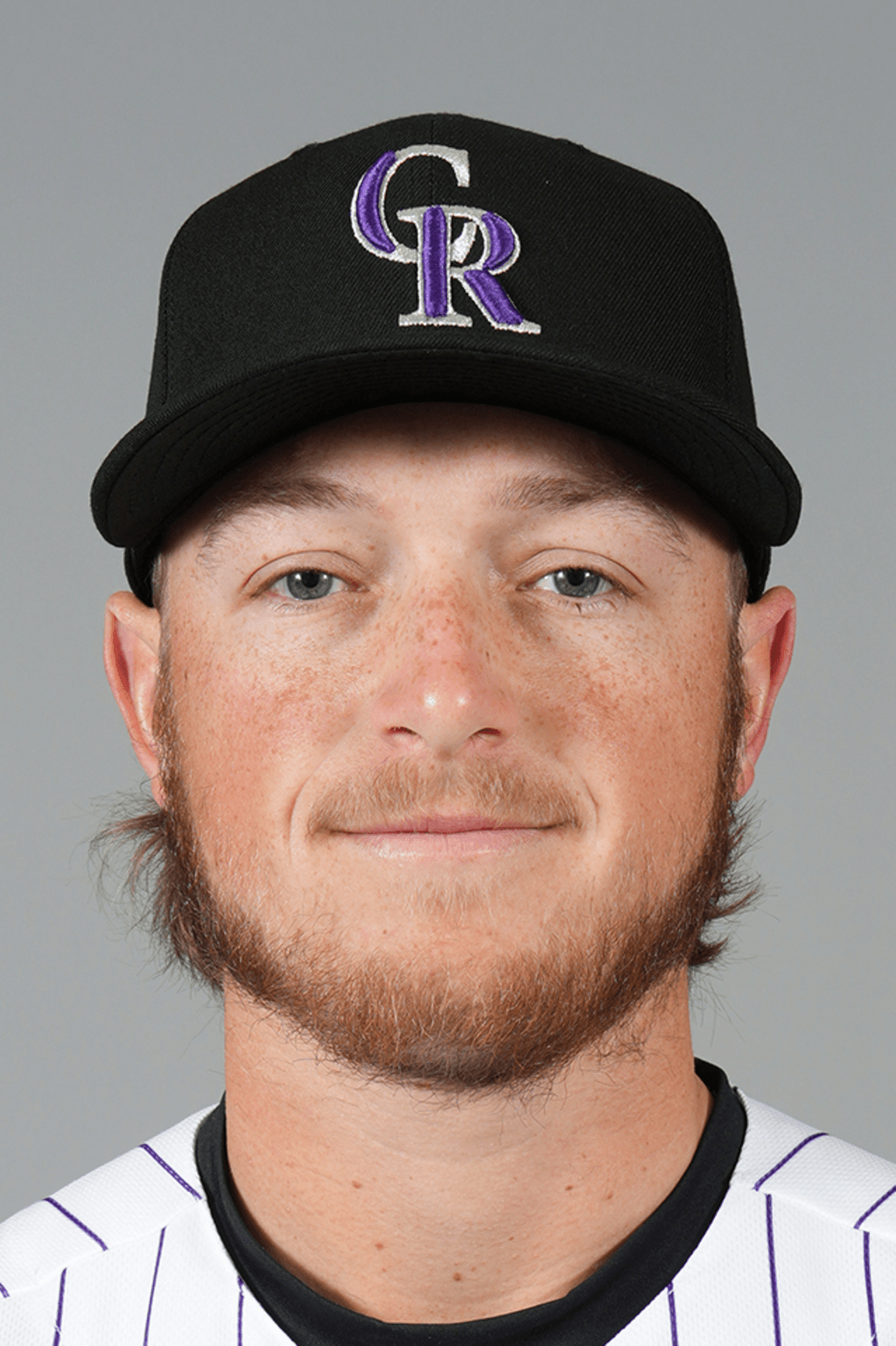
Hunter Goodman: 33 Home Runs and Rare Company
▶ Watch this story in under a minute — or read on.
Hunter Goodman is the fourth National League catcher in history with back-to-back 30-homer seasons — and 18 road home runs say the power has nothing to do with Coors Field.
Hunter Goodman went 4-for-4 against Kansas City with two home runs and five runs batted in. It was his sixth multi-homer game of the year. No National League catcher had managed six in a single season since Mike Piazza in 1995.
Two weeks ago we covered the night Goodman hit three home runs and set a Rockies franchise record. He has not cooled off since.
He now sits at 33 home runs, which clears the 31 he hit last season. That was his career high, and he passed it with two months still to play.
The company he just joined
Goodman is the fourth National League catcher in history to hit 30 or more home runs in back-to-back seasons.
The other three are names that catchers grow up hearing. Mike Piazza, the Hall of Famer, did it eight years running from 1995 through 2002. Roy Campanella, the Hall of Fame Brooklyn Dodgers catcher, did it in 1950 and 1951. Todd Hundley did it in 1996 and 1997.
Goodman also carried 27 home runs into the All-Star break. No National League catcher had brought that many to the break since Johnny Bench hit 28 in 1970.
| 2026 | |
|---|---|
| Games | 102 |
| Home runs | 33 |
| RBI | 65 |
| Average | .258 |
But he plays at Coors Field
Every Rockies hitter gets the same question, and it is a fair one. Coors Field sits a mile above sea level, so the thin air helps the ball carry. How much of this is the park?
Through late July, 18 of his first 31 home runs came on the road.
The power travels.
The noise
Goodman’s name sat in the middle of trade talk for weeks. The Yankees called. So did the Red Sox and the Rays. Colorado listened, then set an asking price high enough to cool most of it off.
Then, one day before the deadline, the Rockies pulled him from the lineup against Kansas City. Plenty of people read that as a trade landing any minute.
It wasn’t. Goodman had not taken a day off since July 18, and his team finally gave him one.
When reporters asked about the speculation, he did not describe blocking it out or ignoring it. He described it as something that was never his to hold:
“Looking at the stuff like that, it does more bad for you than good. So there’s no point, because it’s all out of your control anyway.”
What a catcher can learn from this
There is a real difference between ignoring something and deciding it is not yours to carry. Ignoring takes effort, and it fails the moment someone brings it up. Goodman did the other thing. He sorted the situation into what he controlled and what he did not, and then he spent his attention on the first pile.
A catcher gets more chances to practice that than anyone else on the field.
You do not control the umpire’s zone. You do not control whether your pitcher has his breaking ball tonight, and you certainly do not control who is watching from the stands. You control your setup, your target, your footwork on the throw, and what you say to the pitcher after a bad inning.
The 2025 National League Silver Slugger winner at catcher is going to keep hearing his name in rumors, because that is what happens when you hit like this. Meanwhile the swing keeps working, because that is the part he actually owns.
Sweat the gear and never fear. Do the work that belongs to you, and let the rest be somebody else’s problem.
Try this at your next practice
- Name the two piles. Before you put the gear on, say out loud one thing you control today and one thing you don’t. I control where I set my target. I don’t control whether the umpire gives me the low strike. Naming them takes ten seconds, and it keeps the second pile from renting space in your head all game.
- Build a reset between pitches. Pick one physical cue — a tap of the mask, a look at the outfield grass, a breath before you crouch. Use the same one every time something goes wrong. A reset you practice when things are calm is the only kind that works when they aren’t.
- Talk to your pitcher about the next pitch, not the last one. After a walk or a passed ball, the trip to the mound should be about what you are throwing next. The last pitch is already in the second pile. Your pitcher is watching how you handle it, and he will copy you.
Sources: Rockies All-Star catcher Hunter Goodman tunes out trade buzz, keeps up power surge as deadline nears (FOX Sports/AP), Rockies’ Hunter Goodman scratched from lineup before trade deadline, but not for why you think (Yahoo Sports), Colorado Rockies Slugger First Catcher to Do This in 31 Years (Sports Illustrated), Hunter Goodman player page (ESPN).