
How to Clean and Condition a Catcher’s Mitt
Cleaning a catcher’s mitt takes a brush after every game, a damp-cloth wipe when it looks dull, and a thin coat of conditioner two or three times a season. That is the whole program, and none of it takes ten minutes. This page is the method — the product picks live here, and breaking in a new mitt is its own different job. The routine below is what keeps a broken-in pocket alive for years.
The care routine at a glance
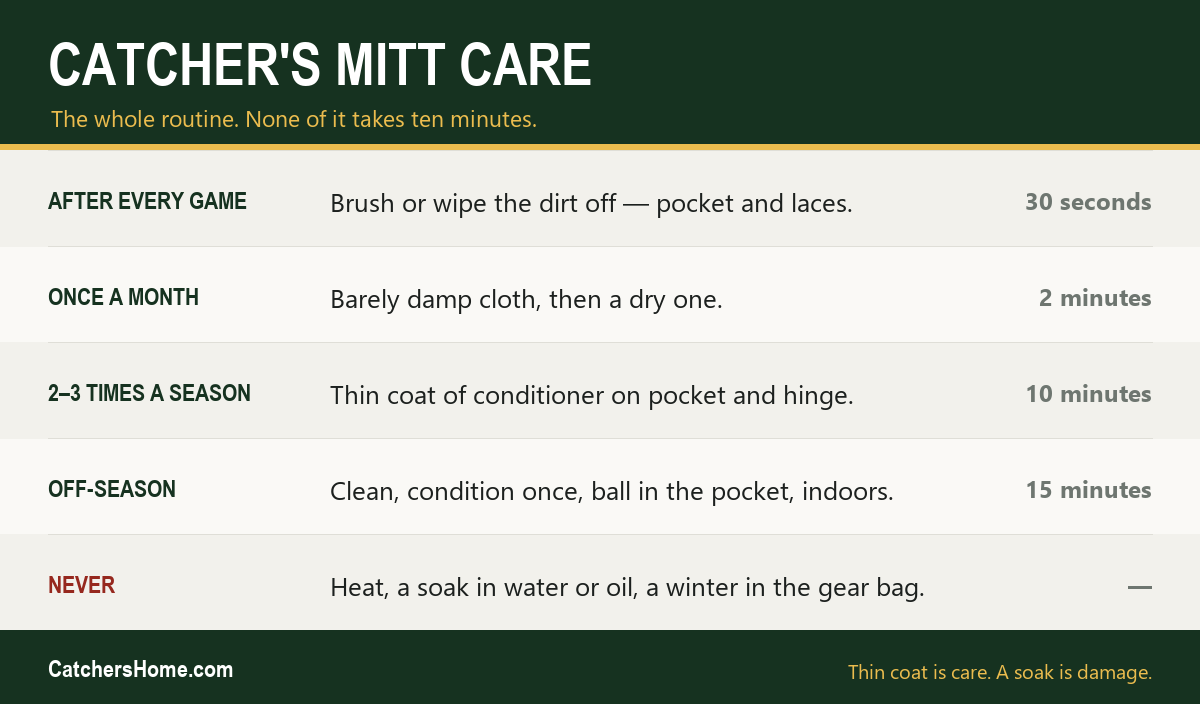
| When | What | Time |
|---|---|---|
| After every game | Brush or wipe the dirt off, pocket and laces | 30 seconds |
| Monthly, or when dull | Damp-cloth wipe, then dry cloth | 2 minutes |
| 2–3 times a season | Thin coat of conditioner on pocket and hinge | 10 minutes |
| Off-season | Clean, condition once, ball in pocket, store indoors | 15 minutes |
| Never | Heat, a soak in water or oil, a winter in the gear bag | — |
Two things about that table before the details. First, the after-game brush matters more than everything else combined, because dirt is what grinds a pocket down from the inside. Second, the conditioner line says thin for a reason. More care is not better care — the most common way owners ruin good leather is loving it too hard.
The six steps, in order
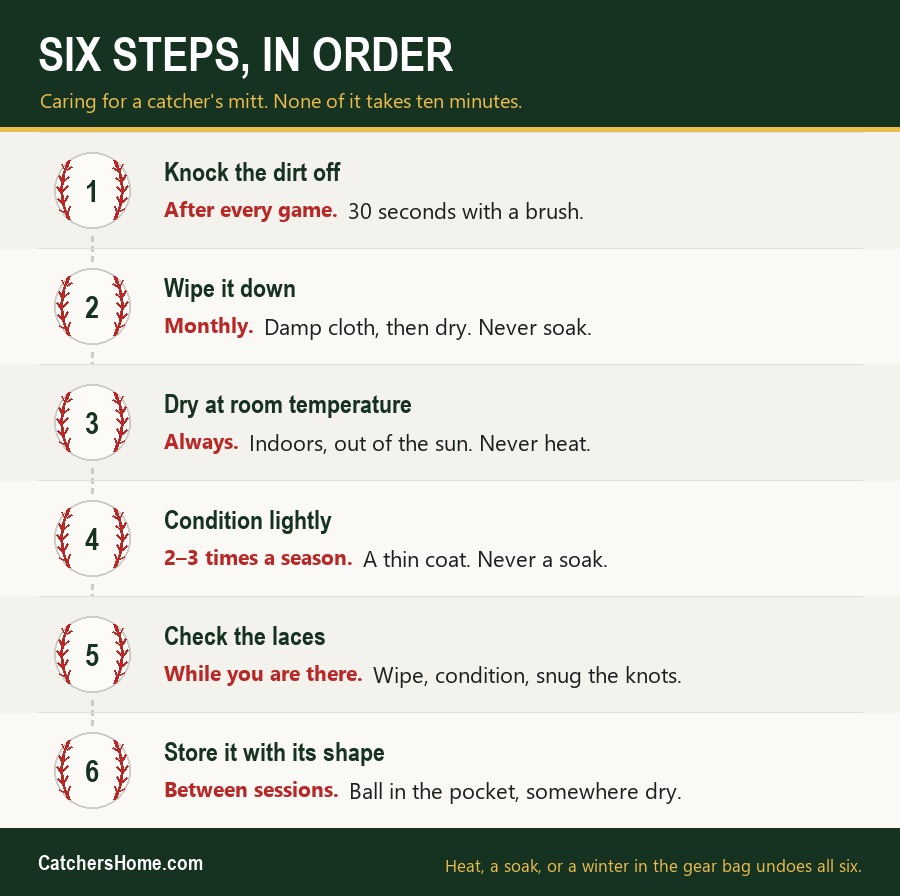
Step 1 — Knock the dirt off after every game
Thirty seconds with a horsehair brush or a dry cloth, pocket and laces included. Dirt left in the pocket grinds the leather like sandpaper every time the mitt closes, so this one habit does more than everything else combined.
Step 2 — Wipe it down when it looks dull
Once a month or so, wipe the leather with a barely damp cloth, then dry it with a clean one. Meanwhile, stubborn grime takes a small dab of leather-safe cleaner on the cloth, never applied straight to the mitt. And never soak leather in water — a wet mitt is a damaged mitt waiting to happen.
Step 3 — Dry it at room temperature, always
A mitt that got caught in the rain dries on a shelf indoors, out of the sun, stuffed loosely with newspaper if it is soaked. Heat, however, is the one unforgivable shortcut. The oven, the radiator, the hot car trunk — all of them cook the natural oils out and leave the leather brittle.
Step 4 — Condition lightly, two or three times a season
When the leather feels dry or looks chalky, rub a thin coat of glove conditioner into the pocket and hinge with a cloth, let it sit, then buff off what did not absorb. A thin coat is care; a soak is damage. Skip it entirely if the maker says no oil, and go more often only in a dry climate.
Step 5 — Check the laces while you are at it
Wipe the laces, work a little conditioner into them when they look pale, and snug up loose knots at the web and heel. Laces are the mitt’s wear part, so catching a stretched one early is the difference between a five-minute fix and a mid-game snap.
Step 6 — Store it with its shape, not in the bag
Between sessions, the mitt lives somewhere dry with a ball in the pocket. Then, for the off-season, clean it, condition it once, wrap it loosely closed around the ball, and keep it indoors. A winter spent crushed under gear in a bag in the garage undoes a season of good care.
The mistakes that undo it all
- Heat, in any form. Oven, microwave, radiator, hot trunk. Heat cooks the oils out and leaves leather brittle — the same reason it is banned from break-in.
- The oil soak. A drenched mitt gains weight, loses structure, and collects dirt. Dry leather can be conditioned back; oil-heavy leather cannot be dried out.
- Household products. Petroleum jelly, cooking oil, furniture polish. Leather is skin, so feed it the thing that was made for it.
- Conditioning tan or maker-restricted leather blind. Wilson says the A2000 needs no oil at all, and oil can stain Japanese-tanned leather. Read the maker’s care line first.
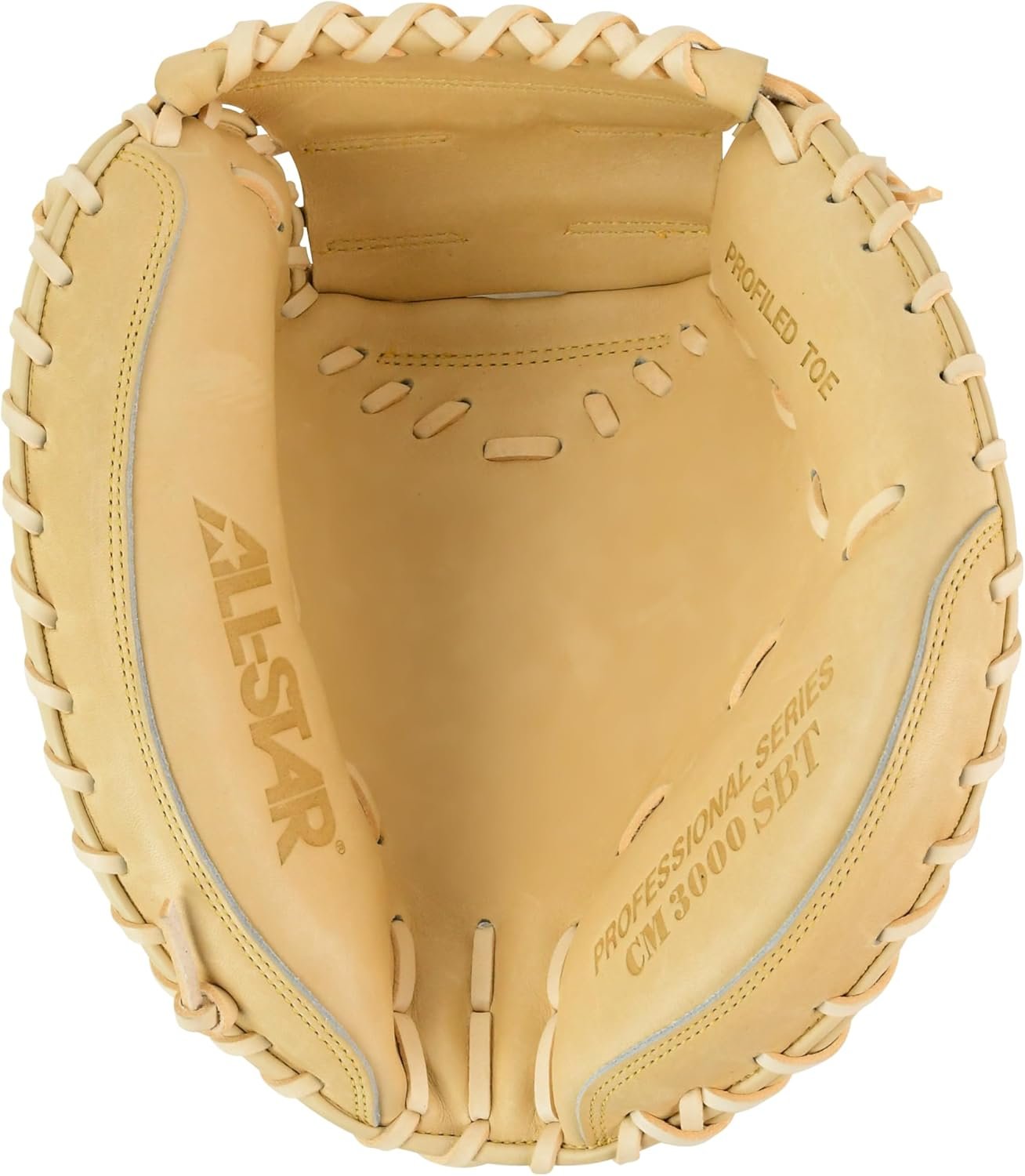
That last bullet deserves the extra sentence. Leather grades react differently to conditioner, because they are genuinely different materials — full-grain steerhide drinks a light coat gratefully, while some Japanese-tanned hides mark. When the maker publishes care guidance, it beats every rule of thumb on this page.
Why the boring routine wins
A catcher’s mitt dies four ways: ground down by dirt, cracked by dryness, cooked by heat, or drowned in oil. The routine above blocks all four for the cost of a brush, a cloth, and one jar of conditioner a year. And the payoff compounds — lifespan is the denominator in the cost-per-season math, so every season of care is money that stays in your pocket.
How to clean a catcher’s mitt: FAQs
How do you clean a catcher’s mitt?
Brush the dirt off after every use, wipe with a barely damp cloth when it looks dull, and dry it at room temperature. Use a leather-safe cleaner only for stubborn grime, applied to the cloth rather than the mitt. Never soak it, and never machine-wash it. Cleaning is thirty seconds of habit, not a project.
Should I oil my catcher’s mitt?
Lightly, and only if the maker allows it. Work a thin coat of glove conditioner into the pocket and hinge, never a soak. Wilson says the A2000 needs no oil at all, and at least one CM3000 reviewer warns that oil stains the tan pocket leather. Too much oil adds weight and softens the leather past where it holds a pocket.
How often should a catcher’s mitt be conditioned?
Two or three times a season, and only when the leather feels dry. A mitt in a dry climate, or one that gets daily innings, can take a little more. One that lives in a humid dugout needs less. The leather tells you — chalky, stiff, or pale means it is time, while supple means leave it alone.
Can I use Vaseline, olive oil, or mink oil on a catcher’s mitt?
Use a purpose-made glove conditioner instead. Petroleum jelly and heavy oils soak in deep, add weight, and soften the pocket past its job. Meanwhile, kitchen oils can go rancid inside the leather. The old shaving-cream trick dates from when shaving cream carried lanolin — modern gel does not, so buy the real thing. It costs about what one baseball costs.
How do you dry a wet catcher’s mitt?
Slowly, indoors, at room temperature. Blot it with a towel, stuff it loosely with newspaper to hold the shape, and give it a day or two on a shelf out of the sun. Then condition it lightly once it is fully dry, because water pulls oils out as it evaporates. Never a radiator, a dryer, or a sunny dashboard.
Does cleaning a mitt actually make it last longer?
Yes — dirt and dryness are two of the four accelerants that kill mitts early. Grit grinds the pocket from the inside, and dry leather cracks, which is the one failure no product reverses. The other two are heat and over-oiling, and this routine avoids both. Care will not resurrect compressed padding, but it reliably adds seasons to the leather.
Need the products to run this routine? Our glove oil and conditioner picks cover every leather type on the shelf. A brand-new mitt starts at the break-in guide instead, and everything sits under our catcher’s mitts pillar.