
Mizuno Catcher’s Mitts Review: The Pro Select GPS-20 and the Ladder Below It
Affiliate disclosure: CatchersHome earns a commission on qualifying purchases through the Amazon links below, at no extra cost to you. We only recommend gear we’d hand to our own catcher.
The Mizuno catcher’s mitt worth serious money is the Pro Select GPS-20 — a pro-pattern 33.5-inch mitt at $330.00 as of August 27, 2026. That is roughly $90 under the equivalent Wilson or Rawlings premium mitt. Below it, the $95 Franchise is a fair floor, while the Prospect line owns the youth shelf. Mizuno’s problem in American catching has never been the gloves. Rather, it has been the shelf space. If you are still deciding whether any premium mitt is your answer, start with how to choose a catcher’s mitt and come back.
Price as of Oct 12, 2026 · may have changed
Where Mizuno sits in the catching world
Mizuno has been making gloves since before your league existed — the company started in Osaka in 1906 and built its reputation supplying professional baseball in Japan, where glove making is treated as a craft discipline. In Japan’s NPB, Mizuno is not the alternative brand. It is the establishment.
Behind American plates the picture inverts. Rawlings and Wilson own the professional shelf, and a Mizuno mitt is the one that makes the other catcher ask what it is. That gap is mostly distribution and habit. Yet it produces the one thing a value-minded buyer should care about: Mizuno prices its premium retail mitt under the big two, because it has to. Our Rawlings versus Wilson comparison covers what the big two argue about. Meanwhile, this page covers what it costs to step outside that argument.
The Mizuno catcher’s mitt ladder
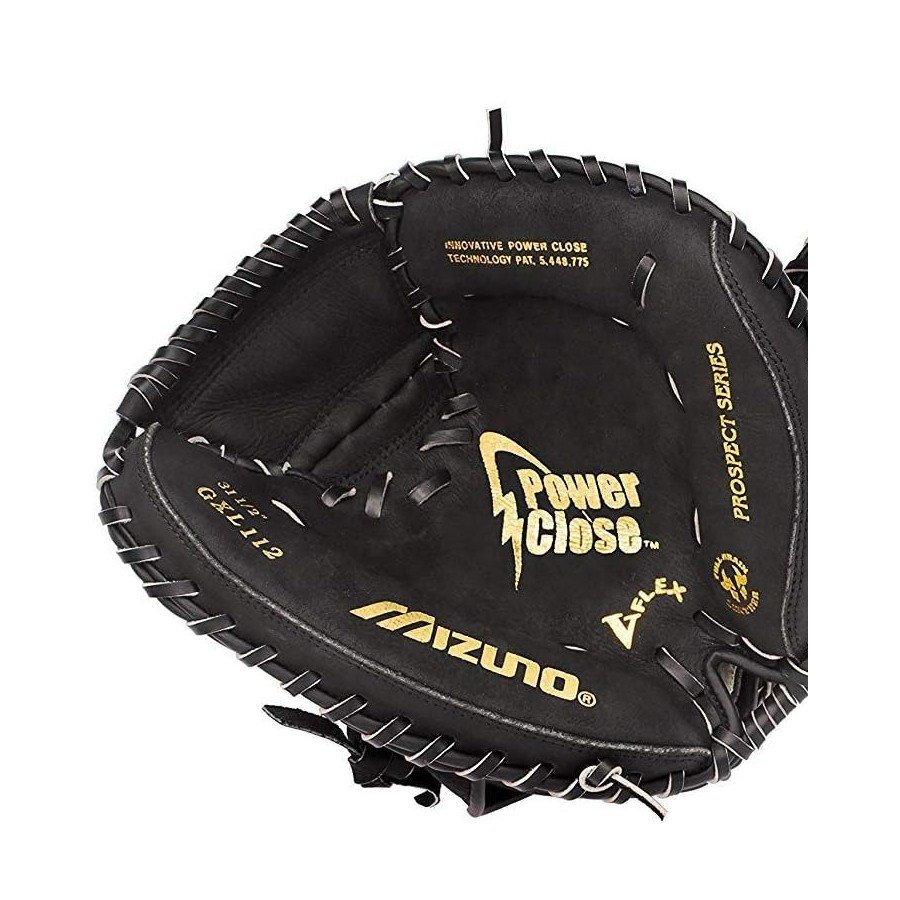
PowerClose
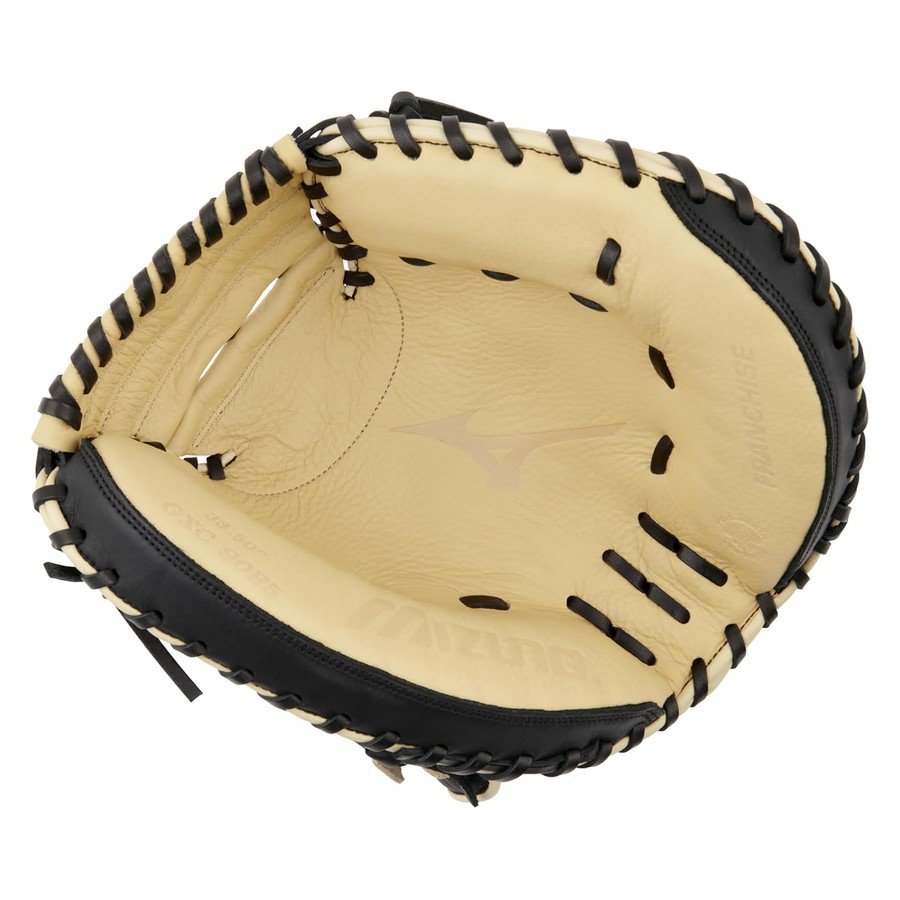
Franchise
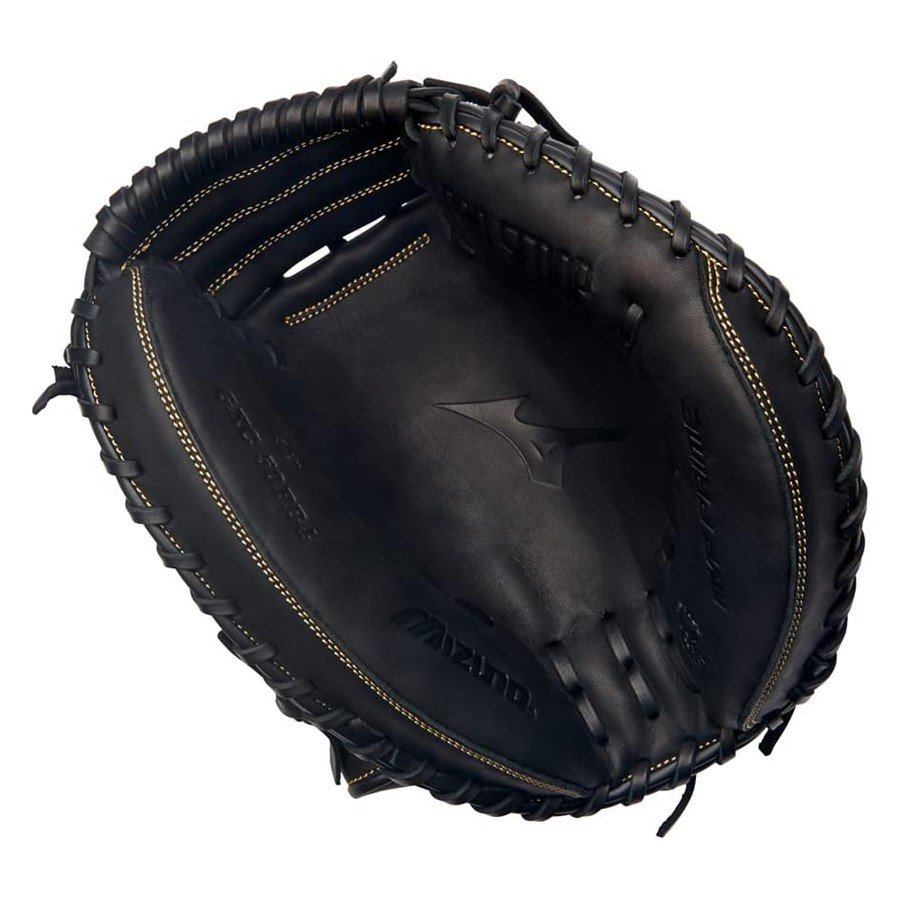
MVP Prime
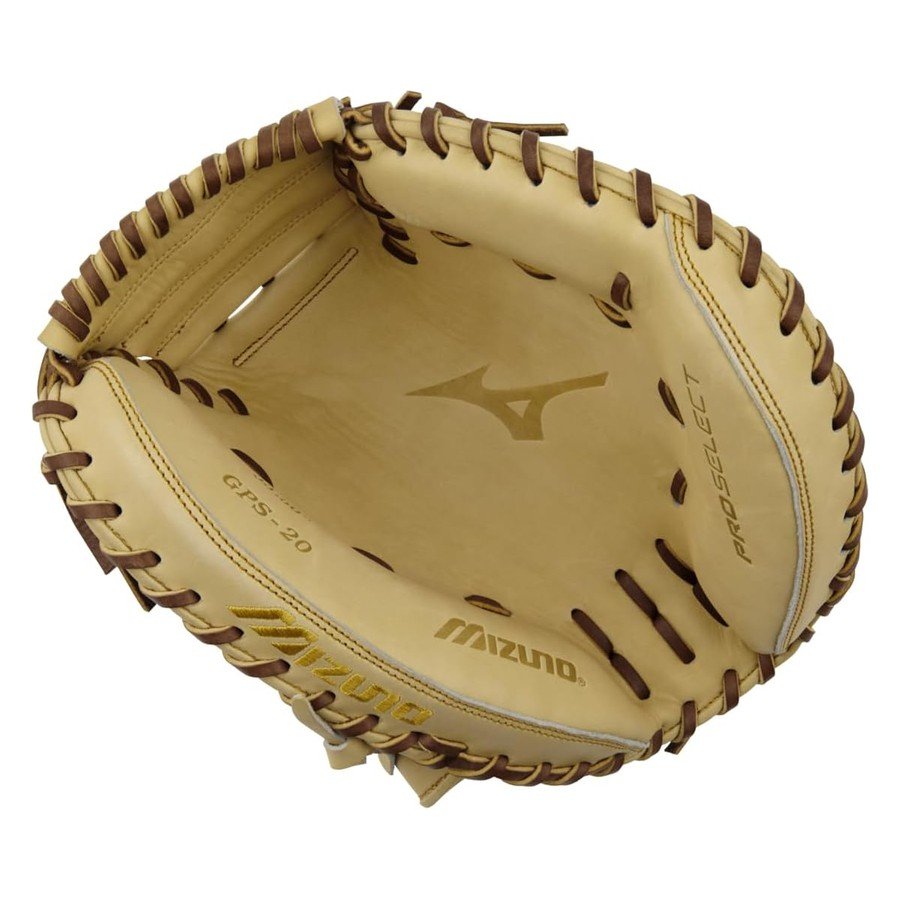
Pro Select
| Model | Lowest price | Size | Who it’s for |
|---|---|---|---|
| Prospect PowerClose GXC112 | 31.5″ | First-year and youth catchers | |
| Franchise GXC90B5 | 33.5″ | High school catchers on a budget ceiling | |
| MVP Prime | 34″ | The step between Franchise and Pro Select | |
| Pro Select GPS-20 | 33.5″ | Serious high school, travel and adult catchers | |
| Mizuno Pro | Custom order | built to spec | Pros and the catchers who buy like them |
Prices are what Amazon showed on the date listed, and they move without notice. The ladder’s shape is the story: Mizuno covers every rung from a seven-year-old’s first mitt to a built-to-order professional glove, and the retail ceiling — the Pro Select — undercuts the premium tier it competes against.
Mizuno Pro Select GPS-20 review — the premium rung
- Pattern: professional 33.5-inch catcher’s pattern — Mizuno’s listing leads with patterns “created for the best players in the world”
- Leather: not named on the listing — see what leather grades actually mean for how to read that silence
- Lace: the same professional-level lace Mizuno uses in its pro gloves
- Fit: thumb slot for a solid, secure hold; 3D silicone logo and woven label on the shell
- Price band: $330.00 as of August 27, 2026
- Best for: the catcher who wants pro pattern craft without big-two premium pricing
Verdict: the Mizuno Pro Select GPS-20 is the best premium catcher’s mitt that almost nobody in your league will be carrying — professional pattern geometry at a price the big two do not match.
What the GPS-20 actually sells is shape. A catcher’s mitt earns its keep by presenting a reliable target and funneling the ball to the same spot every time, and pattern geometry is what decides that — where the pocket sits, how the mitt hinges, how much of the catching surface actually catches. In fact, Mizuno’s entire professional reputation is built on getting that geometry right. A pitcher who sees strikes stick where you caught them starts trusting the target you set, and that trust is the quiet currency a catcher trades in all game.
The honest caveat is the spec sheet. Mizuno’s listing names the pattern and the lace but not the hide, which is unusual at this price — Rawlings will tell you kip, Wilson will tell you Pro Stock steerhide. We would rather flag that gap than paper over it: read our leather explainer to understand what the marketing names on any listing do and do not promise, and judge the GPS-20 on the thing Mizuno does document, which is the pattern.
Pros: professional pattern craft from the most respected glove maker in Japanese baseball; priced about $90 under equivalent big-two premium mitts; professional-grade lacing; a 33.5-inch size that fits the widest band of serious catchers.
Cons: the listing does not state the leather grade; resale and recognition trail Rawlings and Wilson in American ball; no alternate sizes in the Pro Select catcher pattern on the listing we read.
Price as of Oct 12, 2026 · may have changed
The rungs below: Franchise and Prospect
The Franchise GXC90B5 is the ladder’s workhorse — a 33.5-inch catcher pattern with a full-grain leather shell, a Parashock palm pad and HiLo lacing, at $95.00 when we checked on August 19, 2026. That price puts it just under the mid-range tier, and it is the floor reference we cite there: the cheapest mitt that still behaves like real equipment. For a high school catcher whose ceiling is a hundred dollars, it is the honest answer.
Price as of Oct 12, 2026 · may have changed
The Prospect PowerClose line owns the youth shelf. The GXC112 at 31.5 inches was $65 on August 18, 2026, and its PowerClose hinge does part of the closing work for a small hand — for a first-year catcher, that is the difference between catching the ball and flinching at it. Indeed, it earned its place in our youth catcher’s mitt roundup on exactly that argument.
The rung above: Mizuno Pro
Above the Pro Select sits Mizuno Pro, the made-in-Japan custom program — built-to-order patterns, hand-selected hides, and pricing to match. It is the tier Nippon Pro Baseball (NPB), Japan’s equivalent of MLB, professionals actually use. Accordingly, it is bought the way all custom mitts are bought: through an order sheet, not a shelf. If that route tempts you, read our custom catcher’s mitt guide first. The build-your-own question has the same answer regardless of whose order form it is.
Who should buy something else
Buy none of these if your catcher is still growing fast, or still deciding whether catching is their position. The budget shelf exists for exactly that season, because outgrowing a $65 mitt hurts less than outgrowing a $330 one. And if you want the mitt everyone recognizes — deepest review bench, easiest resale — the big two earn that pick. So start at our premium catcher’s mitt guide and let the A2000 make its case.
Breaking in a Mizuno mitt
The ladder splits on this. Franchise and Prospect mitts arrive mostly game-ready, because the factory has already spent some of the leather’s stiffness for you. The Pro Select arrives firm on purpose, like every premium mitt, and pays that firmness back in seasons. Either way the method is the same: break it in with reps, not heat.
How we checked, and what we could not verify
- Every price above was read off the live Amazon listing, with size and position confirmed on the listing itself. We never trust the URL, because it is family-level and identifies nothing. Dates sit next to each price.
- The MVP Prime listing would not load for us on four attempts on August 27, 2026. So it appears in the ladder without a price. It exists, and it sits between the Franchise and the Pro Select. Still, we would rather show the gap than invent the number.
- Mizuno’s GPS-20 listing does not state its leather grade. So we flagged that in the review rather than guessing at the hide.
- The product photos above are stamp-verified: we read the model code pressed into each mitt’s leather at zoom. The Pro Select reads GPS-20, the Franchise GXC 90B5, the MVP Prime GXC 50PB4. The PowerClose photo is the Amazon listing’s own image for the 31.5-inch mitt we price above; its leather reads GXL112 where retailers say GXC112. We flag that rather than hide it.
- Durability claims here are inference from tier and factory treatment, not measured lifespan — nobody publishes season counts, ourselves included.
Mizuno catcher’s mitt FAQs
Are Mizuno catcher’s mitts good?
Yes — Mizuno catcher’s mitts are well built at every rung, and the GPS-20 is a genuine premium mitt at $330. Mizuno’s strength is pattern craft: the company has been building gloves in Japan since 1906, and it designs for professional players first. Its weakness in the American market is visibility, not quality. In fact, that gap is exactly why the GPS-20 costs less than the big-two equivalents.
Is the Mizuno Pro Select GPS-20 worth $330?
The Mizuno GPS-20 Pro Select is worth $330 if you want professional pattern craft without paying big-two premium prices. It sits about $90 under a Wilson A2000 catcher’s mitt, and $90 over the top of the mid-range tier. What you give up is resale familiarity, as well as a spec sheet that names its leather grade. Meanwhile, what you gain is a pro-pattern 33.5-inch mitt from the most pattern-obsessed glove maker in the game.
What is the difference between Mizuno Pro and Pro Select?
Mizuno Pro is the made-in-Japan custom tier, while Pro Select is the premium retail line you can order today. Mizuno Pro mitts are built to order and priced like it. The Pro Select GPS-20 borrows the professional patterns and lace quality from that program, then packages them at $330. So for almost every amateur catcher, the Pro Select is the sensible ceiling of the ladder.
What sizes do Mizuno catcher’s mitts come in?
Mizuno’s catcher patterns run from 31.5 inches in the youth Prospect line up to 34 inches in the MVP Prime. Meanwhile the Franchise and the Pro Select sit at 33.5 inches, so the range covers a first-year catcher through an adult. Size by the hand that has to close the mitt, not by the biggest number on the shelf. Our size chart maps age and level to inches.
How long does a Mizuno catcher’s mitt take to break in?
A Mizuno Franchise or Prospect mitt arrives largely game-ready, while the Pro Select GPS-20 asks for real break-in time. The PowerClose youth models even build a hinge into the pocket, so small hands can close them on day one. Premium leather resists first and rewards later. So give the GPS-20 a few weeks of reps rather than an afternoon with an oven.
Do MLB catchers use Mizuno mitts?
Mizuno is a major professional brand in Japan’s NPB, but Mizuno catcher’s mitts are rare behind MLB plates. There, Rawlings, Wilson and All-Star dominate. Still, that scarcity says more about equipment deals and habit than about the leather. If seeing your mitt on a big-league broadcast matters to you, buy the big two. But if pattern quality per dollar matters more, the scarcity is working in your favor.
The bottom line
Mizuno’s ladder is complete, honest and priced under the noise. It runs from $65 for a first mitt to $330 for a professional pattern that undercuts the big two. The GPS-20 belongs in the premium conversation, so see how it stacks against the field in our premium catcher’s mitt guide. And if the price still gives you pause, the cost-per-season math is how to think about it. Everything here lives under baseball catcher’s mitts in our mitts pillar.
Price as of Oct 12, 2026 · may have changed