
Dejah Mulipola Wins Defensive MVP — 2026
▶ Watch this story in under a minute — or read on.
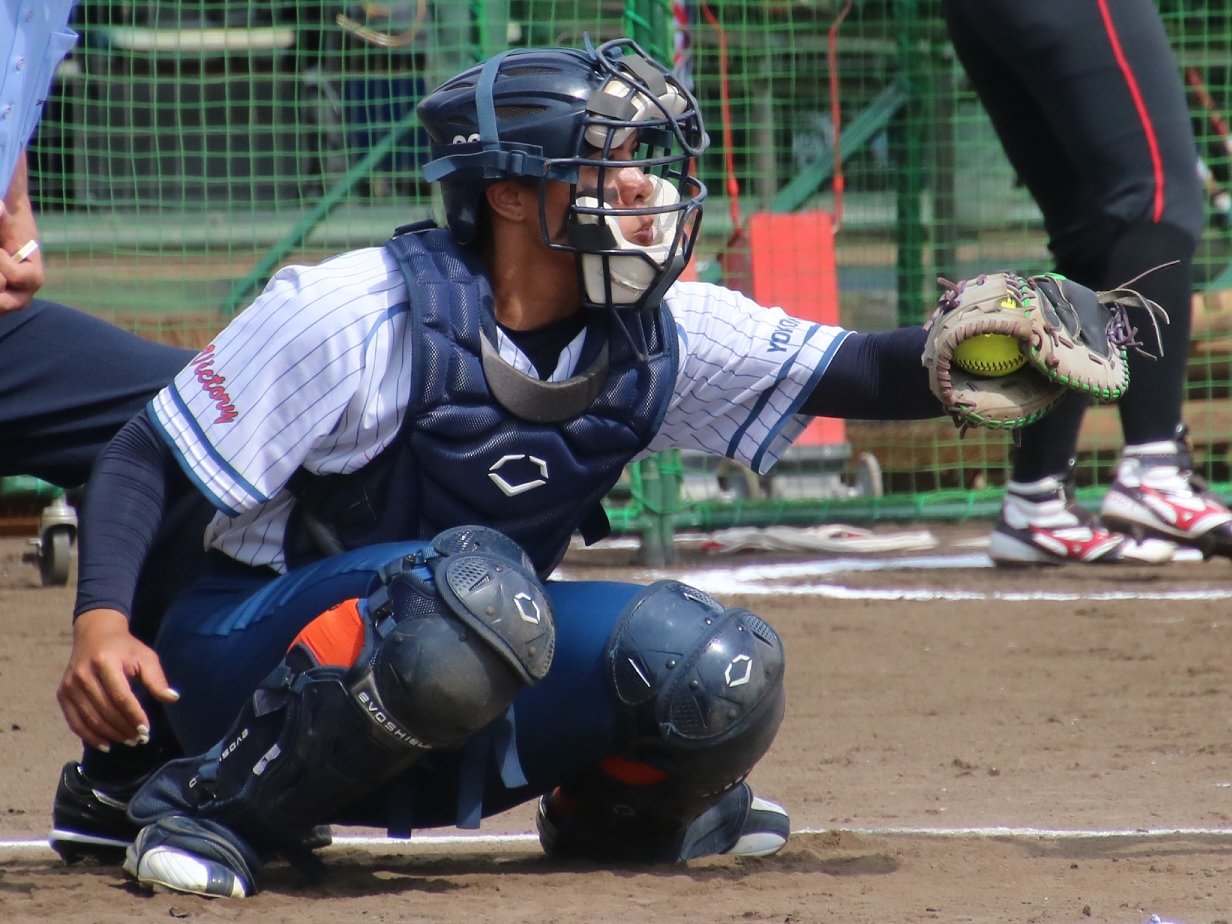
Dejah Mulipola spent the 2026 USA Softball International Cup doing what great catchers do: making someone else look brilliant.
Nobody in the stands was watching the catcher.
That is the job.
Devon Park in Oklahoma City went quiet in the late innings of the gold medal game. The USA had Japan scoreless. Montana Fouts had retired 18 batters in a row. The crowd was tracking Fouts — her arm, her release, the way the ball disappeared into the glove with a pop. Behind the plate, Dejah Mulipola was tracking everything else. She read the cadence of Japan’s lineup, called the pitches, and kept Fouts in the rhythm. The catcher’s work is invisible by design. When it is done right, the pitcher gets the credit.
Fouts’s near-perfect game ended at 18. A leadoff single in the seventh inning broke it up. But Team USA held on. The final score was USA 2, Japan 0 — gold medal game, Devon Park, first week of August 2026. The USA went undefeated throughout the tournament. Jayda Coleman drove in the first run with an RBI single in the second inning. Maya Brady added another in the fifth. Two runs. Two hits. That was all Mulipola needed to work with.
When the awards were announced, Brady took Tournament MVP. Janae Jefferson took Offensive MVP. Fouts took Most Valuable Pitcher. The fourth award — Defensive MVP — went to the catcher.
Mulipola earned it across the whole tournament, not just one game. After all, Defensive MVP does not go to the fastest thrower. It goes to the catcher who controlled the game.
To understand why that award means what it means, you need to know who Mulipola is. She played professional softball in Japan for Hitachi Sundiva. When her international duty ended, she traveled 24 hours, through five cities, across 6,000 miles to reach her Texas Volts debut in the AUSL. She did not miss her spot in the lineup. Instead, she showed up.
Her career at Arizona reads like a credential list: .335 batting average, 68 home runs, 203 RBI in 237 games, a .996 fielding percentage. She won the NFCA Catcher of the Year award twice — 2019 and 2021. In 2019, she also won the Johnny Bench Award, USA Softball’s highest honor for a collegiate catcher. She won the 2022 AUSL individual championship as a position player — the first in league history to do it. She has Olympic, World Games, and Pan American Games medals. The resume is long.
But the Defensive MVP captures something the resume cannot. A catcher reads a tournament as it unfolds. She tracks which pitches are working, what hitters are chasing, when to quicken the tempo and when to slow it down. The answers in the first inning sharpen what she calls in the sixth. Mulipola held that plan across every game until Team USA stood undefeated in the final.
That is the catcher’s edge. And the award finally said so out loud.
For every young catcher watching: this position does not only build toward big stats. It builds toward the game no one else sees. The pitch that keeps a pitcher in rhythm. The call that coaxes a strikeout when the hitter was sitting fastball. Mulipola spent a full tournament doing exactly that, and the International Cup noticed.
Sweat the gear and never fear. The mask earns its moment too.
Try this at your next practice
- Pitch-call journal. Before your next bullpen session, write down three things you want to learn about your pitcher that day — which pitch has the most movement, which count she is sharpest in, what she throws when she is getting tired. Call the bullpen based on what you observe, not habit. After the session, check your notes. This is how Mulipola built her game plan across a full tournament: one inning at a time.
- Signal tempo drill. Work with a pitcher for a 10-pitch sequence. The rule: you must give your signal within two seconds of settling into your stance. No pauses, no second-guessing on the sign. The goal is building the rhythm a pitcher trusts — when the catcher is decisive, the pitcher stays loose. Tempo is a tool catchers control.
- Hitter tendency chart. Pick one at-bat from your next game or scrimmage. After each pitch, note what the hitter did: did they foul it off, take it, swing and miss? After the at-bat, write down one thing you learned about that hitter. Do this for three at-bats. By the sixth inning, the calls in the first inning are paying off.
Sources: Montana Fouts pitches USA to International Cup title — WBSC · USA Softball International Cup 2026: Montana Fouts Blanks Japan — Just Women’s Sports · Dejah Mulipola named Defensive MVP — AUSL / Facebook · Dejah Mulipola — Wikipedia