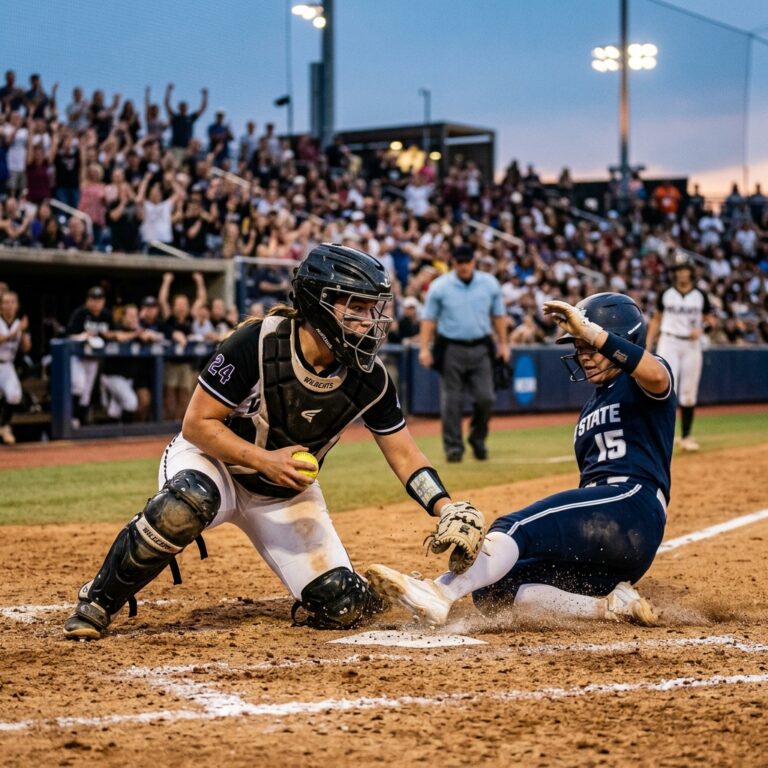
Reese Atwood Carolina Blaze Postseason Push
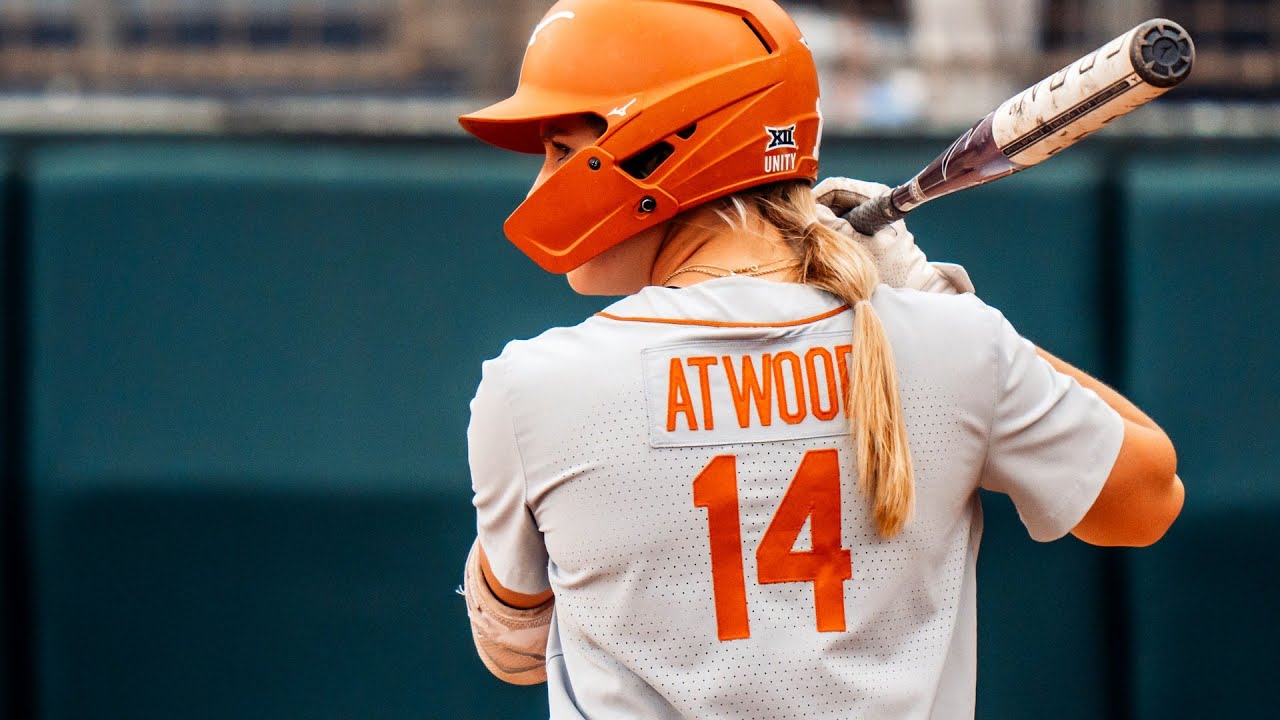
Atwood is adjusting to pro pitching in real time — and her team’s postseason window is closing fast.
Two weeks ago, Reese Atwood was the catcher every fan in the AUSL wanted to celebrate. She was slashing .450/.522/1.000 — numbers that don’t look real — and leading the All-Star Cup fan vote at her position. Easy to root for. Easy to write about.
The postseason cutoff doesn’t care about fan votes.
As of July 13, the Carolina Blaze sit 8-11, fifth in a six-team league, one game behind the fourth-place Oklahoma City Spark — and the last day of the regular season is July 20. Seven days. Only the top four teams advance. The window is closing.
Atwood is still producing at a level most catchers can only dream of. Through 18 games and 17 starts in her rookie AUSL season, she is slashing .314/.417/.784 with a 1.201 OPS, 7 home runs, and 19 RBI. The average has come down from that blazing .450 peak. That is what happens in professional softball: pitchers make notes, swap video, and come back with a plan for your swing. The Two-Time NCAA National Champion, the Johnny Bench Award winner — college softball’s highest honor for the best catcher in the country — is facing it now like every elite player does. She is adjusting, at-bat by at-bat.
Her best game of the season came on June 20: 3-for-3 with 4 RBI, including a triple off the Chicago Bandits. That is Atwood when preparation meets the moment — the swing that carried her to two WCWS titles finding the gap when the team needed it.
Then came July 10. The Texas Volts won 1-0 on a walkoff. One run. Wrong team. The Blaze now stand on a precipice — close enough to fight, but with no margin left for another bad stretch.
The next seven days are the story. Not the All-Star vote. Not the blazing early numbers. This week.
What a catcher can learn from this
The .450 batting average was never the whole picture. It was a snapshot — electric, real, and legitimate, but still a small sample. A .314/.417/.784 line through 18 professional games is what a body of work starts to look like.
When a catcher with two national titles and a 1.201 OPS sees her average settle into the .310s, that isn’t a stumble. That’s the pro-level adjustment happening in real time. Better pitching. Sharper scouting. Arms that remember what worked against you two starts ago. The only way through it is to stay in your squat, keep calling your game, and work every at-bat like the last one doesn’t exist.
That adjustment happens at every level you move up. Travel ball feels impossible your first big tournament. High school pitching is nasty the first week of varsity. The answer is the same every time: trust your preparation, compete on the pitch in front of you, and let the line take care of itself.
Atwood is at .314 and still grinding. That is the standard — and it is something you can copy Thursday.
The next time your team needs wins in a tight window, remember this: a catcher leads with her preparation and her at-bats. The scoreboard and the lineup card belong to someone else. What belongs to you is your work behind the plate and how hard you compete when the margin disappears.
Right now, Reese Atwood’s margin is seven days. Watch how she uses them.
Try this at your next practice
- The one-pitch reset. After every pitch — ball or strike — take a breath, reset your feet, and call the next pitch as if the last one never happened. Atwood’s ability to grind through 18 professional games at a 1.201 OPS is built on exactly this: competing on the pitch in front of her, not the one she just missed.
- Back-and-forth pitch-calling drill. Have a teammate call a random count (0-2, 1-1, 3-0) before each pitch in bullpen work. Respond with a pitch call immediately — no huddle, no hesitation. This sharpens the in-game decision-making that separates pro-level catchers from everyone else. The pitcher adjusts; your job is to lead the adjustment.
- Situational at-bat simulation. During batting practice, invent a situation before each swing: your team is down one run, two outs, full count. Practice committing to a plan — take a pitch, work the count, use the whole field. Atwood’s best game this season (3-for-3, 4 RBI) didn’t happen by accident. It came from a catcher who prepares her at-bats before she ever steps into the box.
Sources: Reese Atwood player page / stats (theausl.com); Carolina Blaze Rookies Karlyn Pickens, Reese Atwood Top AUSL All-Star Voting (Just Women’s Sports); Texas Volts snap losing streak vs. ex-Longhorns star Reese Atwood and the Carolina Blaze (Yahoo Sports); AUSL Standings (theausl.com).