
Samantha Swan Transfers to Texas as Top Portal Catcher
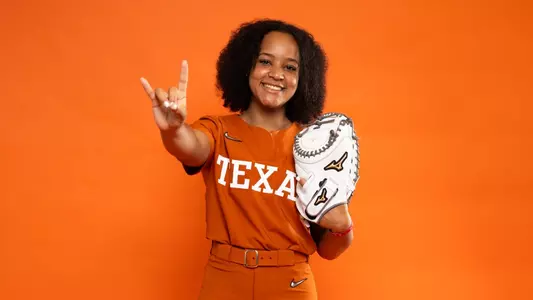
The transfer portal’s top catcher just signed with the team she nearly beat — and she’s bringing a full resume with her.
Samantha Swan grew up in Georgetown, Texas, thirty miles north of Austin. She played high school softball there, helped the program reach the Texas 5A Regional Finals, and then left for Arizona State — learned a new conference and earned a great reputation all while becoming one of the best catchers in the country. Now she is coming back to her home state, Texas.
On June 10, 2026, Swan signed with the University of Texas as a graduate transfer. One year of eligibility. One assignment: take over as catcher for the national champions.
The season she built at ASU made the call simple.
| G | H | 2B | HR | RBI | AVG | OBP | SLG | OPS |
|---|---|---|---|---|---|---|---|---|
| 62 | 69 | 21 | 12 | 55 | .383 | .450 | .700 | 1.151 |
The number that matters most is the last one. An OPS of 1.151 — on-base percentage plus slugging — tells a pitcher exactly how much trouble is walking into the box.
Softball America ranked Swan the No. 1 catcher in the transfer portal, No. 9 overall among all positions. The Big 12 named her a unanimous First-Team selection. On April 14, the NFCA — the National Fastpitch Coaches Association, the sport’s top coaching body — named Swan the National Player of the Week. She earned it again the following week at the conference level.
The Texas connection runs deeper than the zip code. In the 2026 Super Regional, Arizona State faced the Longhorns. Swan went 4-for-6 across Games 1 and 2. She hit five RBIs and one home run. Texas won the national title.
The catcher she is stepping in for is Reese Atwood, one of the best players in Texas program history. Atwood won the 2025 NFCA Catcher of the Year — the highest individual honor in college softball for catchers — along with the Johnny Bench Award.
She left Austin holding Texas career records for home runs, RBIs, and slugging percentage, then signed with the Carolina Blaze in the Athletes Unlimited Softball League. That’s the chair Swan chose.
What does a catcher do with an assignment that has brought her full circle? She demonstrates how she continues to play at the highest level of the college game, for one more year in the state where she learned to play.
What a catcher can learn from this
The transfer portal opened doors that did not exist a decade ago. But a door is only as useful as what you carry through it.
Swan’s portal entry worked because she had built something worth transferring: 25 multi-hit games in a 62-game season, and three years of proof at a Power Five program. A Super Regional where the performance nearly flipped the outcome.
Every catcher faces a version of this moment. A role opens up. The question is whether you are ready.
Swan had her answer. She built it rep by rep, season by season, at the position that rewards that kind of work more than any other on the field.
That could be you.
Try this at your next practice
- Staff communication drill. After blocking or receiving each pitch in bullpen work, call the pitch result out loud to your pitcher — “good spin,” “low and away,” “came back.” Build the habit of constant, calm communication. Swan will be calling pitches for a Texas staff. That habit starts in practice, not in the Super Regional.
- Multi-hit mindset. Swan had 25 multi-hit games in 62 — nearly one every 2.5 starts. Work with your batting practice pitcher on two-strike approach: shorten your swing, use the whole field, stay in the at-bat. The goal in BP is not to hit the ball hard. The goal is to hit it twice.
- Film your own at-bats. Swan’s Super Regional performance (.667 in 6 ABs against a team she’d studied all year) came from preparation. Ask a parent to record you from the dugout angle for two games. Watch your own approach at the plate. Look for what the pitcher is trying to do. The game film is how Swan prepared for Texas — before she was a Longhorn.
- Call the full bullpen. Ask your pitcher to throw a full 30-pitch session with you running every sign — no coaches calling pitches. When you are done, tell your pitcher what you saw: which pitch had the most movement, which one got chased. That is the game-management skill that earns a conversation with a college coach.
Sources: Texas Longhorns Athletics · Softball America via On3 · Yahoo Sports · 247Sports