
Best Glove Oil and Conditioner for a Catcher’s Mitt
Affiliate disclosure: CatchersHome earns a commission on qualifying purchases through the Amazon links below, at no extra cost to you. We only recommend gear we’d hand to our own catcher.
The best glove oil for a catcher’s mitt is not an oil at all: the water-based Sarna liquid conditioner at $16.99 softens leather without darkening it or adding weight. Meanwhile, Wilson, Rawlings, and Mizuno each make the right answer for their own leather. Every price on this page was checked on Amazon on August 20, 2026, and prices move without notice. This page is the product half of mitt care — the routine itself lives here, and it only calls for a thin coat, two or three times a season. So here are the five products worth that job.
The five picks at a glance
| Product | Price | Form | Best for |
|---|---|---|---|
| Sarna Glove Conditioner, Liquid 8 oz | $16.99 | Water-based liquid | Best overall |
| Wilson Pro Stock Glove Conditioner | $11.95 | Lanolin cream, 2.5 oz canister | Best for Wilson mitts |
| Rawlings Glove Conditioner | $11.25 | Lanolin-free paste, 1.75 oz jar | Best for Rawlings mitts |
| Mizuno Strong Oil | $13.40 | Traditional oil balm, 65 g tin | Best traditional oil |
| Rhino Wax Ultimate Break-in Kit | $39.95 | Oil 8 oz + conditioner 2 oz + mallet, wrap, brush, cloth | Best kit |
Prices checked on Amazon on August 20, 2026. Check the live listing before you buy, and read the label for the maker’s own application guidance.
Best overall: Sarna Glove Conditioner, Liquid 8 oz — $16.99
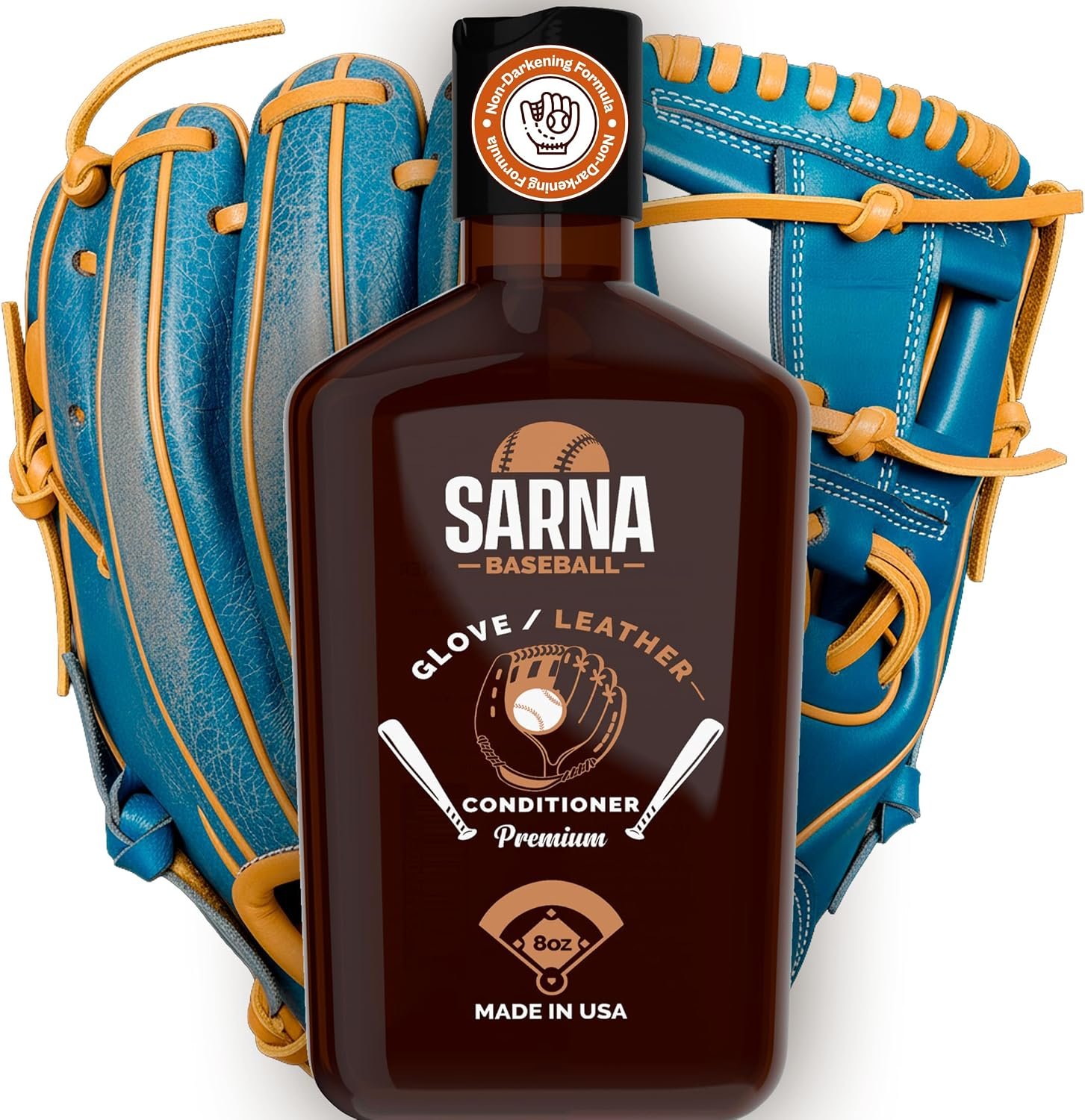
Sarna’s liquid is the modern answer to the oil question: water-based, non-darkening, and no sticky residue, per the listing. It conditions evenly across panels, welting, and laces while keeping the original color, which makes it the safe default for today’s dyed and two-tone mitts. It was also the top-rated glove conditioner on Amazon when we checked. The same formula comes as a 4-ounce cream if you prefer working with a paste.
The catch: Water-based means gentler, and gentler means slower. For a fast break-in assist on stubborn steerhide, a traditional oil works quicker — at the cost of some darkening.
Sarna Glove Conditioner, Liquid 8 oz (Water-based liquid) — check price on Amazon
Best for Wilson mitts: Wilson Pro Stock Glove Conditioner — $11.95
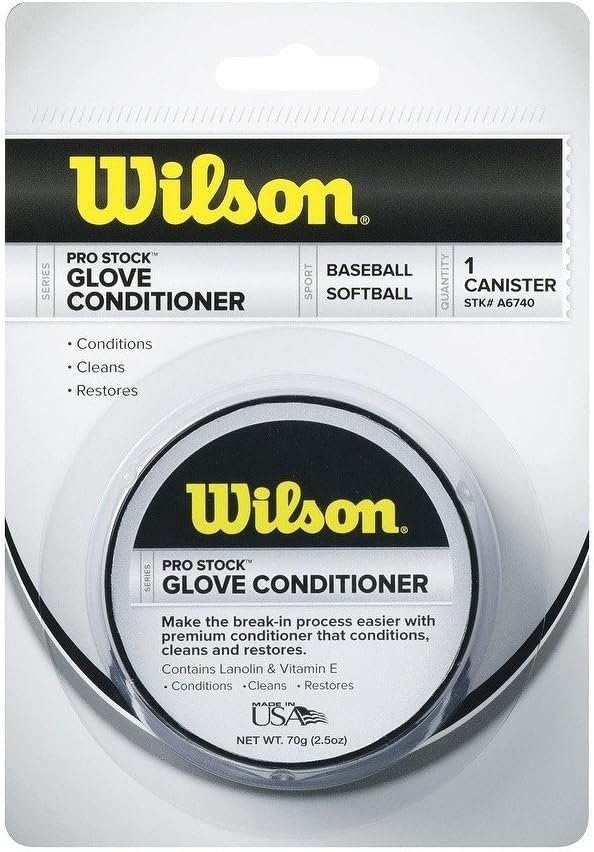
Wilson says the A2000 needs no oil — and this is what Wilson offers instead. The Pro Stock conditioner carries lanolin and vitamin E, cleans as it conditions, and is formulated by the company that tanned the leather it goes on. For an A2000 or A2K owner, that settles the guesswork. The compact canister also fits an equipment bag, which is where care products actually get used.
The catch: A 2.5-ounce canister is small, and heavy users will finish it in a season. It is a conditioner for maintenance, not a break-in accelerant.
Wilson Pro Stock Glove Conditioner (Lanolin cream, 2.5 oz canister) — check price on Amazon
Best for Rawlings mitts: Rawlings Glove Conditioner — $11.25
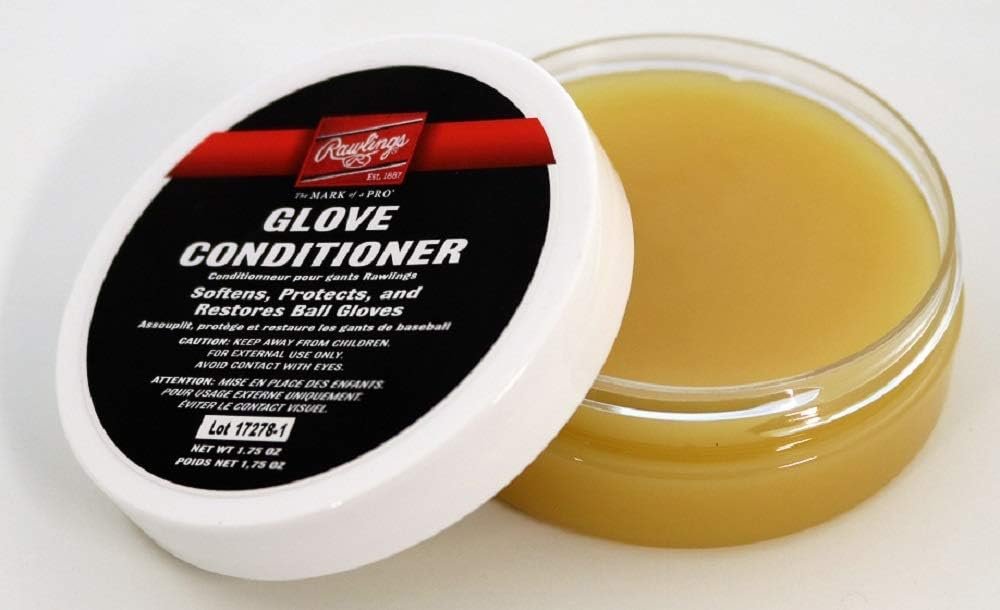
The house product for Heart of the Hide and R9 leather. The listing pitches it plainly: a paste-based treatment that softens, protects, and restores without adding weight, and it repels moisture while being lanolin-free. A paste is also the beginner-proof format, because you can see exactly how much you are taking — the thin coat rule enforces itself.
The catch: The jar is small at 1.75 ounces. Fine for two or three seasonal applications, but a team bag needs something bigger.
Rawlings Glove Conditioner (Lanolin-free paste, 1.75 oz jar) — check price on Amazon
Best traditional oil: Mizuno Strong Oil — $13.40
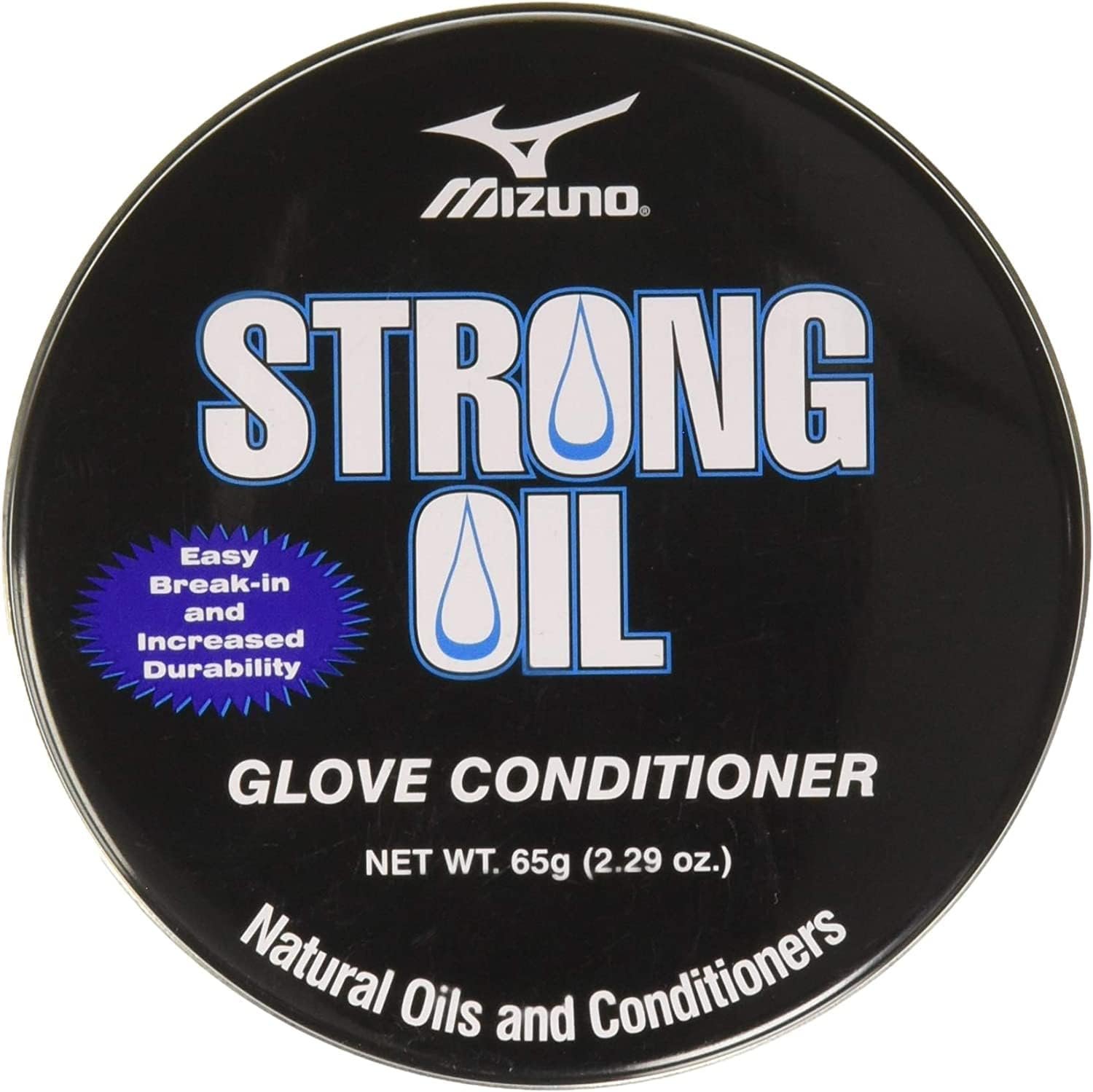
If you want the classic glove-oil experience from a maker rather than a mystery bottle, this is it. Mizuno’s tin promises easy break-in and increased durability from natural oils and conditioners, and it is the standard companion to Japanese-tanned Mizuno leather. It softens faster than the water-based picks, which is exactly what a stiff new hinge sometimes needs.
The catch: Still, a true oil darkens leather a shade and demands the thin-coat discipline. Keep it off tan show-leather pockets, and off any mitt whose maker says no oil.
Mizuno Strong Oil (Traditional oil balm, 65 g tin) — check price on Amazon
Best kit: Rhino Wax Ultimate Break-in Kit — $39.95
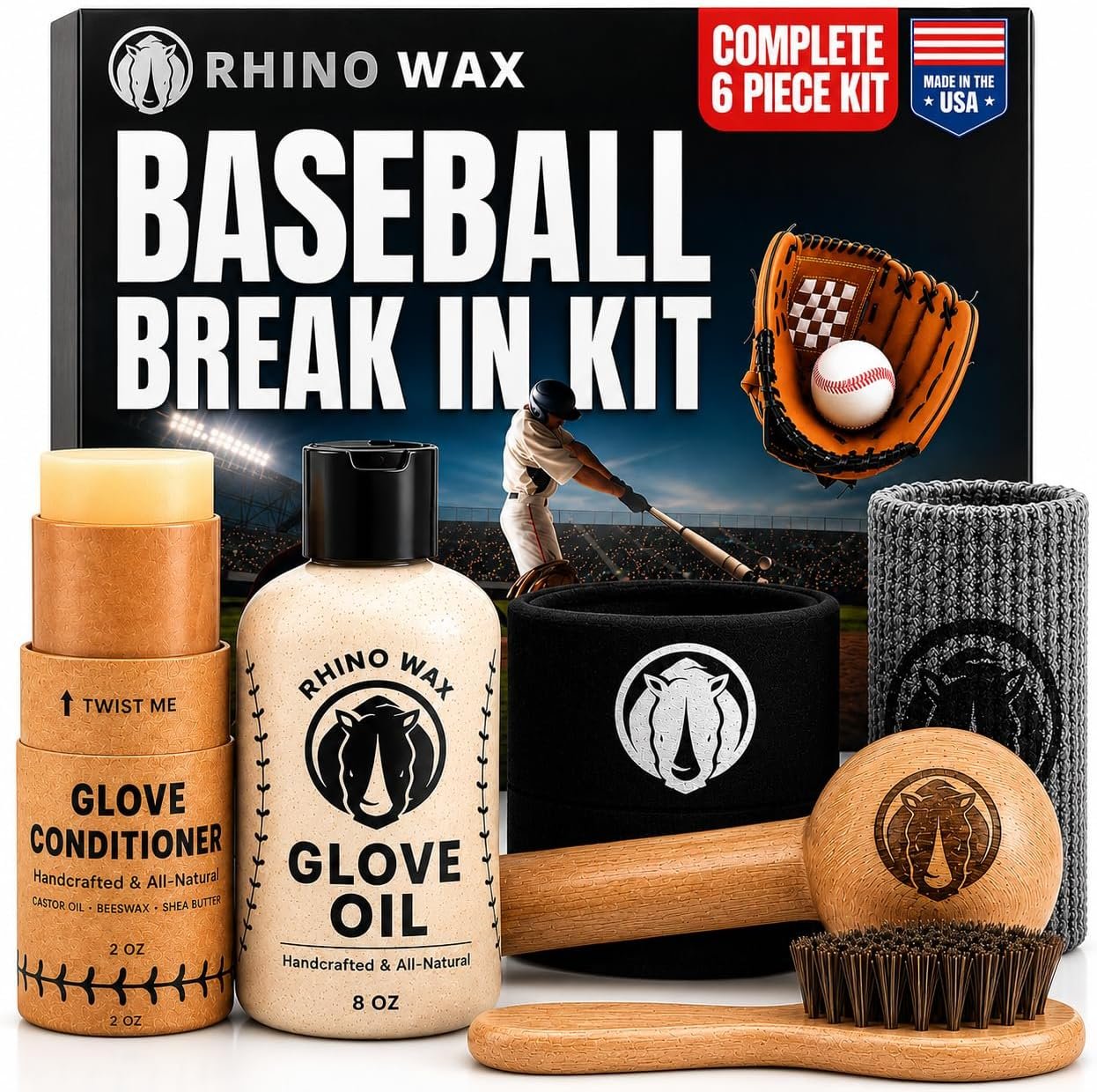
In essence, this is our break-in method sold as a box: hydrate lightly with oil, shape with a ball-shaped mallet and a wrap, protect with conditioner, and brush the dirt off after. The mallet head matches a baseball on purpose, so the pocket forms around the right shape. For a new mitt and a new catcher in the same spring, one purchase covers both the tools and the products.
The catch: You are paying for the mallet and wrap as much as the liquids. If you already own both, buy a single conditioner above and keep the difference.
The warning that outranks every product
Some leather should not be oiled at all, and the maker gets the final word. Wilson says the A2000 needs no oil. At least one reviewer warns that oil stains the tan Japanese-tanned pocket on the All-Star CM3000. And factory-oiled cowhide — most youth and budget mitts — already carries all the oil it should ever hold. Our leather explainer decodes which hide your mitt actually is, because the right product for one grade is a stain on another.
The second half of the warning is quantity. In fact, every product above works applied thin and fails applied heavy. A soak adds weight, collapses the pocket’s structure, attracts dirt, and cannot be undone — dry leather can be conditioned back, while oil-logged leather is finished. If you remember one sentence from this page: a thin coat is care, a soak is damage.
Oil, conditioner, or kit — which do you actually need?
For a mitt already in service, a conditioner is the answer, so any of the first three picks does the job. The choice between them is mostly matching the maker and the format you will actually use. For a brand-new mitt, the kit question is really a tools question — if you own a mallet and a wrap, skip the kit; if not, it is the cheapest way to acquire the whole break-in method at once.
And if you are conditioning an old mitt hoping to resurrect it, first check what actually failed. Conditioner fixes dry leather, but it cannot re-inflate compressed padding or restore a collapsed hinge — the lifespan guide covers which failures are fixable and which are final.
How we picked, and what we did not verify
- Every product above was checked on its live Amazon listing on August 20, 2026 — the listing title, the feature bullets, and the price shown that day.
- Every product photo was checked against the label text in the image before publishing: the Sarna 8-ounce non-darkening bottle, the Wilson Pro Stock 2.5-ounce canister, the Rawlings 1.75-ounce jar, the Mizuno Strong Oil 65-gram tin, and the Rhino Wax six-piece kit. A wrong photo next to a buy link is a false claim, so we verify them the same way we verify mitt leather stamps.
- Jar and canister sizes come from the product labels where the listing text omits them — the Rawlings listing, for example, does not state the 1.75-ounce size its own photo shows.
- We have not run season-length durability tests on these formulas, and nobody publishes them. The darkening and softening behavior described here follows each maker’s own claims plus the leather chemistry in our leather explainer.
- The ‘top-rated’ note on the Sarna reflects its Amazon rating at check time, which moves.
Best glove oil and conditioner FAQs
What is the best glove oil for a catcher’s mitt?
For most mitts, a modern water-based conditioner like the Sarna liquid beats traditional oil, because it softens without darkening or adding weight. If your mitt’s maker sells its own care product — Wilson, Rawlings, and Mizuno all do — that is the other safe answer. Match the product to the leather, and when the maker says no oil, believe them.
Does oiling a glove help break it in?
A thin coat helps; a soak hurts. Conditioner loosens stiff areas so the hinge and pocket shape faster, which is why every break-in kit includes some. But the actual break-in work is reps — a ball, a mallet, and catch. Oil is the assistant, never the method, and too much of it softens the leather past where it holds a pocket.
How often should a catcher’s mitt be oiled?
Two or three light applications a season, and only when the leather feels dry. A mitt in a desert climate can take one more; a mitt in a humid dugout needs fewer. The failure mode is always over-oiling, not under-oiling, because dry leather can be conditioned back while oil-soaked leather cannot be dried out.
What is the difference between glove oil and glove conditioner?
Oil is a liquid that penetrates deep and softens aggressively. Conditioner is a cream, paste, or water-based formula that moisturizes the surface with less soak-in. Modern care has moved toward conditioners for exactly that reason — more control, less weight, less darkening. Traditional oil still has a place in a fast break-in, applied thin.
Can I use household leather conditioner on a catcher’s mitt?
Buy the glove-specific product instead — it costs about the same as one baseball. Furniture and boot products are formulated for leathers that never flex like a hinge or take impact, and some carry silicones and waxes that gum up lacing. Meanwhile, petroleum jelly and cooking oils add weight and can turn rancid inside the pocket.
Will glove conditioner darken my mitt?
Traditional oils and waxes usually darken leather at least a shade; water-based formulas are built not to. That is the whole pitch of the non-darkening Sarna, and it matters most on light and colored leather. On tan Japanese-tanned hides the stakes are higher than shade — oil can stain them outright, so check the maker’s guidance first.
Ready to put one of these to work? The cleaning and conditioning routine is the method, the break-in guide covers a new mitt’s first month, and everything sits under our catcher’s mitts pillar.