First Freshman Ever: Kendall Wells Wins the Johnny Bench Award
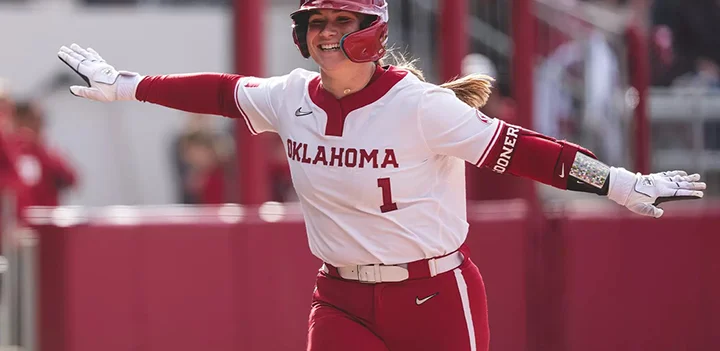
The Oklahoma freshman won the sport’s highest honor behind the plate in June. By August she was catching for Team USA.
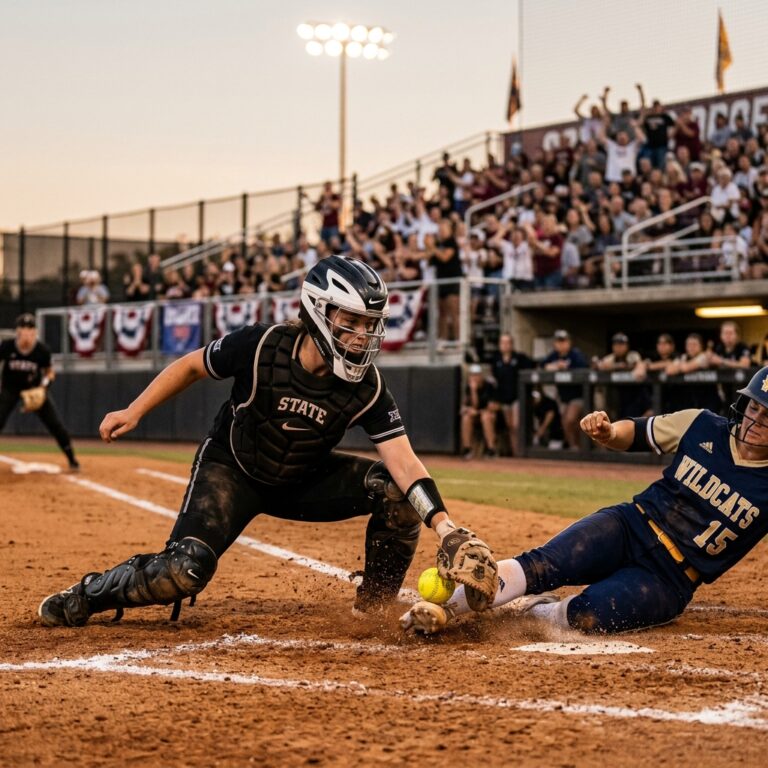
Kendall Wells arrived at Oklahoma with a job most freshmen do not get. A catcher calls the pitches. She sets the plan for the staff, and she tells pitchers older than she is what is coming and why. Most freshmen serve an apprenticeship first. They catch bullpens, they study, and they wait a year or two for a staff to trust them.
Wells did not wait. She caught 60 starts in her first college season, and by June she held the highest honor at her position.
The Johnny Bench Award goes each year to the best catcher in Division I college baseball and the best catcher in Division I college softball. It also honors the top high school catchers in Indiana, Kentucky, Ohio and West Virginia. Major League Baseball, the Cincinnati Reds and Johnny Bench himself present it. On the softball side it has been awarded since 2019, and no freshman had ever won it.
Wells had just finished her first college season.
She also did not walk into an empty trophy case. Kinzie Hansen won the same award for Oklahoma in 2023, so the standard was already sitting in Wells’s own locker room.
The season that earned it
Her freshman line at Oklahoma would read like a career year for most players.
| AVG | OBP | SLG | OPS | HR | RBI | R |
|---|---|---|---|---|---|---|
| .358 | .480 | 1.028 | 1.508 | 39 | 88 | 70 |
Those 39 home runs set the Oklahoma single-season record, as well as the SEC single-season record, and remarckably, Wells set the NCAA freshman record too. In fact, only one player in the history of college softball has ever hit more in a season.
| Player | Single-season home runs |
|---|---|
| Megan Grant, UCLA | 42 |
| Kendall Wells, Oklahoma | 39 |
| Laura Espinoza (previous NCAA record) | 37 |
Megan Grant hit her 42 for UCLA that same spring, so two players passed the previous NCAA record of 37 in the same year. Wells did it as a D-1 Rookie.
Number 39 came against Mississippi State, and it was her second home run of that game.
But the Johnny Bench Award does not count home runs. It goes to the complete catcher, and the committee had plenty to look at. Wells finished the season at .993 in the field. Runners tested her arm six times all year. Six! She threw out three of them.
That is the part of her season that transfers straight to the youngest catcher reading this. A fielding percentage and a caught-stealing line get built at practice, long before anyone is watching. So does the work that never reaches a box score at all: the scouting report, the pitch call, the trip to the mound when a pitcher starts losing the strike zone. None of that appears in the statistics. All of it appears in the ERA.
The rest of the awards came in a stack.
- NFCA Division I Freshman of the Year
- Diamond Sports/NFCA Division I Catcher of the Year
- SEC Player of the Year
- SEC Freshman of the Year
- NFCA First Team All-American
- USA Softball Collegiate Player of the Year Top 10 Finalist
Oklahoma announced the Bench Award on June 9. Wells collected it a month later at the Johnny Bench Awards Luncheon at Great American Ball Park in Cincinnati. She met Bench, shook his hand, and stood on his field before the Reds played the Phillies that night.
Six more weeks
For most players that would be the whole year. Wells had six weeks left in hers.
USA Softball added her to the Women’s National Team Athlete Pool in late June. The pool is the pipeline that feeds the roster for the 2028 Olympics in Los Angeles. A pool selection is not a roster spot. Still, it is a formal signal that USA Softball sees a player at that level.
The next test came quickly, and it came close to home. The 2026 USA Softball International Cup opened July 30 at Devon Park in Oklahoma City, a short drive from Norman, and ran through August 3. Six nations played, including top-ranked Japan. Wells caught for the U.S. Women’s Elite Team, the developmental side that feeds the national team.
Her Oklahoma head coach, Patty Gasso, was leading Team USA. So Wells walked into the biggest stage of her career already knowing how her coach wants a staff run. That continuity is worth something when everything else is unfamiliar.
The bronze medal game was effectively finished when Wells came to the plate in the fifth. The Elite team led Canada 7-0. Taylor Shumaker had driven in three runs, Ally Carda had the win in hand, and the run rule was one hit away. Wells doubled to right field and drove in another run to end the game.
The U.S. Women’s National Team took gold at the same tournament, beating Japan 2-0 in the final. Dejah Mulipola caught there too, and she left with the tournament’s Defensive MVP award.
Wells is 19 years old. She has three more college seasons in front of her, and a full Olympic cycle after that.
The bat is what got everyone’s attention. Thirty-nine home runs will do that. But the trophy with Johnny Bench’s name on it came to her for the whole job: the arm, the blocks, the plan, and the runners who decided not to test her. That whole job is available to you at your next practice, at whatever level you play. It is also the part that decides how far your bat can carry you.
Sweat the gear and never fear.
Try this at your next practice
1. The transfer clock. From your receiving stance, take five throws to second base on a stopwatch. Target under 1.8 seconds for high school and under 2.0 for youth. Work the transfer from glove to throwing hand, not the arm. That is where the time actually gets saved, and it is why Wells only saw six runners all season.
2. The two-way rep. Finish every round of blocking with a transfer and a throw. Most teams train defense and offense in separate blocks, so the two never touch. The Johnny Bench Award does not separate them. Neither should your practice.
3. Read the lineup before you call the game. Before your next start, look at the other team’s order and pick one tendency to test. A hitter who chases high. A runner who takes a big lead. Build a plan around it, then watch whether the game confirms what you saw. Catchers who call good games are not guessing. They studied first.
Sources
- Kendall Wells Earns 2026 Johnny Bench Award — SoonerSports.com
- 2026 Johnny Bench Award winners announced — MLB.com
- OU’s Kendall Wells becomes first college softball freshman to earn Johnny Bench Award — SEC Sports
- OU softball’s Kendall Wells wins 2026 Johnny Bench Award as nation’s best catcher — Tulsa World
- Oklahoma’s Kendall Wells Takes Significant Step Toward Olympic Roster — Sports Illustrated
- U.S. Women’s Elite run-rules Canada 7-0 for International Cup bronze — Southeastern Softball Wire
- 2026 International Cup — USA Softball