
Best Left-Handed Catcher’s Mitts
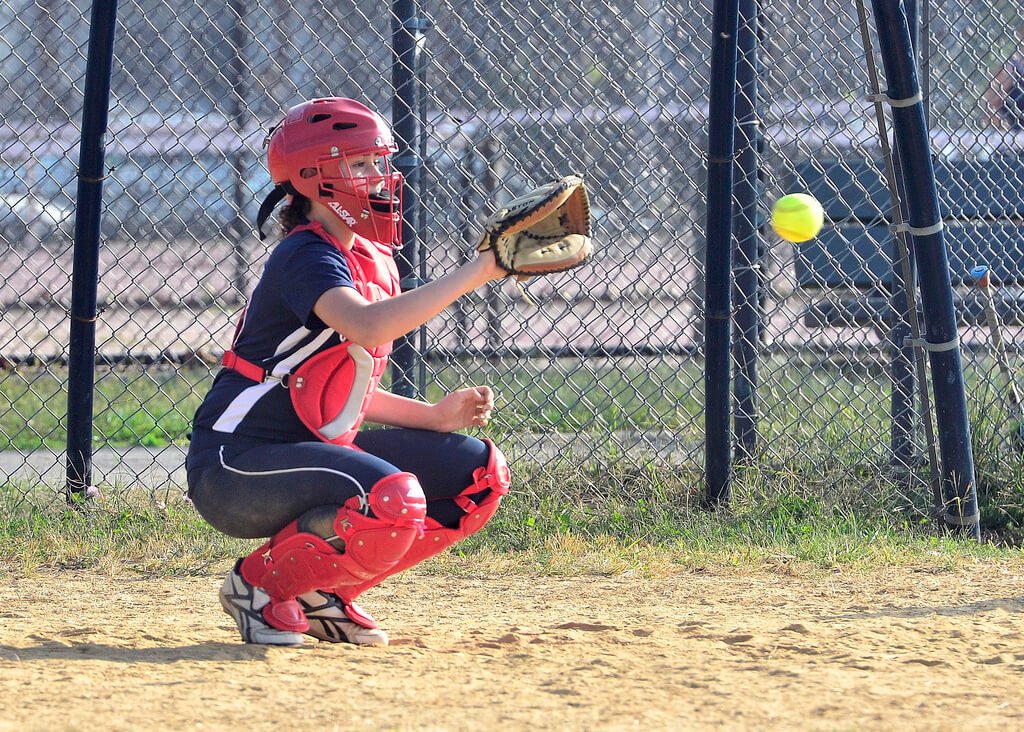
The best left-handed throw (LHT) catcher’s mitt you can buy off the shelf is the Rawlings Player Preferred RCM325R in left-hand throw — a game-ready 32.5″ budget mitt that is reliably stocked in LHT, with the Rawlings Renegade as the budget runner-up, the Rawlings R9 and Wilson A700 as the mid-range options when a season’s stock includes them, and a custom order as the only path to premium leather — no manufacturer stocks a premium LHT catcher’s mitt at all. This page covers what is actually available, what is not, and how to buy in a market this thin.
Left-handed catcher’s mitts compared
| Model | Tier | Size | Note |
|---|---|---|---|
| Rawlings Player Preferred RCM325R — best available LHT pick | Budget | 32.5″ | Synthetic and leather shell; game-ready out of the box |
| Rawlings Renegade — budget runner-up | Budget | 32.5″ | Check the listing carefully — not all variations offer LHT |
| Rawlings R9 Series — mid-range, when stocked | Mid-range | 32.5″ | Rawlings rotates LHT availability by season |
| Wilson A700 — full leather at mid-range | Mid-range | 32″ | Verify LHT availability before ordering |
| Custom order — the only premium path | Premium | Any | Wilson, Rawlings, 44 Pro and Nokona all accept LHT customs |
- Rawlings Player Preferred RCM325R — best available LHT pick
- Rawlings Renegade — budget runner-up
- Rawlings R9 Series — mid-range, when stocked
- Wilson A700 — full leather at mid-range
- Custom order — the only premium path
How we picked
- Scope: stock catcher’s mitts offered in a true left-hand throw (LHT) configuration — not first-base mitts, not fielder’s gloves relabeled by a retailer.
- Sources: manufacturer catalogs and retailer listings, checked August 26, 2026. LHT availability rotates season to season, so every entry still needs a listing check at order time.
- Ranking basis: in a market this thin, availability outranks spec sheets — the best mitt is the one actually offered in LHT at the size your catcher needs.
- Known gaps: we quote no prices here because LHT variations move in and out of stock too often for a printed price to hold; the premium tier is empty by fact, not by omission — no major manufacturer stocks a premium LHT catcher’s mitt.
Why left-handed catcher’s mitts are so rare
Left-handed catchers have been filtered out of baseball at every competitive level for over a century. The last left-handed catcher to appear in a major-league game was Benny Distefano, who caught three games for the Pittsburgh Pirates in 1989. The reasons are mechanical: a left-handed catcher’s throwing hand sits on the wrong side for fielding bunts down the third-base line, and the throw to third base — the shortest and most urgent steal in the game — forces the catcher to rotate further than a right-hander to clear the batter. At the professional and college level, that disadvantage ends the conversation.
Below those levels, though, left-handed catchers are real. Youth leagues, rec leagues, and slowpitch softball carry no such filter, and a left-handed kid who wants the hardest job on the field should not be talked out of it — the willingness to take that job is exactly the trait the position runs on. The problem is that the glove industry builds for the competitive pipeline, and the pipeline does not include left-handed catchers. So the stock shelf reflects a market that hardly exists at the top, even though it very much exists at the bottom. For more on the history, see our profile of famous left-handed catchers.
Rawlings Player Preferred RCM325R — best available LHT pick
- Tier: Budget
- Size: 32.5″
- Shell: Synthetic and leather mix
- Break-in: Game-ready out of the box
- Best for: Youth and rec-league catchers who need an LHT mitt they can actually order today
Verdict: the Rawlings Player Preferred RCM325R is the most reliably available left-handed catcher’s mitt on the market, and available beats perfect when the shelf holds five options. The synthetic-leather shell will not last like full steerhide, but it needs no break-in, which matters for a young catcher who wants to be behind the plate this weekend, not conditioning leather for a month. Confirm the LHT variation is selectable in the listing before ordering — that rule applies to every mitt on this page.
Rawlings Renegade — budget runner-up
- Tier: Budget
- Size: 32.5″
- LHT status: Offered, but not on every variation
- Best for: A second budget option when the Player Preferred is out of stock
Verdict: the Rawlings Renegade is the fallback budget pick — a comparable mitt whose left-hand-throw availability is less consistent than the Player Preferred’s. The Renegade line spans many gloves, and only some variations include LHT; add the mitt to your cart and confirm the left-hand throw option is actually selectable, not just pictured, before you count on it.
Price as of Oct 11, 2026 · may have changed
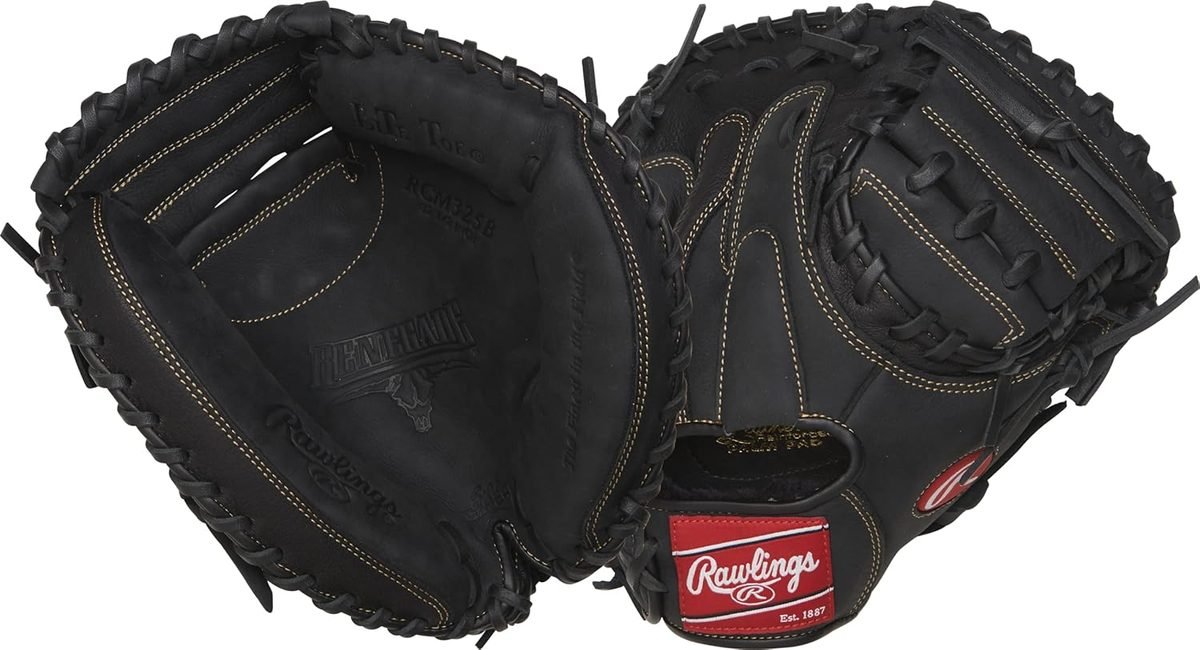
Rawlings R9 Series — mid-range, when stocked
- Tier: Mid-range
- Size: 32.5″
- LHT status: Rotates by season — some years yes, some years no
- Best for: A step up in quality when a season’s catalog includes the LHT variation
Verdict: the Rawlings R9 is the mid-range mitt worth waiting a season for — if Rawlings stocks it in LHT that year. Rawlings rotates left-hand-throw availability across its lines season to season, so the R9 in LHT is a check-every-spring proposition rather than a standing option. When it appears, it is the best value on this page.
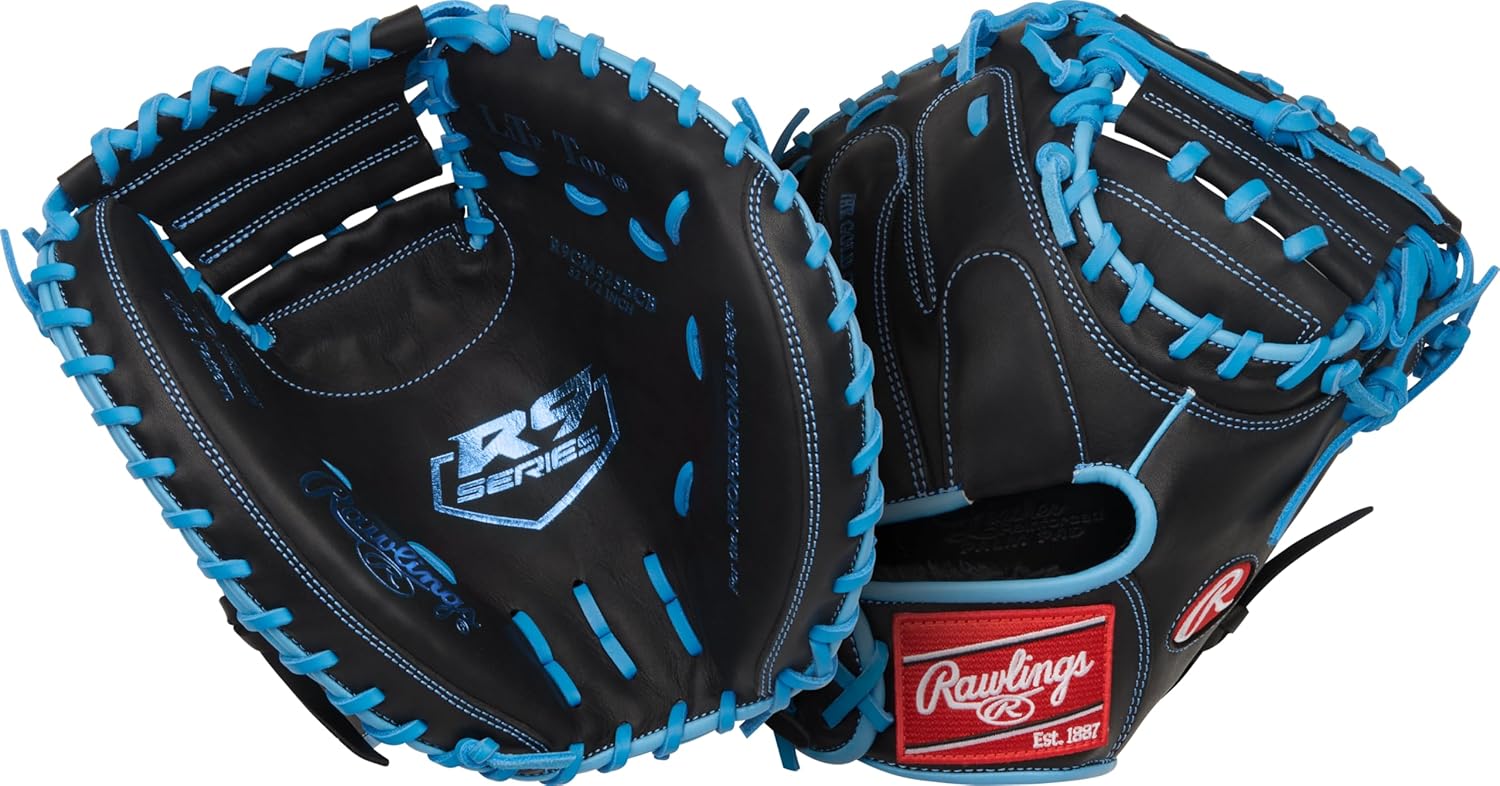
Wilson A700 — full leather at mid-range
- Tier: Mid-range
- Size: 32″
- Shell: Full leather
- Best for: A committed catcher who wants real leather without going custom
Verdict: the Wilson A700 is the only full-leather stock mitt we found offered in left-hand throw, which makes it the ceiling of the off-the-rack market. Full leather means a real break-in period — plan for it with our break-in guide — and verify the LHT option in the current listing, because Wilson’s availability shifts like everyone else’s.
Custom order — the only premium path
- Tier: Premium
- Size: Any
- Builders: Wilson, Rawlings, 44 Pro, Nokona — all accept LHT catcher’s mitt orders
- Best for: A committed, done-growing catcher who wants premium leather in a left-hand throw
Verdict: a custom order is the only way to get premium leather in a left-handed catcher’s mitt — there is no left-hand throw Heart of the Hide, no LHT A2000, no LHT All-Star CM3000 on any shelf. The good news is that a custom LHT mitt is not a compromise: it is the same leather and the same construction as the right-handed catalog, built to the hand. Our custom-mitts page covers the builders, the prices, and the four-to-twelve-week lead times.
Youth left-handed catchers
The best news in this entire niche is at the youth level. Several manufacturers offer youth catcher’s mitts in left-hand throw, because youth leagues do not filter by throwing hand and the demand is real. Rawlings, Mizuno and Wilson all carry at least one youth model with an LHT option, typically in the 31–32.5-inch range. Our youth catcher’s mitt roundup covers the picks by age; check each listing for the LHT variation before ordering.
Sizing matters more, not less, for a left-handed youth catcher, because the selection is so thin that you cannot simply pick the next model up. Our size chart gives the right number by age and hand circumference, and getting that number right is the difference between a mitt that works and a mitt that sits in the bag.
Left-handed catchers in fastpitch softball
Fastpitch softball has the same structural bias against left-handed catchers, but the filter is weaker. The shorter distances and the underhand delivery reduce the throw-to-third penalty, and left-handed catchers appear in college softball far more often than in college baseball. The mitt selection is still thin, but our fastpitch catcher’s mitt roundup flags which models carry an LHT variation. The same buying rules apply: verify the listing, size by the hand, and go custom for premium leather.
Which left-handed catcher’s mitt should you buy?
Buy the Rawlings Player Preferred if you need an LHT mitt now
The Rawlings Player Preferred is the mitt most likely to be in stock in left-hand throw at any given moment, and it is game-ready out of the box. For a youth or rec-league catcher starting this season, it is the practical answer. The Rawlings Renegade is the same call when the Player Preferred is out of stock.
Buy the Wilson A700 or Rawlings R9 if you want a step up and the listing cooperates
The Wilson A700 brings full leather at a mid-range price, and the Rawlings R9 is the better value in the seasons Rawlings stocks it in LHT. Both are “verify first” mitts: confirm the left-hand-throw variation is selectable and in stock before committing to either.
Order a custom if your catcher is committed and done growing
A custom left-handed catcher’s mitt is the only premium option, and it rewards the catcher who plans ahead: order in the off-season, because lead times run four to twelve weeks and the mitt still needs break-in time after delivery. That timeline is a feature for the right buyer — the catcher who thinks a season ahead is the one the position was built for.
Buy none of these if a first baseman’s mitt is tempting you
A first baseman’s mitt in LHT is easy to find and looks close enough — and it is the one substitution you should refuse. The pocket is shallower, the padding is lighter, and the shape is long and flat rather than round and deep; it is built to scoop throws, not to absorb pitches a hundred times a game. Protecting the hand is what keeps a catcher on the field every inning, and a team can build on a catcher who is always there. Our glove-vs-mitt explainer covers why the two are not interchangeable. Wait for the right mitt or go custom instead.
Frequently asked questions
Can a left-handed player catch in baseball?
A left-handed player can legally catch at every level of baseball — no rule forbids it. The obstacle is mechanical, not legal: a left-handed catcher has a harder time throwing to third base and fielding bunts on the third-base side. At the professional and college level, that disadvantage is enough to filter left-handers out. At the youth, rec-league and slowpitch level, it is not, and a left-handed catcher who loves the position should play it.
Why are there so few left-handed catcher’s mitts?
Left-handed catcher’s mitts are rare because the competitive pipeline does not produce left-handed catchers, so the market for LHT catcher’s mitts is extremely small. Manufacturers build for volume, and volume means right-hand throw. The demand that does exist — youth, rec, slowpitch — is served by a handful of budget and mid-range models. Premium LHT mitts are custom-only.
Can I use a first baseman’s mitt to catch?
A first baseman’s mitt should not be used for catching — it is longer, shallower and lighter than a catcher’s mitt. It is designed to scoop low throws, not to absorb 80- to 90-mph pitches over a hundred times a game. The padding difference alone makes it a safety issue. If you cannot find a catcher’s mitt in LHT at the quality you want, go custom rather than substituting a different position’s glove.
Who was the last left-handed catcher in MLB?
Benny Distefano of the Pittsburgh Pirates was the last left-handed catcher in MLB, catching three games in 1989. Before him, the position had not seen a left-handed catcher in decades. The history goes back to the 1870s, when catchers worked bare-handed and throwing hand mattered less. Our full profile of famous left-handed catchers covers the names and the era.
What is the best left-handed catcher’s mitt for a youth player?
The best left-handed catcher’s mitt for a youth player is the Rawlings Player Preferred or Renegade in LHT — game-ready, sized right, and actually available. Our youth catcher’s mitt roundup lists the models by age and size; check each listing for the left-hand throw option before ordering.
The bottom line
A left-handed catcher should not be told to switch positions — they should be told the truth about the market: a few stock options at the budget and mid-range tier that work, and a custom order at the premium tier that is the same leather and construction as anything on the right-handed shelf, built to the hand. The limiting factor is selection, not quality — know what is on the shelf, know when to go custom, and do not let a right-handed-default industry make the decision for you. For the broader mitt decision, start with how to choose a catcher’s mitt or see the premium roundup.