
Wilson A2K vs A2000 Catchers Mitt Compared
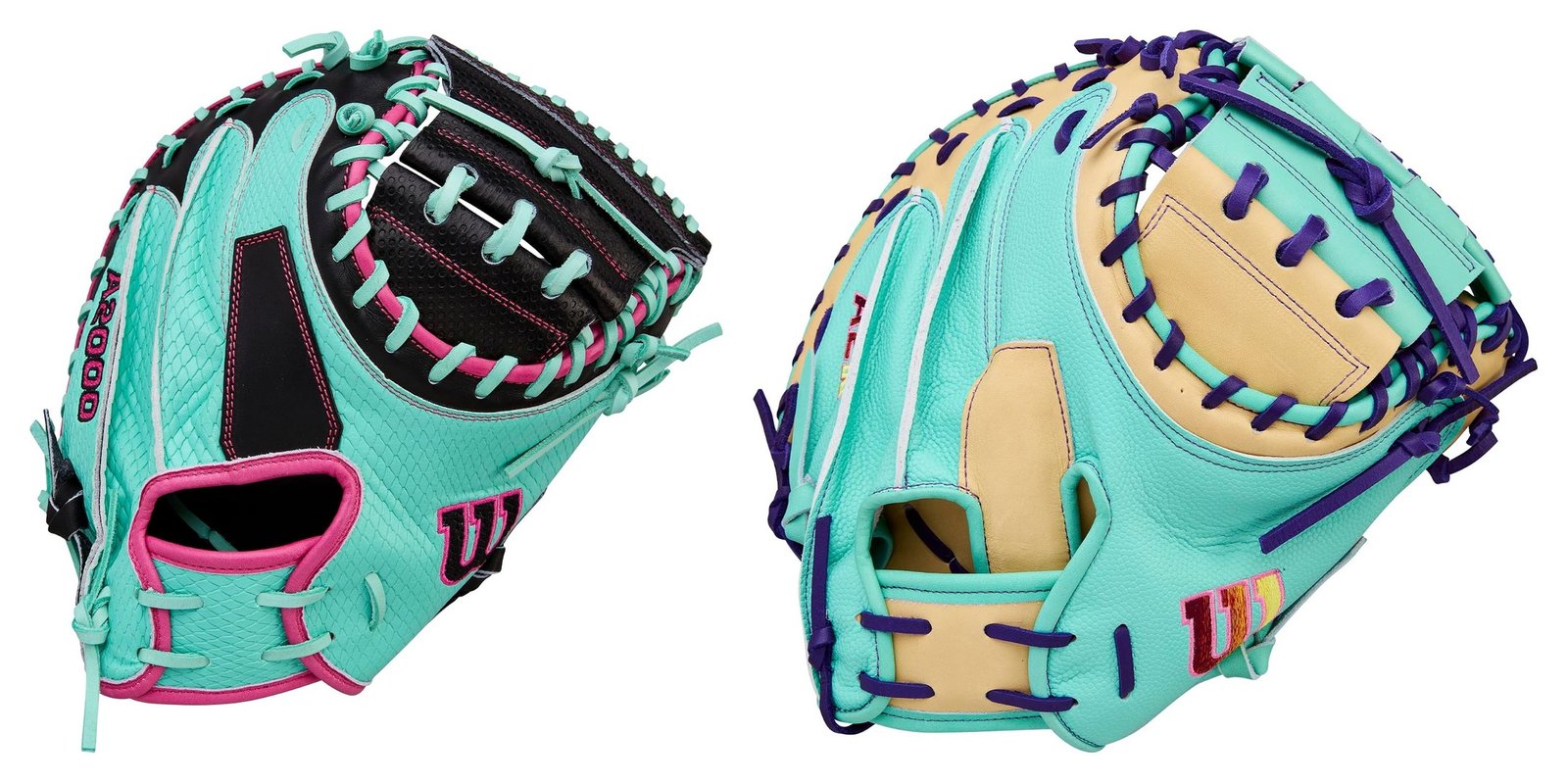
CatchersHome is reader-supported. If you buy through the Amazon links on this page, we may earn a small commission — at no extra cost to you. It does not change what we tell you about the gear.
Buy the Wilson A2000 catcher’s mitt if you want the more predictable break-in and roughly $100 back in your gear budget; typically $290–$330 as of July 11, 2026. Buy the Wilson A2K catcher’s mitt if you want triple-sorted leather and Double Palm Construction that owners report lasting four-plus seasons, typically $360–$500. Both lines now share the same M23 catcher pattern platform, so this is a leather-and-construction decision, not a shape decision.
Wilson A2000 SCM23SS 33.5in — check price on Amazon
Wilson A2K 1734 34in — check price on Amazon
Wilson A2K vs A2000 catcher’s mitts compared
| Dimension | Wilson A2000 — best value, more predictable break-in | Wilson A2K — best leather and durability |
|---|---|---|
| Catcher patterns | M1D, 1790, CM33 (+ Pedroia Fit), M2, PF33, 1734, current SCM23SS/M23 | M1, M2, 1734, 1679, current M23, Pudge (32.5in) |
| Sizes | 31.5in–34in (33.5in most common) | 32.5in–34in (33.5in most common) |
| Leather | Pro Stock Leather, single-sort | Pro Stock Select Leather, triple-sorted, top 5% of hides |
| Construction | Rolled dual welting on current listings; SuperSkin variants swap in a synthetic back panel | Double Palm Construction, rolled dual welting, Dri-Lex wrist lining (M23) |
| Manufacturing | Reported to be manufactured in Vietnam (single source) | Handcrafted in Japan, roughly 18 hours of labor per glove |
| Typical break-in | About a month with conditioner; up to 6–8 weeks for a full pocket (CM33 pattern) | Sources contradict — some report faster than expected, others 8–10 weeks |
| Price band (as of July 11, 2026) | Typically $290–$330 | Typically $360–$500 |
- Best value and the more predictable break-in: Wilson A2000 catcher’s mitt
- Best leather and multi-season durability: Wilson A2K catcher’s mitt
How we compared the Wilson A2K and A2000
- Rubric: the Wilson A2K and A2000 were compared on five dimensions — leather grade, break-in cost, durability, feel and pop, and price.
- Scope: catcher patterns only. Most “A2K vs A2000” comparisons online photograph an infield glove and never mention the double-palm pocket or the catcher-specific patterns both lines actually ship in. This one is scoped to the position.
- Sources: Wilson’s own line comparison and product language, retailer listings, and independent owner and reviewer reports, cross-checked where they disagreed. Pricing retrieved July 11, 2026.
- Known gaps: break-in timelines for the A2K genuinely conflict across independent sources and we do not pick a side below. The A2000’s Vietnam manufacturing appears in one source and is not confirmed on Wilson’s own site. Neither mitt carries a numeric score here because we have no scored test protocol to back one.
Wilson A2000 catcher’s mitt — best value and the more predictable break-in
CatchersHome verdict: 4.5 / 5
- Leather: Pro Stock Leather, single-sort
- Construction: rolled dual welting; SuperSkin variants swap in a synthetic back panel
- Catcher sizes: 31.5in–34in, 33.5in most common
- Break-in: about a month with conditioner; up to 6–8 weeks for a full CM33 pocket
- Price band: typically $290–$330 as of July 11, 2026
- Best for: high school and budget-conscious catchers who need to be game-ready on a schedule
Verdict: the Wilson A2000 catcher’s mitt is the honest recommendation for most catchers, because it delivers real Pro Stock leather and a decades-refined catcher pattern lineup at a price band well under $350, with the more predictable break-in path of the two.
The Wilson A2000 is not a consolation prize. Multiple comparison sources note that experienced and even pro-level catchers choose it over its pricier sibling, which tells you how far it closes the gap for the money. One long-time multi-mitt owner said the A2000 quickly became their number one, praising how it controlled the ball and blocked well from early on. The built-in thumb guard draws specific praise too — owners say it molds into a genuinely comfortable fit over a season.
The A2000’s real advantage is that its break-in is a known quantity. A month of conditioning and catch gets it workable; the CM33 pattern wants 6–8 weeks for a full pocket. A catcher who knows exactly when the mitt will be ready can plan the season around it — and a catcher whose gear is ready when the season starts is the one the staff stops worrying about.
Wilson A2000 pros and cons
- Pro: roughly $100 less than a comparable A2K, freeing budget for the rest of the bag.
- Pro: the more predictable break-in timeline of the two lines.
- Pro: the widest catcher pattern selection Wilson offers, including Pedroia Fit for smaller hands.
- Con: single-sorted Pro Stock leather does not match the A2K’s first-touch feel.
- Con: no Double Palm Construction, so the pocket is less stable under repeated blocking.
Price: typically $290–$330 as of July 11, 2026. Wilson A2000 SCM23SS 33.5in — check price on Amazon — or read the full A2000 review for the deep dive on every pattern.
Wilson A2K catcher’s mitt — best leather and multi-season durability
CatchersHome verdict: 4.3 / 5
- Leather: Pro Stock Select Leather, triple-sorted from the top 5% of hides
- Construction: Double Palm Construction, rolled dual welting, Dri-Lex wrist lining (M23)
- Catcher sizes: 32.5in–34in, 33.5in most common
- Break-in: sources conflict — some report faster than expected, others 8–10 weeks
- Price band: typically $360–$500 as of July 11, 2026
- Best for: college and serious adult catchers keeping one mitt for four-plus seasons
Verdict: the Wilson A2K catcher’s mitt buys you the best leather and the most stable pocket Wilson makes, and owners report it holding up for four-plus seasons of serious play — which is what the roughly $100 premium is actually purchasing.
The Wilson A2K is hand-shaped in Japan at roughly 18 hours of labor per glove, and that is the best-corroborated fact in this comparison — four independent sources repeat it identically. Its Pro Stock Select leather is triple-sorted from the top 5% of available hides, and owners describe it as remarkable from the first touch. Double Palm Construction adds a second layer of leather stitched between the palm and the interior liner, confirmed across four separate sources.
In catcher’s terms, that extra layer is not a spec-sheet flourish. It stabilizes the pocket under repeated impact: fewer balls squirting loose in the dirt, more protection for the catching hand across a season of blocking. A pitcher throwing a breaking ball in the dirt with a runner on third is making a bet on the mitt behind the plate. The A2K is built so that bet keeps paying in the fourth season, not just the first.
Wilson A2K pros and cons
- Pro: triple-sorted Pro Stock Select leather, the clearest and best-supported edge either mitt has.
- Pro: Double Palm Construction gives a deeper, more stable pocket under blocking.
- Pro: owners report four full seasons of serious play, some past five with maintenance.
- Con: roughly $100 more, and the top of the band reaches $500 on loaded trims.
- Con: break-in timeline is genuinely unsettled across independent sources.
Price: typically $360–$500 as of July 11, 2026. Wilson A2K 1734 34in — check price on Amazon — or read the full A2K review for the complete breakdown.
Where the Wilson A2K and A2000 actually differ
Leather — the Wilson A2K takes it
The Wilson A2K’s Pro Stock Select Leather is triple-sorted, pulled from the top 5% of available hides — a claim repeated consistently across independent retailer and review sources. The Wilson A2000 uses Pro Stock Leather, sorted once rather than three times: still a real leather, just not graded as tightly. Owners describe the A2K’s leather as remarkable from the first touch, and that first-touch quality is the clearest, best-supported edge either mitt has.
Break-in — the Wilson A2000 takes it
The Wilson A2000 has a fairly consistent break-in story: roughly a month with regular conditioning to get workable, up to 6–8 weeks for the CM33 pattern to fully form its pocket. That is a real commitment for a premium mitt, but it is a predictable one.
The Wilson A2K’s break-in timeline is contradictory across sources, and this comparison is not going to invent a clean answer. One line of reporting says the A2K breaks in faster than expected thanks to factory pre-shaping. A separate, independent set of owner reports puts it at 8–10 weeks — the longest in the Wilson lineup — blamed on the density of the Pro Stock Select leather and the extra layer from Double Palm Construction. Both cannot be right. What is consistent across both takes: a secure squeeze takes practice early on, and steam is a bad idea on either mitt. Over-soften the A2K’s denser leather and you erode the durability you paid for.
Durability — the Wilson A2K takes it
Durability is the best-supported fact in the entire comparison. Double Palm Construction — a second layer of leather stitched between the palm and the interior liner — appears on the Wilson A2K and not on the Wilson A2000, a claim confirmed across four separate sources. Owners report the A2K has been built for four full seasons of serious play, with some well-maintained gloves still going strong past five at the college and pro level.
Feel and pop — the Wilson A2K takes it, but not by a landslide
The Wilson A2K’s pocket sits deeper and holds its shape more consistently, a direct result of Double Palm Construction, and comparison sources cite it for cutting down passed balls and protecting the catching hand. The Wilson A2000 does not lose this fight badly. Its built-in thumb guard molds into a comfortable fit over time, and owners describe strong ball control and blocking early in the mitt’s life. If the A2K’s feel is a notch above, the A2000’s is still real, and it arrives with less of a wait.
Price — the Wilson A2000 takes it
The Wilson A2000 typically runs $290–$330. The Wilson A2K typically runs $360–$500, with the wider range driven by pattern and trim — a base M1 sits closer to $360, while a loaded current-generation 1734SS or a fully custom build pushes toward the top. Comparing both at the same point in Wilson’s lineup, current M23-pattern releases, the real-world gap lands at roughly $100. Treat that as a rule of thumb rather than a fixed line; it moves with trim. Spread across four-plus seasons it is a small annual difference — smaller than most catchers spend on cleats in a year. Spread across two, it is real money that buys a lot of other gear.
Which Wilson catcher’s mitt should you buy?
Buy the Wilson A2000 if…
Buy the Wilson A2000 if you are a high school starter working with a family budget, or anyone who needs a known break-in timeline. You get a mitt that reaches game-ready on a schedule you can plan around and leaves room in the budget for the rest of the gear bag. And you’ll be in good company since multiple sources note experienced and pro-level catchers choosing the A2000 over the A2K.
Buy the Wilson A2K if…
Buy the Wilson A2K if you are a college or serious adult catcher, or a travel-ball family treating the mitt as a multi-season investment. Double Palm durability is built for exactly that arc: fall ball, spring season, and summer travel without a replacement in between. You already know what a triple-sorted hide and an 18-hour hand-shaped build are worth.
Buy neither if…
Buy neither the Wilson A2K nor the A2000 if even the A2000’s price band is a stretch this season, or if you are a first-year catcher still deciding whether the position is yours. Neither of these is your mitt yet, and there is no virtue in overspending on a first serious mitt. Our premium mitt guide covers the full range at different price points. If you want to look outside Wilson entirely, we also review the Rawlings Pro Preferred and the Mizuno Pro Select.
Wilson A2K vs A2000 FAQs
What’s the difference between the Wilson A2K and A2000?
The Wilson A2K and A2000 differ in leather grade and construction, not shape — both lines now share the M23 catcher pattern platform. The A2K uses triple-sorted Pro Stock Select Leather and adds Double Palm Construction for a deeper, more stable pocket. The A2000 uses single-sorted Pro Stock Leather without that layer. The A2K edges out the A2000 on leather feel and durability; the A2000 wins on price and offers the more predictable break-in.
Is the Wilson A2K worth the extra $100?
The Wilson A2K is worth roughly $100 more if you plan to keep the mitt four-plus seasons, and probably is not if you do not. Comparing both at the same point in Wilson’s current lineup, that premium buys triple-sorted leather, Double Palm Construction, and a hand-shaped build in Japan. Spread across four seasons it thins out fast. On a tighter timeline and budget, the A2000 delivers most of the performance for less.
Why is the Wilson A2000 so popular?
The Wilson A2000 is popular because it hits a rare balance: real Pro Stock leather, a catcher pattern lineup refined over decades, and a price band well under $350. Multiple comparison sources note experienced and pro-level catchers sometimes preferring it to the pricier A2K, which says something about how far it closes the gap for the money.
Are Wilson A2K gloves made in Japan?
Wilson A2K gloves are hand-shaped in Japan at roughly 18 hours of labor per glove — the best-corroborated fact in this comparison, repeated identically across four independent sources. The Wilson A2000 is reported to be manufactured in Vietnam, though that detail comes from a single source and is not confirmed on Wilson’s own site.
How long does a Wilson catcher’s mitt take to break in?
A Wilson A2000 catcher’s mitt takes about a month of conditioning and catch to become workable, and up to 6–8 weeks for a full CM33 pocket; the Wilson A2K’s timeline is disputed, with reports ranging from faster-than-expected to 8–10 weeks. Mallet work, light conditioner, and daily catch reps are the recommended method for both. Steam is a bad idea on either mitt, and especially on the A2K’s denser leather.
Bottom line
The Wilson A2000 is the smarter buy for a catcher watching the budget and wanting a break-in they can schedule; the Wilson A2K is the smarter buy for a catcher who wants the best leather and durability Wilson makes and will pay roughly $100 more to get it. Both are real catcher’s mitts rather than glove-wide gloves that happen to come in a catcher pattern — which is the thing most A2K-vs-A2000 comparisons get wrong.
Still shopping? See every mitt in our lineup at our premium mitt guide, the baseball catchers mitts collection, or the mitts hub.