
Best Mid-Range Catcher’s Mitts: The $100–$250 Tier
Affiliate disclosure: CatchersHome earns a commission on qualifying purchases through the Amazon links below, at no extra cost to you. We only recommend gear we’d hand to our own catcher.
The best mid-range catcher’s mitt for most players is the Rawlings Gamer XLE Speed Shell at $189.95. It is a catcher-specific pattern that arrives about 80% broken in. Meanwhile the Rawlings R9 at $149.99 is the value pick, and the All-Star CM3100 at $249.99 buys premium-family leather. Every price on this page was checked on Amazon on August 18, 2026, and prices move without notice. This tier is the one most catchers should actually be shopping. It is also the one almost nobody writes about. So this guide covers the six mitts worth your money between $100 and $250.
Why the $100 to $250 tier matters
Most catcher’s mitt advice offers you two answers: an $80 mitt or a $400 one. That is a real gap, and a lot of catchers fall straight into it. A high school player catching a full season needs more mitt than the budget shelf provides. Yet that same player often does not catch enough innings to earn back a premium mitt. Not at three or four times the price.
The middle tier answers that. Here you get real leather, catcher-specific patterns and genuine padding. Meanwhile you skip paying for a hide engineered to survive four seasons of college ball. So the trade is simple. You give up years, and you keep money.
The six best mid-range catcher’s mitts
| Mitt | Lowest price | Size | Best for |
|---|---|---|---|
| All-Star Pro Series CM3100 | 33.5in (CM3100SBT) | Best leather in the tier | |
| Rawlings Gamer XLE Speed Shell | 32.5in | Best overall for the money | |
| All-Star S7 Elite CM5000 | check the listing | Best pocket for blocking | |
| Marucci Ascension V4 230C1 | 32.0in | Lightest feel | |
| Rawlings R9 Series | 32.5in | Best value | |
| Marucci Acadia | 32in | Best entry to the tier |
Prices checked on Amazon on August 18, 2026. Check the live listing before you buy. Then confirm the size and hand on the listing itself, rather than the product title.
Best leather in the tier: All-Star Pro Series CM3100 — $249.99
This is the only mitt here built from Japanese-tanned steerhide out of a genuine premium family. In fact it is the value model of the same Pro Series that produces the $450 CM3000. The leather arrives pre-oiled, so it starts softer than a true premium mitt. It also ships with a removable padded wrist guard and a Velcro closure. The CM3000 does not include one at any price.
The catch: One major glove retailer lists the 33.5-inch CM3100SBT as discontinued. Yet it was in stock on Amazon at $249.99 when we checked. So treat this as a line winding down, and buy the size you want while it is on a shelf.
All-Star Pro Series CM3100 (33.5in (CM3100SBT)) — check price on Amazon
Best overall for the money: Rawlings Gamer XLE Speed Shell — $189.95
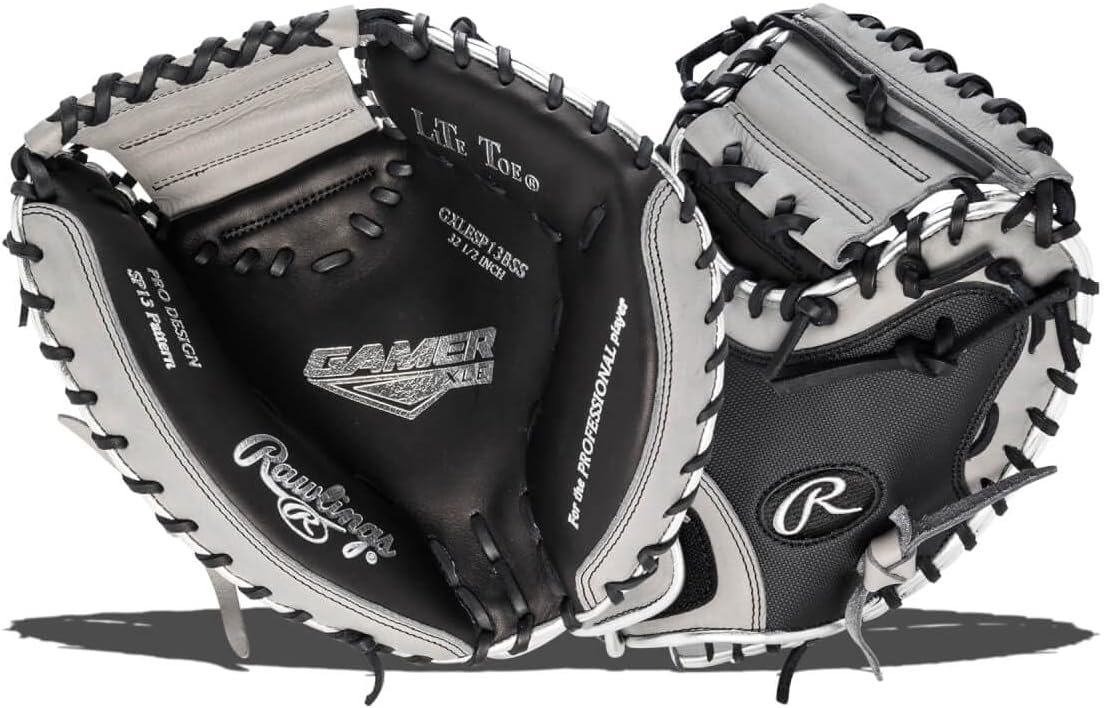
Rawlings states this one plainly. The listing says recommended exclusively for use by catchers, designed for a high school to adult hand, and roughly 80% broken in at the factory. It runs a one-piece solid web that reads like a two-piece closed web. That combination — catcher-specific pattern, near-game-ready, mid-tier money — is the tidiest answer in the tier.
The catch: Nearly game-ready leather is leather that was softened for you, which is a withdrawal against the mitt’s later life. Expect a good season or two rather than four.
Rawlings Gamer XLE Speed Shell (32.5in) — check price on Amazon
Best pocket for blocking: All-Star S7 Elite CM5000 — $179.95
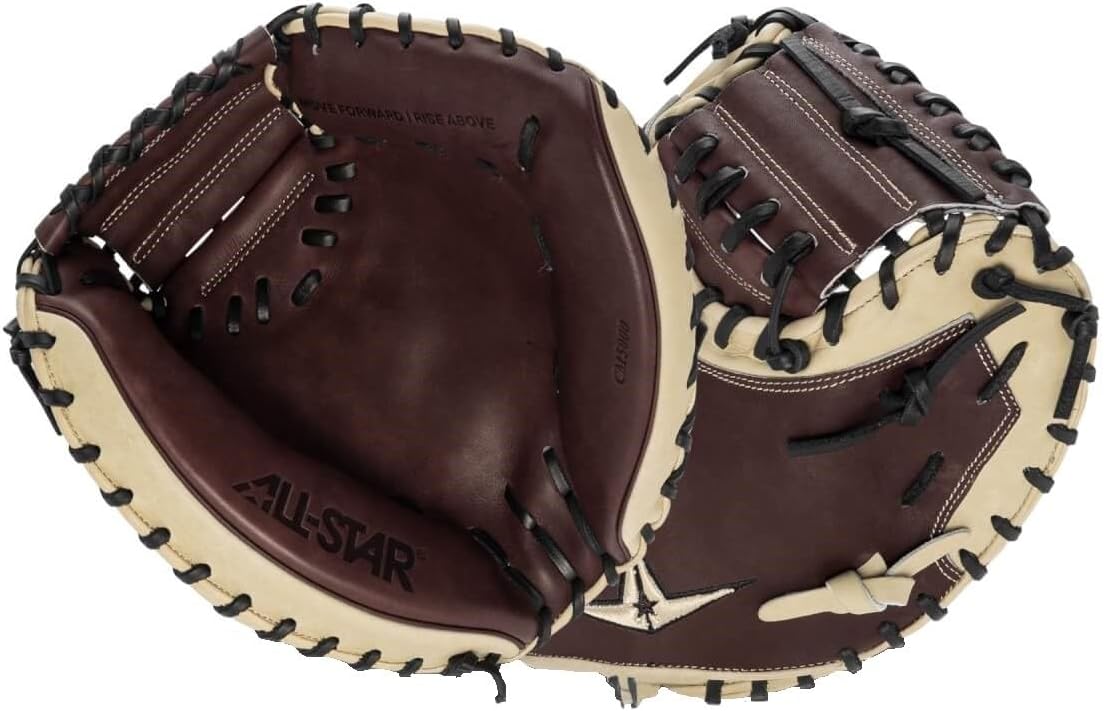
All-Star builds this one around a deep pocket meant to secure the ball while minimizing spin. Alongside that sits a cut-weight design, which removes excess leather for a quicker glove hand. It adds an index finger pad on the shell backing and a professional-class wrist strap. For a catcher whose innings are spent smothering balls in the dirt, the deep pocket is the spec that matters.
The catch: The Amazon listing we read did not state a size on the ASIN itself. Confirm the size on the live listing before ordering.
All-Star S7 Elite CM5000 (check the listing) — check price on Amazon
Lightest feel: Marucci Ascension V4 230C1 — $169.95
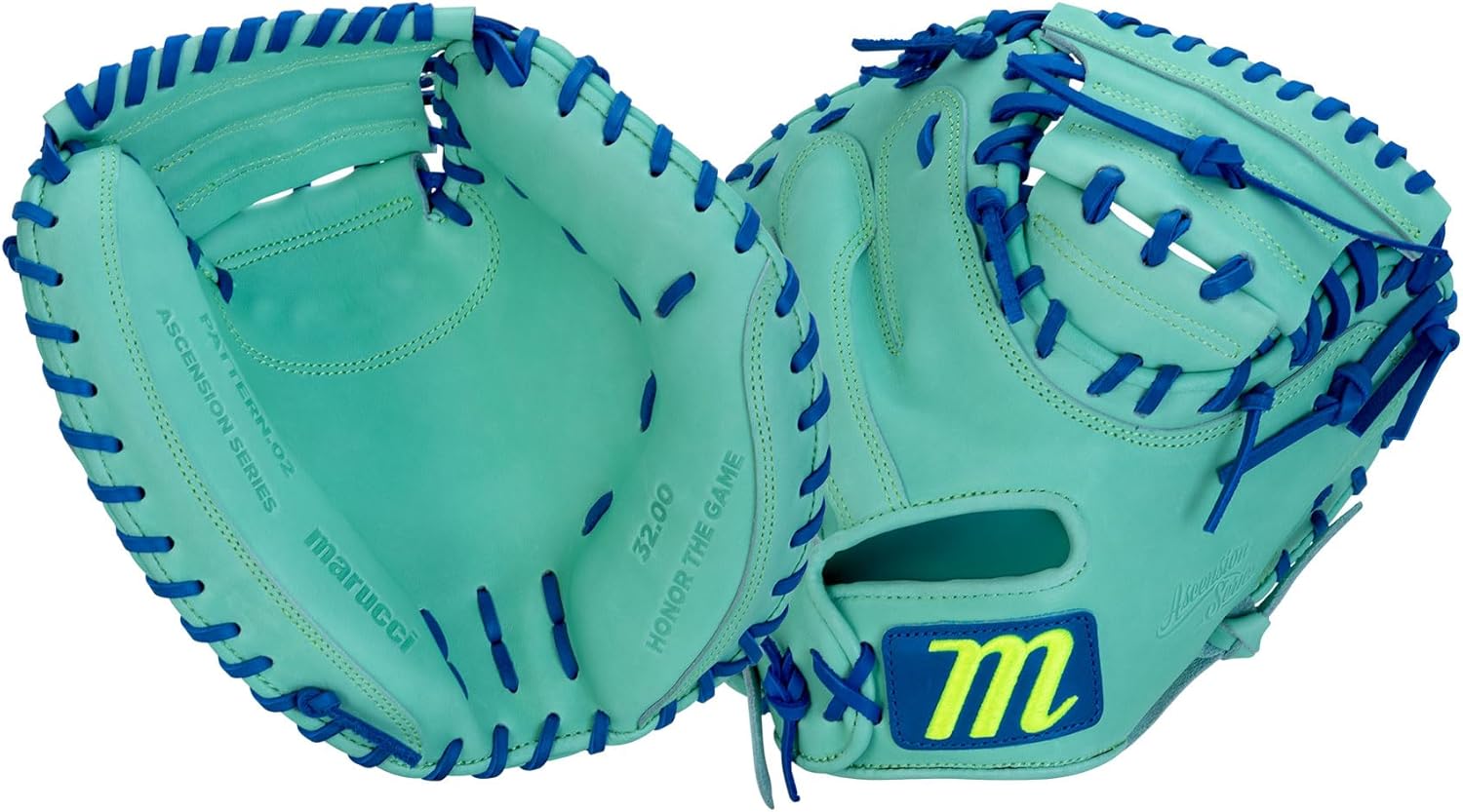
Marucci uses a tight-grain steerhide shell here to increase durability while reducing weight. That is an unusual pairing at this price. The wrist lining is moisture-wicking mesh over dual-density memory foam, and the finger lining is cushioned leather. Weight is a seventh-inning problem, so a lighter mitt earns its keep late in games rather than early.
The catch: At 32 inches this is the smaller end of the adult range. A catcher with big hands or a preference for surface area should size up within the tier.
Marucci Ascension V4 230C1 (32.0in) — check price on Amazon
Best value: Rawlings R9 Series — $149.99
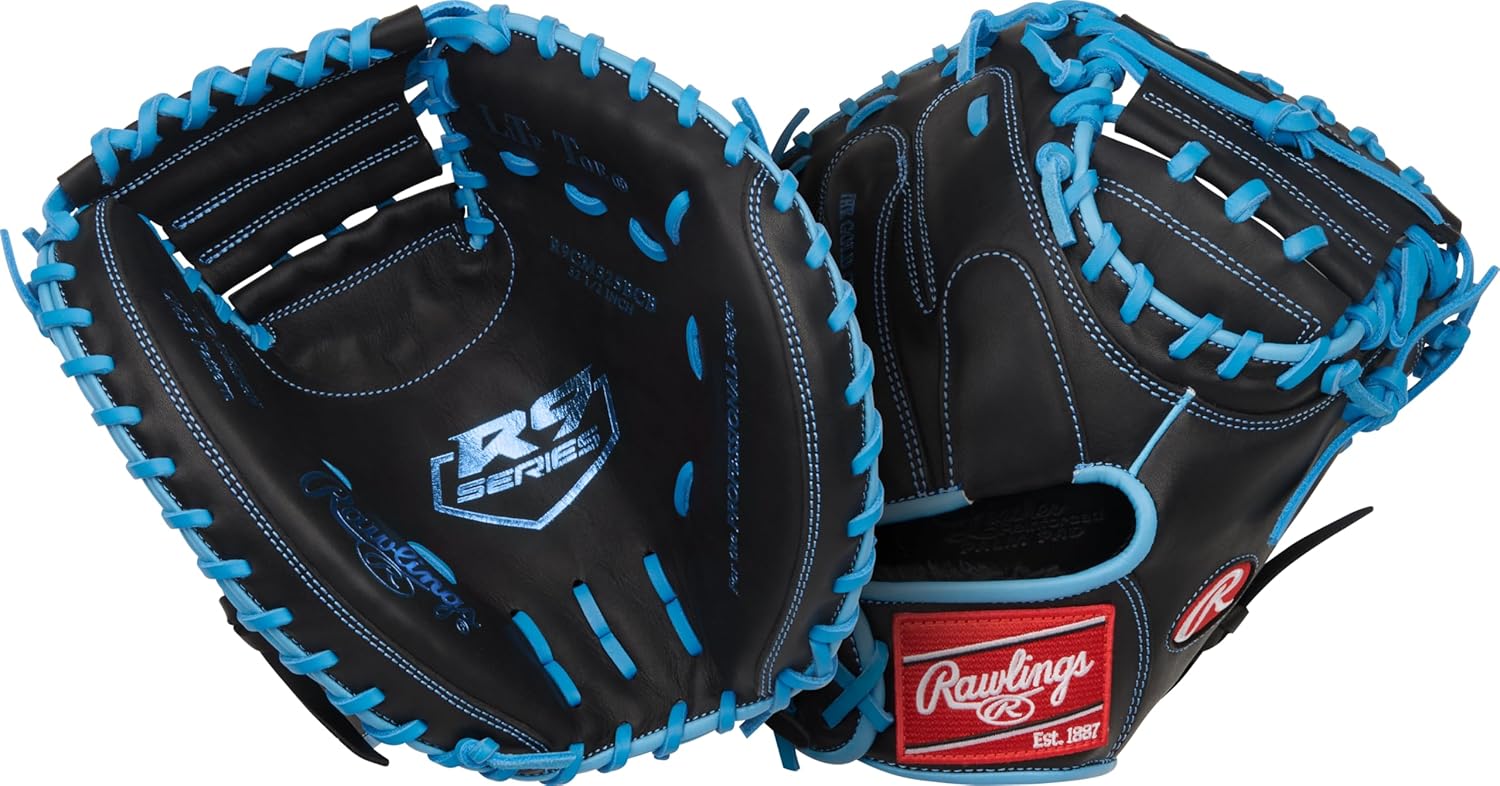
The R9 is Rawlings’ step between the entry lines and the Heart of the Hide. It is aimed at select youth, high school and competitive players. It uses an all-leather shell soft enough for a quick break-in. Padding runs through a reinforced palm pad, a padded thumb loop and padded fingerback liners. At $149.99 it is the cheapest mitt here that still feels like a real catcher’s mitt.
The catch: The R9 name spans a large family of gloves at many sizes. The 32.5-inch catcher’s variant is the one linked here — check the size and position on the listing before you buy.
Rawlings R9 Series (32.5in) — check price on Amazon
Best entry to the tier: Marucci Acadia — $109.99
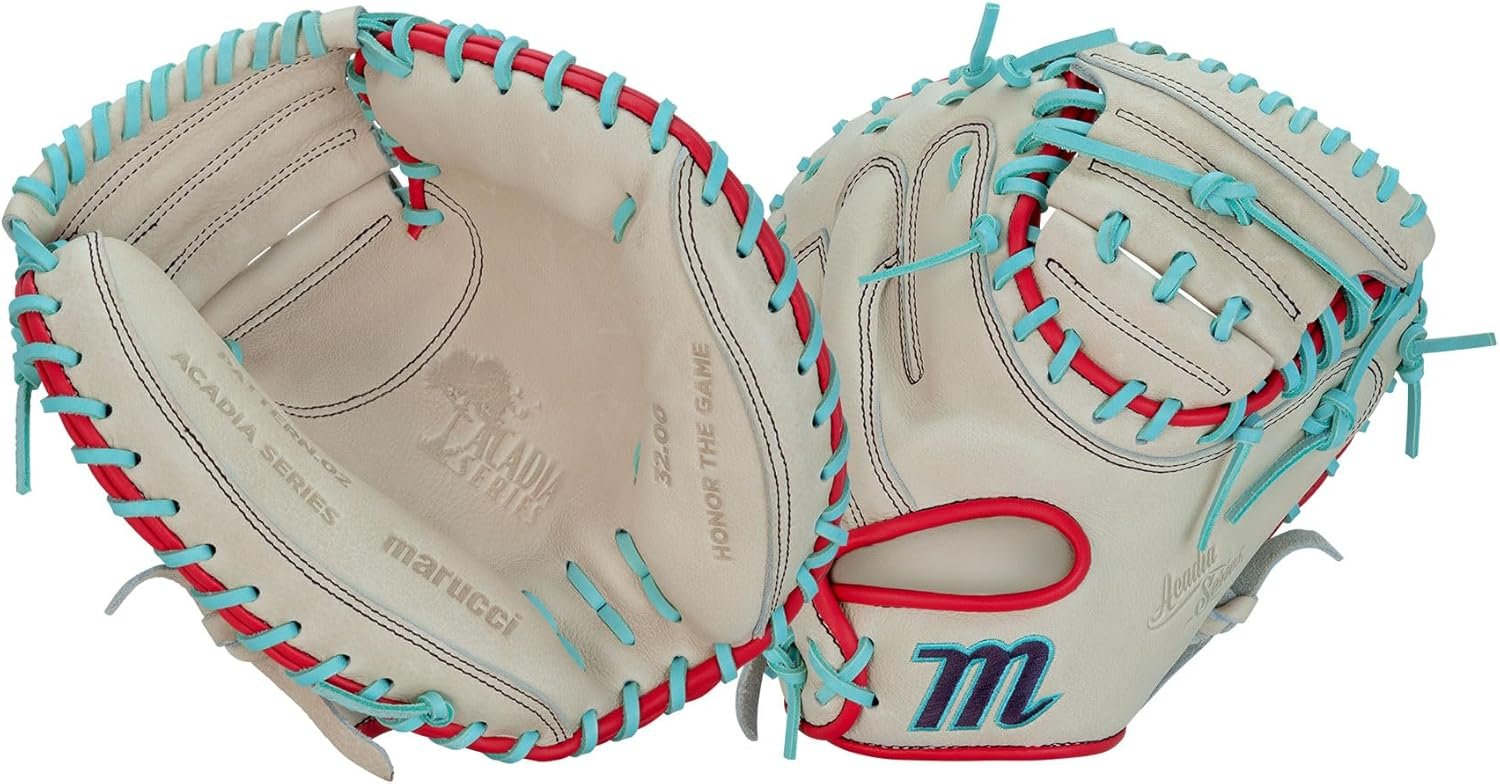
Full-grain cowhide shell, a supple leather palm lining with added cushioning, tapered hand stall sizing and professional-grade rawhide laces. This is the point where a mitt stops being a toy and starts being equipment. Meanwhile it costs about $30 more than the best of the budget shelf.
The catch: Full-grain cowhide is a step below the steerhide used higher in this tier. So plan on a shorter life than the $170-plus picks.
Marucci Acadia (32in) — check price on Amazon
What you give up against a premium mitt
One thing, mostly: seasons. A premium mitt’s leather resists you at the start and rewards you later. That is why the All-Star Pro Elite CM3000 asks for about three weeks of break-in, and then holds its pocket for years. Mid-range leather is softened earlier, either by grade or by factory oiling, so it plays sooner and flattens sooner.
That trade shows up in year two, not week one. In March, a $180 mitt and a $450 mitt feel closer than the price suggests. By the following July the cheaper pocket has gone shallow. Then the difference is obvious every time a ball hits the dirt. Our leather explainer decodes which grade you are actually buying under each brand’s marketing names.
What you gain against a budget mitt
- A catcher-specific pattern. Budget mitts are often a size in a general glove family. The mitts above are built as catcher’s mitts, and the Gamer XLE listing says so outright.
- Real padding. Reinforced palm pads, index finger pads and dual-density wrist foam are standard here and rare below $100.
- Leather that holds a pocket. Full-grain cowhide and steerhide keep the shape you break into them. Split-grain and synthetic do not.
- A wrist strap worth adjusting. A mitt that spins on a foul tip is a mitt that stings. Meanwhile the closures in this tier actually lock the hand in.
How to choose inside the tier
Work down in this order, and the list above narrows to one mitt fast. First, size — check the size chart and buy what the catcher can close today. Second, how long the mitt has to last, which sets your budget inside the range. Third, playing style. If the catcher spends real innings blocking, the deep-pocket S7 Elite is the pick, and our framing versus blocking guide explains why.
Only then does the model matter. And if you find yourself talking up to the CM3100 at the tier ceiling, read the CM3000 versus CM3100 comparison first. It lays out exactly what another $200 does and does not buy inside the same family.
Just below the tier
One mitt sits close enough to mention. The Mizuno Franchise GXC90B5 in the 33.5-inch catcher pattern was $95.00 when we checked. That puts it just under this tier rather than in it. It carries a full-grain leather shell, a Parashock palm pad for impact absorption and HiLo lacing. So if your ceiling is under $100, look at that one. Otherwise you are dropping to a synthetic shell.
How we picked, and what we did not verify
- Every mitt above was checked on its live Amazon listing on August 18, 2026. We read the listing title, the selected size and hand, and the feature bullets. Never the URL, because it is family-level and identifies nothing.
- Prices are what the listing showed that day. Premium and mid-tier leather both move, and none of these are locked.
- Every product photo on this page was verified against the model stamp pressed into the leather before it was published — GXLESP13BSS on the Gamer XLE, R9CM325BCB on the R9, CM5000 on the S7 Elite, and the 32.00 pattern stamps on both Maruccis. Supplier image sets for these lines have shown us the wrong model before, and a wrong photo next to a buy link is a false claim.
- The CM3100 appears without a photo. The only listing image we could source carries a different All-Star model’s stamp, so we would rather show you nothing than the wrong mitt.
- Durability estimates here are inference from leather grade and factory treatment, not measured lifespan. Nobody publishes season counts, ourselves included.
- The All-Star S7 Elite CM5000 listing did not state a size on the ASIN we read. Meanwhile the Marucci listings identify by size rather than by the word ‘catcher’. Confirm both on the live page.
Mid-range catcher’s mitt FAQs
How much should you spend on a catcher’s mitt?
Between $100 and $250 for a catcher playing organized ball who is not yet catching a full competitive season. Below $100 you are buying a mitt that will be replaced within a season or two. Above $250 you are buying multi-season durability, which only pays back if the innings are there. So the middle tier is where most high school and travel-ball catchers should actually shop.
What is the best catcher’s mitt for the money?
The Rawlings Gamer XLE Speed Shell at $189.95. It is one of the few mitts in the tier whose listing states it is recommended exclusively for catchers, and it arrives about 80% broken in. Meanwhile the Rawlings R9 at $149.99 is the better buy if you want to spend less. Alternatively the All-Star CM3100 at $249.99 buys premium-family leather.
Is a $200 catcher’s mitt good enough for high school?
Yes. A $200 mitt in this tier will get a high school catcher through a season comfortably. What it will not reliably do is get them through four. So the real question is not whether the mitt is good enough now. Instead it is whether you would rather buy once at $450 or twice at $200.
What is the difference between a mid-range and a premium catcher’s mitt?
Leather grade and how long the pocket holds its shape. Premium mitts use full-grain or Japanese-tanned steerhide that resists break-in and then lasts several seasons. Mid-range mitts use softer or pre-treated leather that plays well sooner and flattens sooner. In fact the gap shows up in year two, not week one.
Do mid-range catcher’s mitts need breaking in?
Less than premium mitts, but yes. Several in this tier ship substantially broken in at the factory. In fact the Rawlings Gamer XLE listing puts it at roughly 80% done. Even so, the last stretch is what shapes the pocket to your hand, and that part cannot be bought.
What size mid-range catcher’s mitt should I buy?
Most mitts in this tier come in 32 to 33.5 inches, which covers high school through adult. Size by the hand and the level rather than by ambition. A mitt the catcher cannot close is a mitt that drops the ball. So check our size chart before you pick a model.
Not sure this is your tier yet? Start at how to choose a catcher’s mitt. Then compare up to the premium roundup, or down to the budget shelf. Whatever you buy, break it in with reps rather than heat. Everything here sits under baseball catcher’s mitts in our mitts pillar.