
Are Expensive Catcher’s Mitts Worth It? The Cost-Per-Season Math
An expensive catcher’s mitt is worth it when the catcher plays enough innings to use it thoroughly. Below that line it is not, at any price. The way to settle it is cost per season, not sticker price. And once you run that number, something surprising falls out. For a catcher playing four full seasons, the cheapest mitt on the whole ladder is not the $80 one — it is a premium mitt. This page shows the math, then tells you which side of the line you are on.
Affiliate disclosure: CatchersHome earns a commission on qualifying purchases through the Amazon links below, at no extra cost to you. We only recommend gear we’d hand to our own catcher.
What catcher’s mitts actually cost in 2026
Start with the real ladder. Budget and mid-range prices below were checked on Amazon on August 18, 2026. Premium bands are the ranges we recorded in July 2026. Prices move, so treat these as the shape of the market rather than a quote.
| Tier | Typical price | Examples | Owner-reported life |
|---|---|---|---|
| Entry / budget | $75–$95 | Rawlings Player Preferred, Wilson A700, Mizuno Franchise | About one full season of catching |
| Mid-range | $110–$250 | Marucci Acadia, Rawlings R9, Gamer XLE, All-Star CM3100 | One to two seasons |
| Premium | $290–$500 | Wilson A2000, Rawlings Heart of the Hide, Wilson A2K, All-Star CM3000 | Three to four-plus seasons |
Those lifespan figures are the soft numbers here, and it is worth being blunt about that. They come from owner reports rather than measurement. Nobody publishes real season counts, including us. But the pattern is consistent enough to plan around: A2K owners report four-plus seasons of serious play, some past five at college and pro level, while a mid-range mitt has a pocket that felt great in March often feels flat by July.
The cost-per-season math
Here is the whole idea in one line. Divide the price by the seasons you will actually get out of it. Then compare that number, not the sticker.
So take a four-season window — a catcher entering high school, say, through to graduation. Assume the budget mitt gets replaced every spring, the mid-range mitt every other spring, and the premium mitt survives the whole run. That is what the owner reports support.
| What you buy – with an average Price | Total over 4 seasons | Cost per season |
|---|---|---|
| $80 budget mitt, replaced every spring | $320 | $80 |
| $180 mid-range mitt, replaced every other spring | $360 | $90 |
| $310 Wilson A2000, bought once | $310 | $78 |
| $330 Heart of the Hide, bought once | $330 | $83 |
| $430 Wilson A2K, bought once | $430 | $108 |
| $475 All-Star Pro Elite CM3000, bought once | $475 | $119 |
Read the third row again. Across four seasons of real catching, the Wilson A2000 is cheaper per season than buying an $80 mitt every year. It is also cheaper than the mid-range rebuy cycle. That is the answer to why the A2000 keeps showing up as the recommendation from people who have owned several mitts — it is not a compromise, it is the value pick.
Two honest caveats. First, that table assumes four seasons actually happen. Second, it ignores resale, which is real for premium mitts and worthless for budget ones. Both push the same direction, so the conclusion holds.
Three catchers, three different answers
The 10-year-old who might not play next season
Buy the budget mitt. A player who is still growing will outgrow the mitt before wearing it out, so durability buys you nothing. Worse, an expensive mitt at this age is often too stiff for the hand to close, which actively hurts the catcher. Our budget mitt guide covers this shelf, and the size chart matters far more here than the price does.
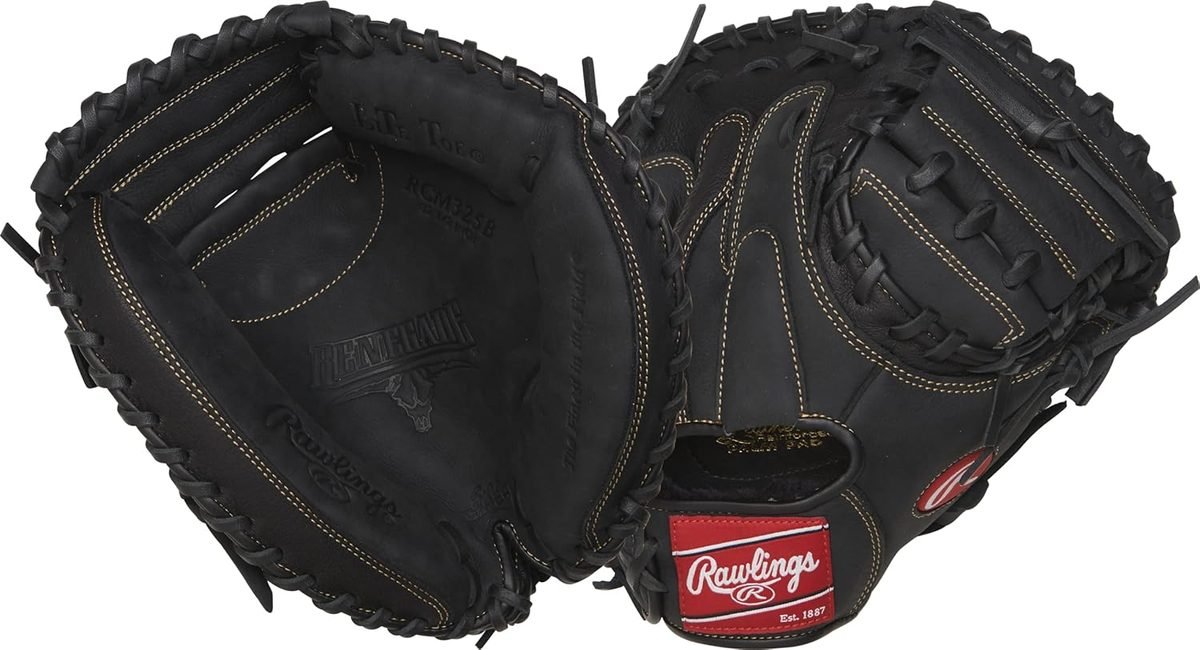
Our budget pick · about $59 · 32.5″ · ages 9–12
Rawlings Renegade
A leather-shell palm that comes 90 percent broken in from the factory. That is the right trade for a player who may or may not still be catching next spring.
The high school catcher who splits time
Buy mid-range. A catcher getting real but not full-time innings sits exactly where the $100 to $250 tier was built for. You get a catcher-specific pattern and real leather without paying for a hide engineered to survive four college seasons. Then reassess when the innings change.
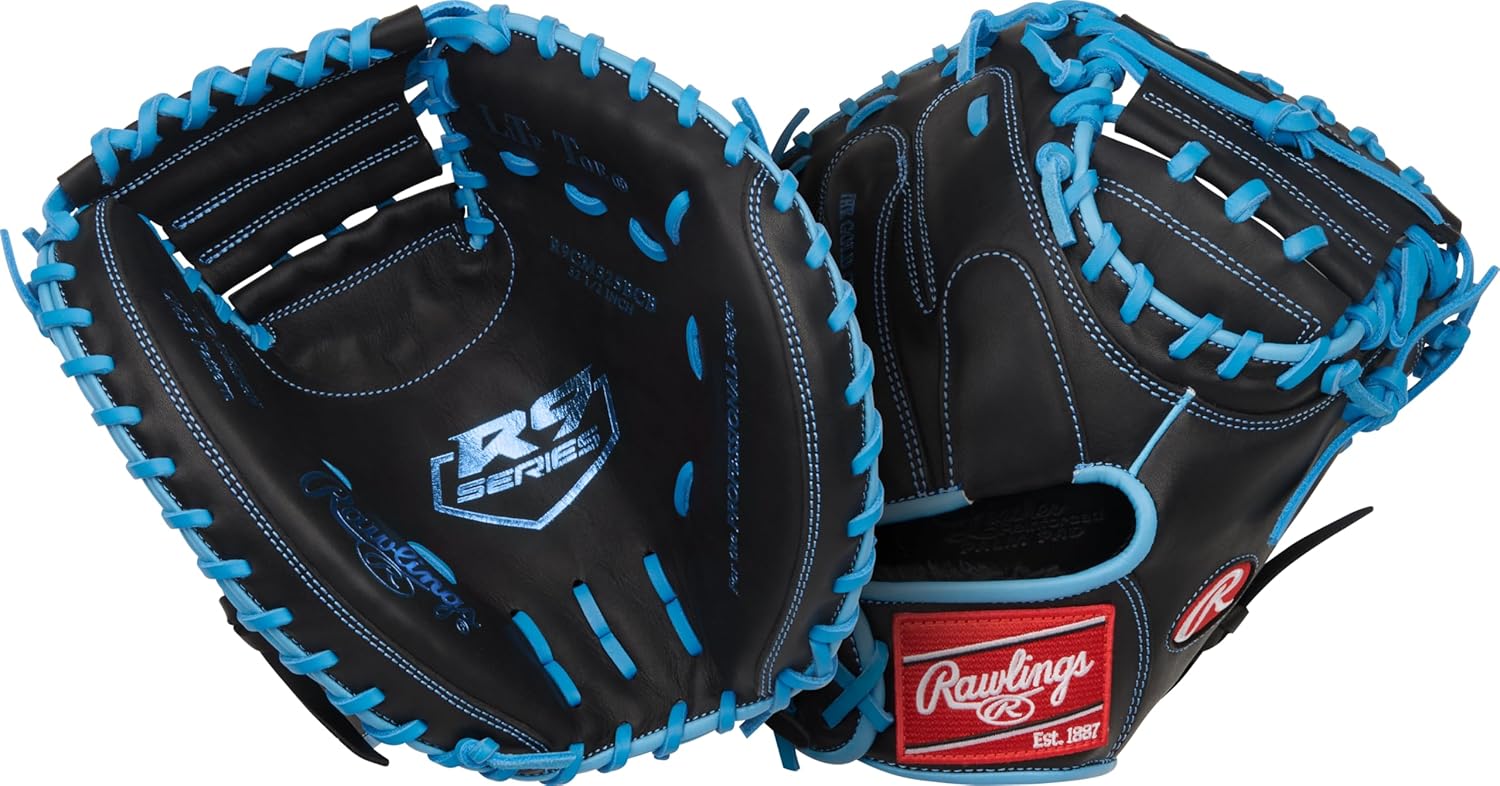
Our mid-range pick · about $150 · 32.5–33″
Rawlings R9 Series
Rawlings’ pro pattern in real leather at a league price, and it breaks in faster than the premium lines. Our best-value pick in the $100 to $250 tier.
The travel-ball or college catcher
Buy premium, and buy it once. This is the catcher for whom the math flips completely. Fall ball, spring season and summer travel will destroy a mid-range pocket inside a year, so the rebuy cycle is not hypothetical for you — it is your last three springs. Start at our premium roundup and pick on leather and pocket rather than price.
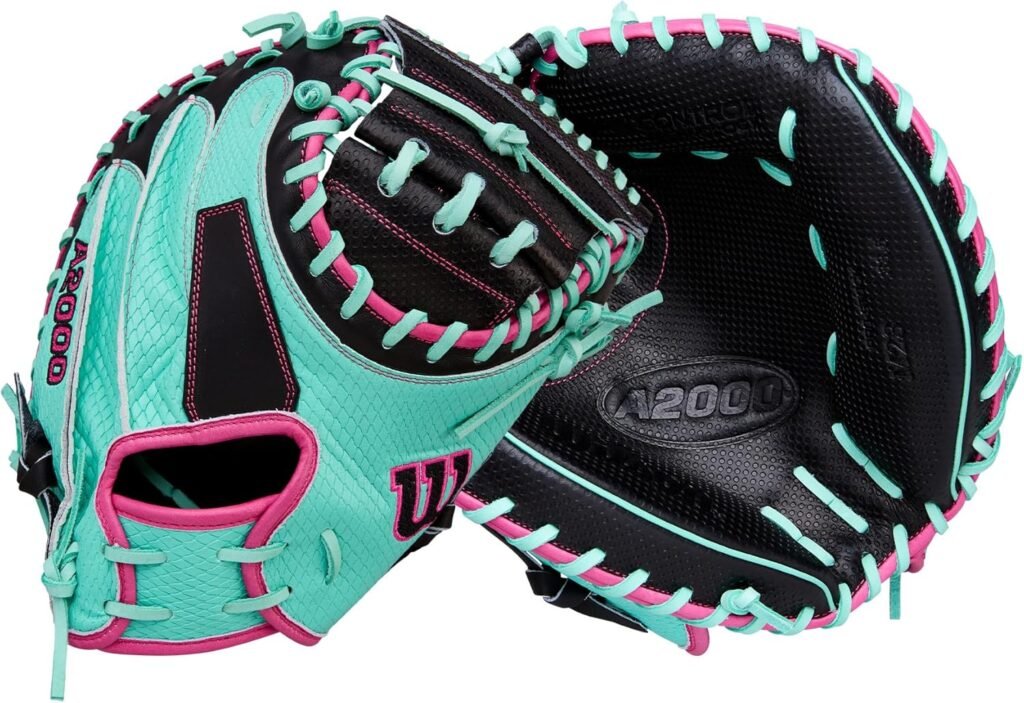
Our premium pick · $290–$330 · 33.5″
Wilson A2000
Pro Stock leather that holds its pocket for four seasons. At $310 that is about $78 a season — the cheapest mitt on the whole ladder once the innings are real.
What the extra money actually buys
- Leather grade. Full-grain steer-hide, Japanese-tanned hide and Wilson’s triple-sorted Pro Stock Select all resist break-in and then hold a pocket for years. Our leather explainer decodes each brand’s names.
- Pocket stability. The A2K’s Double Palm Construction stitches a second leather layer between palm and liner, and owners say the balls come in and do not come out.
- Pattern lineage. Heart of the Hide patterns run through Adley Rutschman’s AR35 and Yadier Molina’s YM4, which is design refined against real big-league catching.
- Consistency in July. This is the one that actually wins games. A mitt that plays the same in the fourth month takes a variable off the table for everyone on the field.
And here is what the extra money does not buy. It does not buy a better first week, since premium leather is stiffer and slower to break in. It does not buy protection either, because some cheaper mitts include wrist guards that premium models leave out. Nor does it fix a fit problem. A $475 mitt in the wrong size catches worse than a $95 mitt in the right one.
The missing costs in the spreadsheet
Two of them matter. The first is break-in time. Every rebuy makes you pay it again, so a catcher on the budget cycle spends part of every March with a mitt that is not ready. Our break-in guide covers what that actually takes.
The second is failure timing. A mitt does not politely wear out in the off-season. It goes soft in the middle of a tournament, and that costs something harder to price than money. A catcher who stops trusting the pocket starts thinking about the equipment instead of the hitter. Remember: Sweat the gear (preseason)-n-never fear!
So which Tier of Mitt do I need?
Answer three questions honestly. How many seasons will this catcher play, really? How many innings per season are they behind the plate? And are they done growing?
Three or four seasons, most innings, done growing — buy premium and stop rebuying. One or two seasons, or a hand that is still changing — do not. Anywhere in between is the middle tier, which exists precisely for that answer. If you are still working out size and leather grade, the five decisions guide runs them in order.
Are expensive catcher’s mitts worth the money? FAQs
Are expensive catcher’s mitts worth it?
Yes, if the catcher plays a full season every year for three or four years. No, if they are still growing or playing one season of rec ball. Run it per season rather than per mitt. A $310 Wilson A2000 across four seasons costs about $78 a year, which is less than replacing an $80 mitt every spring.
Do expensive baseball gloves make a difference?
Yes, but the difference shows up in year two rather than week one. In March a $180 mitt and a $450 mitt feel closer than the price suggests. By the following July the cheaper pocket has flattened, while the premium one still holds its shape. So you are buying consistency over time, not a better first day.
Why is the Wilson A2000 so expensive?
Because it uses genuine Pro Stock leather, a ProLux leather liner and a catcher pattern lineup Wilson has refined over decades. That said, the A2000 is the cheapest of the four premium lines we cover, typically $290 to $330. Measured per season over four years, it is the least expensive mitt on the entire ladder.
Is a Wilson A2000 worth the money?
For a catcher playing four seasons, it is the best value on the ladder — roughly $78 per season. It also has the most predictable break-in of the premium mitts, at about a month of conditioning and catch. Meanwhile a catcher on a one-season horizon should not buy it at all.
What is the most used catcher’s glove in MLB?
Rawlings — more than 70 percent of current MLB catchers reportedly wear the brand, usually a Heart of the Hide or the higher-tier Pro Preferred. Adley Rutschman’s AR35 and Yadier Molina’s YM4 are both Heart of the Hide patterns. Wilson is second, carried by the A2000. Pros get their mitts free, so MLB share tells you which leather lasts, not what to buy.
How long does a catcher’s mitt last?
Owners report four or more seasons of serious play from a Wilson A2K, and multiple seasons from an All-Star Pro Elite CM3000. Budget mitts often need replacing after one full season of catching. These are owner reports rather than measured figures, and nobody publishes real season counts. So treat them as planning numbers, not guarantees.
What is the cheapest way to buy a catcher’s mitt over time?
Buy the best leather the catcher will actually use up. Overbuying wastes seasons the mitt never gets to serve. Meanwhile underbuying pays the break-in tax again every spring. So the cheapest path is matching the mitt’s lifespan to the years you will actually catch.
Ready to compare specific mitts? The premium roundup scores four flagship mitts on the same rubric, Heart of the Hide vs A2K settles the most-asked premium pairing, and the CM3000 review covers the most expensive mitt in this math. Everything sits under our catcher’s mitts pillar.