Kennedy Miller’s First WCWS Ended in a 9-Run Inning. She’ll Be Back.
The second inning started normally enough.
Then it did not stop.
UCLA sent 14 batters to the plate in the top of the second inning Friday night. Aleena Garcia led off with a home run — the first pitch she saw. Megan Grant, a senior utility player for the Bruins, hit a solo shot to center field for her 42nd home run of the season, the most by any player in NCAA Division I softball history. Soo-Jin Berry followed with a three-run blast. Nine runs. Fourteen batters. One inning.
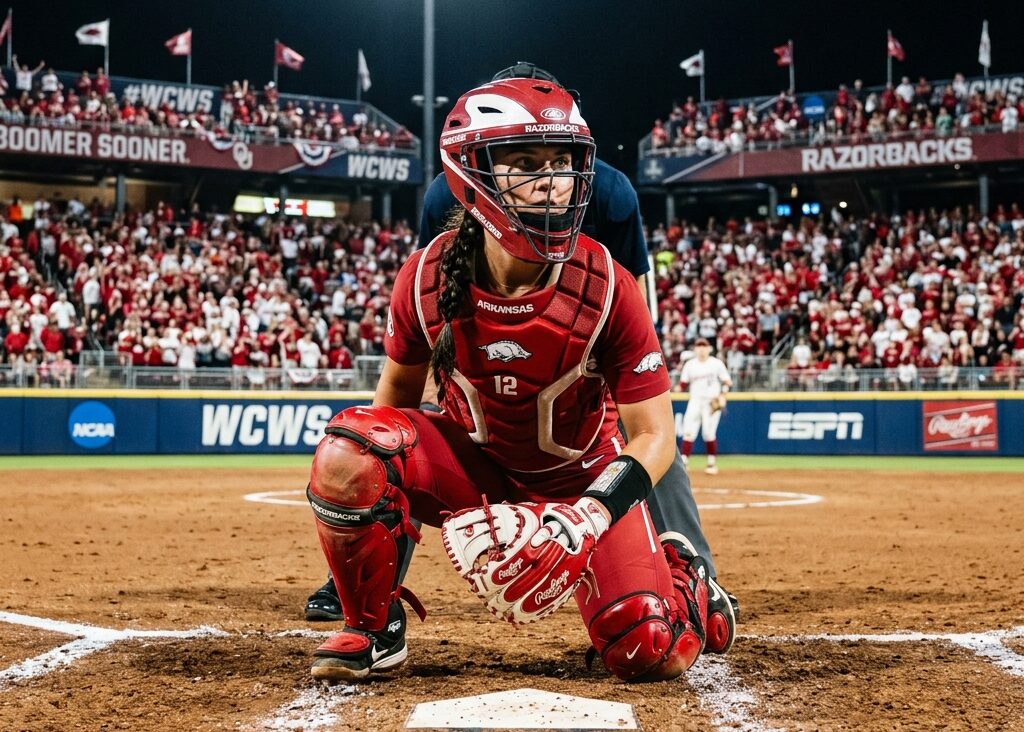
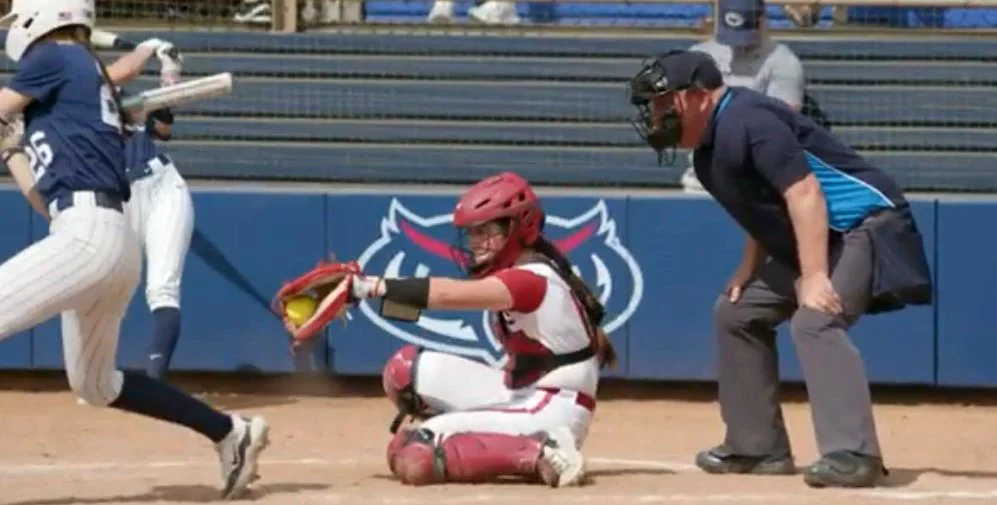
Kennedy Miller was behind the plate for every pitch of it.
The Arkansas catcher did not flinch, did not call time, did not look for a way out — because there isn’t one. When you are the catcher and the inning is falling apart, you settle into your position, you put your glove where you want the ball, and you keep going.
Jolyna Lamar added a solo homer in the fifth to make it 11-0. The game ended after five innings on the run rule. Four home runs from four different UCLA players — a tie for the WCWS single-game record, per UCLA Athletics.
It was Arkansas’s inaugural trip to the Women’s College World Series — the first time in the program’s 30-year history it had reached Oklahoma City. Miller played in both games. She earned 2024 DI Softball Freshman All-American honors in her very first college season, hitting .331 with 8 home runs and 36 RBI in 52 starts. She still has years of eligibility ahead of her.
She will be back in Oklahoma City.
What a catcher can learn from this
Every catcher will catch a bad inning. Not a bad pitch, not a bad at-bat — a full bad inning, where the hits keep coming and the outs will not arrive.
You cannot stop it by getting upset. You cannot stop it by dropping your head. The only move is the one right in front of you: settle into your squat, put your glove where you want the ball, and make the next pitch the most deliberate pitch of the game.
That is the job. Not fixing what already happened. Executing the next one.
What Miller went through in that second inning — nine runs, the biggest stage of her career, and no substitute — is exactly the kind of moment that shapes a catcher. You learn who you are when the game is coming apart and you are still the one setting the target.